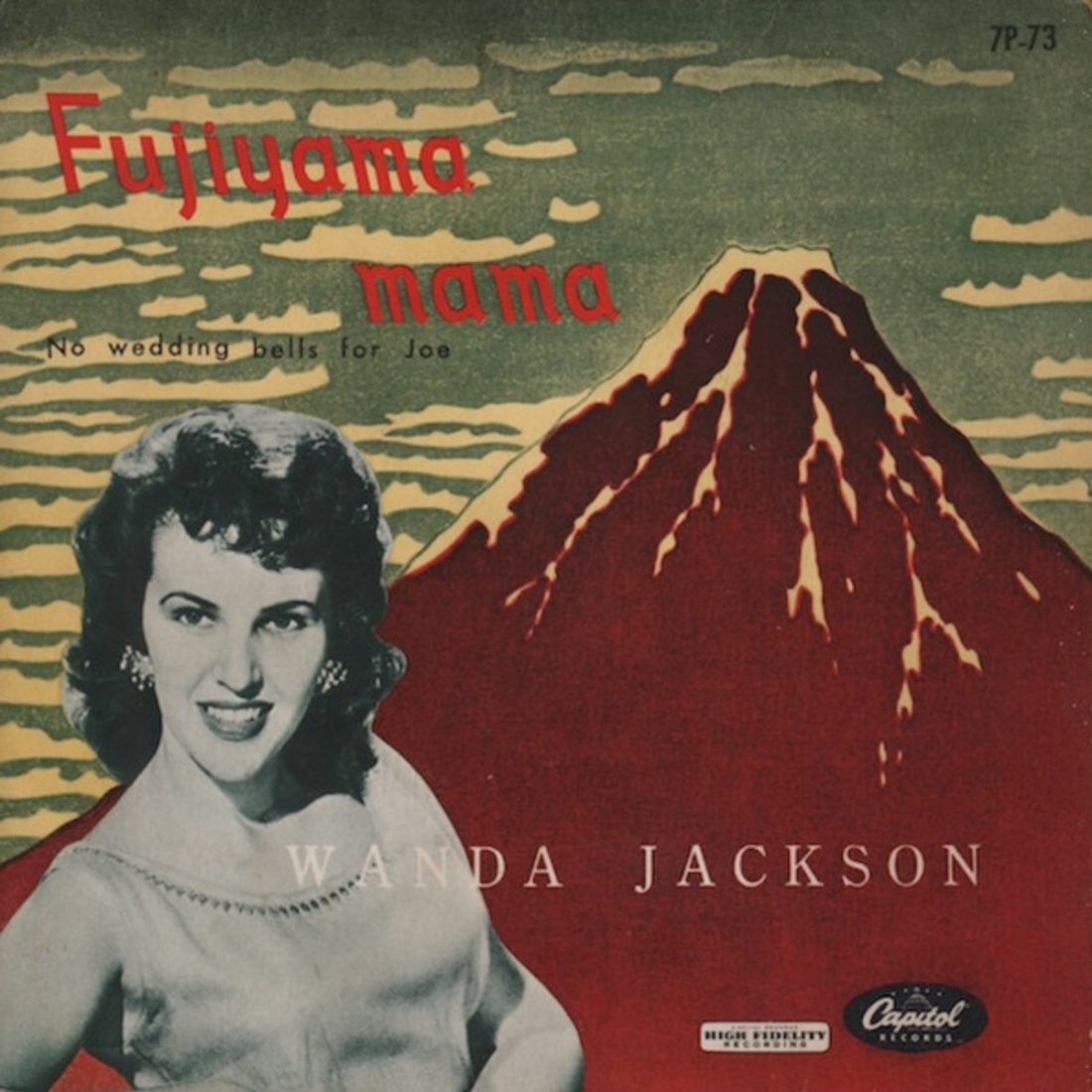
With its combination of atom bombs, sexual liberation and rockabilly mayhem, Fujiyama Mama was hardly the obvious choice to propel Capitol’s Wanda Jackson to mainstream success in conservative 1950s America. But in a bizarre series of events, the Oklahoma City gal’s fortunes would soon align…
The story of how Fujiyama Mama became a rockabilly classic is stranger than most. Little over a decade had passed since the US had dropped atom bombs on Nagasaki and Hiroshima, and yet a track that used this horrific event as a vehicle to express female sexuality somehow soared to the top of the charts in Japan in 1958. Utterly bizarre as it was, it gave a youthful Wanda Jackson a lifeline to rock.
Penned in 1954 by Earl Burrows (the writer of Great Balls Of Fire as Jack Hammer), Wanda Jackson wasn’t the first to take on the song. As with many examples of the period, it’s another side first cut by a Black artist only to be re-recorded by a mainstream-friendly white artist.
Rockabilly Roar
First cut in 1954 by powerhouse vocalist Annisteen Allen for Capitol, her version was a rollicking, brass-driven affair, amplifying a thinly-veiled display of libidinous power – “When I start erupting ain’t nobody gonna make me stop”. And while white pop starlet Eileen Barton would cut a blueprint, more lightweight version, as flipside to her reworking of her earlier novelty If I Knew You Were Coming I’d Have Baked A Cake, it was Allen’s rambunctious take that would catch Wanda’s ear.
Allen’s record may have done very little business on its release in early 1955, but when Jackson heard it booming out of a jukebox, she “just flipped over it”, seeing it as a perfect vehicle for her rockabilly reinvention. Thankfully for rock’n’roll fans past and present, her producer Ken Nelson – unusually for the period – gave Wanda free reign to pick and choose her songs.
When on 17 September 1957, Wanda entered Capitol’s studios in Hollywood to lay down country song No Wedding Bells For Joe, it was Fujiyama Mama that was chosen as its supporting side.
Atomic Platters
It was a risky choice by anyone’s standards and Nelson was understandably nervous. While Cold War tensions certainly crossed over into mainstream culture, and other ‘Atomic Platters’ had preceded it – Amos Milburn’s Atomic Baby (1950), Bill Haley’s Thirteen Women (1953), Atom Bomb Baby by The Five Stars (1957) and Uranium Fever by Elton Britt (1955) amongst them – this one was a little different. Not only was it just over a decade since the awful events in Hiroshima and Nagasaki, but its racy lyrics were hardly befitting of a young lady who up until this point had only just dipped a toe in rock’n’roll. “My record producer… was a little worried about the lyrics, but he let me have my way,” Jackson told the Rock And Roll Hall Of Fame.
It took Wanda seven takes to nail Fujiyama Mama with the required gumption and it was her father who had spurred her on. “Daddy was in the control room – he could see I was getting frustrated and confused. And he called a break,” she continued. “He came in the studio, and pulled me aside… he said, “Wanda… you sing that song however you want to sing it.”… So I went back and I started and – that growl just came out like that.”
Projecting that newfound fiery grit, Wanda dutifully let loose at the mic, ramping up the tempo and feel, supported by some bold rockabilly guitar licks, likely provided by Buck Owens or Billy Strange.
Nuclear Power
Still, issued on Capitol in late 1957, Jackson’s version also tanked in the US. “Nobody would play it,” she told a Tampa Bay audience in 2009. “They barely had accepted Elvis and the other ones, and they weren’t too sure about accepting a teenage girl singing this kind of music.” But, astonishingly, Wanda’s fortunes would flip when she received news that it had made it to No.1 in Japan despite the record’s explosive – what would now be seen as highly insensitive – subject matter.
The Army had a huge part to play in its success. Andrew Hickey explains the order of events on his excellent A History of Rock Music In Five Hundred Songs podcast: “Much of the Japanese entertainment industry in the late 40s and 50s had grown up around the US occupying troops who were stationed there after the end of World War II, and those servicemen were more interested in seeing pretty young girls than in seeing male performers. But this meant two things: it firstly meant that young women were far more likely to be musical performers in Japan than in the US, and it also meant that the Japanese music industry was geared to performers who were performing in American styles.
“So when a recording by a young woman singing about Japan, however offensively, in a rock and roll style, was released in Japan, the market was ready for it. While in America rock and roll was largely viewed as a male music, in Japan, they were ready for Wanda Jackson.”
Sonic Explosion
As such, the track was a big hit on the Armed Forces Radio Service Far East Network and as a result crossed over as a favourite on Japanese radio when released there in April 1958. Holding the top spot for the entirety of the summer, its success afforded a seven-week tour of Japan the following year, Jackson received as a superstar wherever she went. “I got the star treatment and I wasn’t used to that,” she remembered to The Guardian in 2021. “I’d go out to shop or whatever and, before long, there’d be a whole bunch of people following me. I didn’t know what I’d gotten into. Every time I go back to Japan, that song is still like a standard.”
It had clearly struck a big chord over there with a copycat version, albeit half in Japanese, released by Japanese singer and actor Izumi Yukimura also getting some success in 1958. So, thanks to this most serendipitous, improbable twist of fate, the stars had aligned and Fujiyama Mama gave Wanda Jackson international recognition, as well as prompting the track’s rise to acceptance and popularity in her homeland.
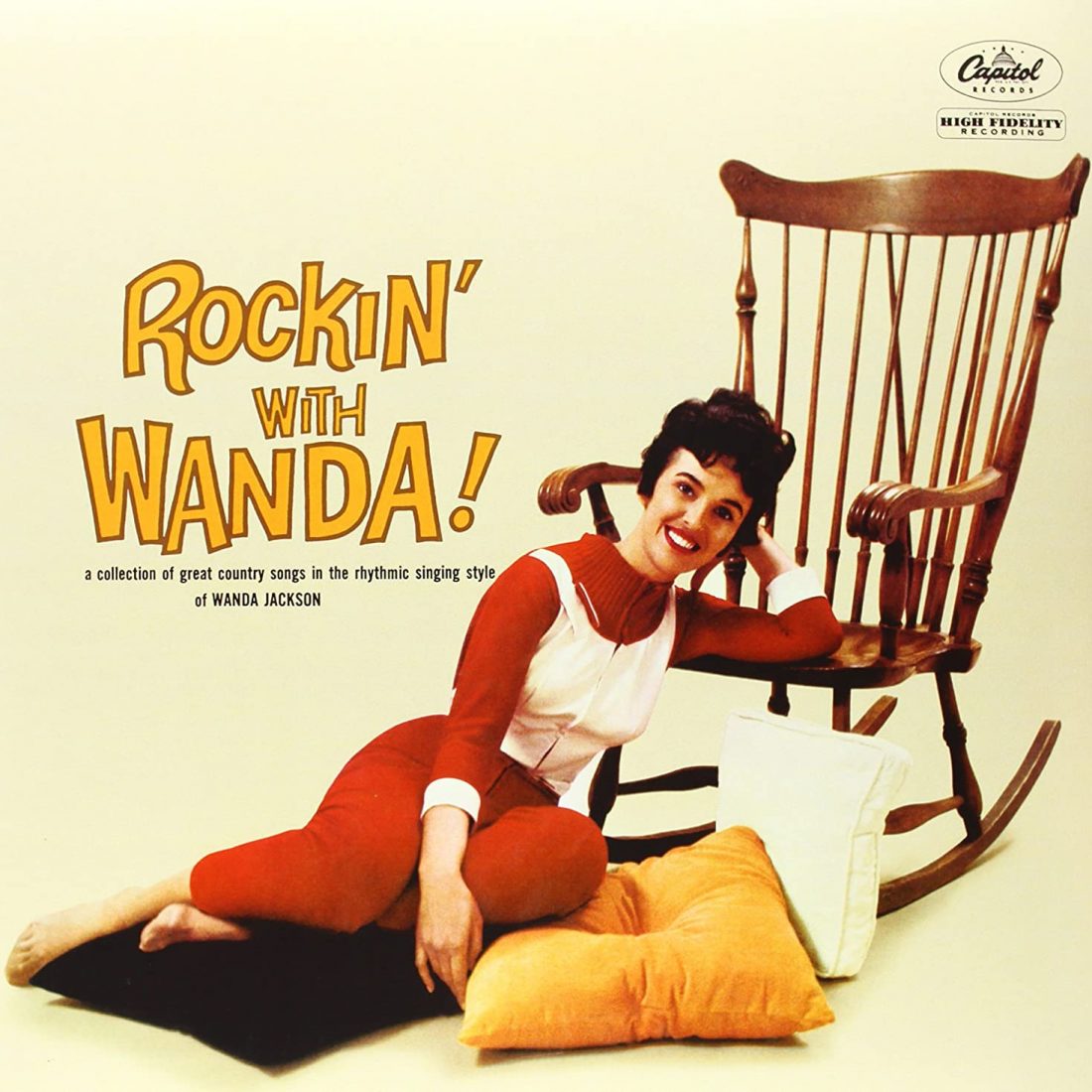
Nonetheless, on her return from the Land of the Rising Sun, Jackson got a band together and headed to the studio in 1960 with firm instructions to record a country album. But, in a further twist, thanks to Iowa DJ Des Moines, using her rocker Let’s Have A Party from 1958’s Wanda Jackson LP for his radio theme music, the track was issued as a single, giving Wanda her first US Top 40. With Fujiyama Mama bolstering its armoury, 1960’s Rockin’ With Wanda started getting traction too, meaning the Oklahoma City gal had carte blanche to blow her top once more on 1961’s album, There’s A Party Goin’ On.
Listen to Fujiyama Mama and more from Wanda Jackson here
Read More: Celebrating the Queen of Rockabilly – Wanda Jackson