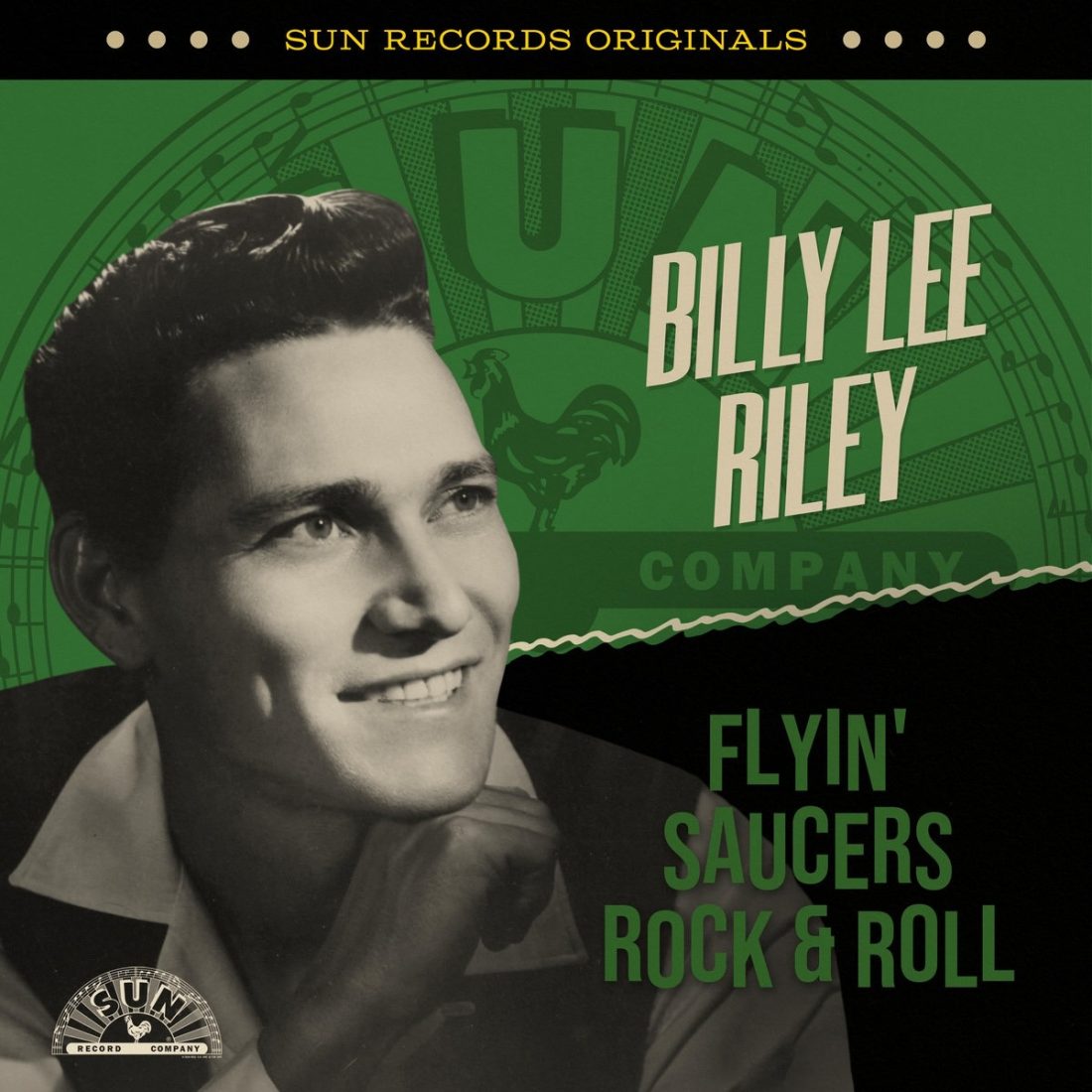
When young fans caught the red hot act of Billy Lee Riley And The Little Green Men in the late 50s, such was their enthusiastic response, the band would be lucky to exit the venue without their bright green suits having been ripped to shreds. Yet Riley would remain bafflingly hitless…
To read some accounts of the Memphis record scene in the 1950s, you could be forgiven for thinking Sam Philips walked on water. But Billy Lee Riley, a wild man from Arkansas, might have told you different. While acknowledging his charm and ability to make an artist feel 10 feet tall, Riley felt the Sun Records boss didn’t respect him enough to properly promote his records.
He reckoned Phillips sabotaged his chances of getting a hit by stacking all his resources behind Jerry Lee Lewis. Just to rub it in, Riley maintained that he’d been key to giving Lewis’ career some impetus at Sun by inviting him to play on one of his sessions, against the inclination of Phillips, who felt a piano didn’t belong on a rock’n’roll record.
Rock With Me Baby
In reality, talented as he was, Riley lacked the focus for top level success. But the voice was searing, if a little hard to take in more than small doses, and the greasy rocker image was perfect. He was a good-looking boy, cool and lean, with high cheekbones. And his time on Sun was definitely not wasted. Here he etched his name in the rockabilly annals – once again with some irony because Riley considered himself strictly rock’n’roll.
But, however you classify them, Flyin’ Saucers Rock & Roll and Red Hot were without question two of the greatest records to emerge from Memphis, or anywhere, in the 50s. His band, The Little Green Men, as well as being a superb road band, for a while operated as Sun’s unofficial house band, playing a key role in thrashing out rock’n’roll’s early blueprints.

Arkansas Roots
Riley was born in Pocahontas in the foothills of the Ozarks, in north-east Arkansas, in 1933. He was playing the harmonica from the age of six, and he had the usual musical upbringing of the son of a poor sharecropper of the time, namely blues songs learnt in the field from fellow labourers while picking cotton, and hearing country and western swing on the radio. After a spell in the US Army, Riley formed a country band in 1953, before hooking up with Jack Clement who was heading for Memphis to start his own Fernwood record label.
Arriving in the city in 1955, Clement recorded Riley in a makeshift studio rigged up in his friend Slim Wallace’s garage. One of the songs, written up by the trio, was the moody Trouble Bound. It had another youngster originally from Arkansas, Roland Janes, on guitar, and Johnny Bernero on drums. Bernero had been the drummer on a few of Elvis’ Sun sessions, and on Trouble Bound he played something similar to the infectious shuffle beat he’d done on I Forgot To Remember To Forget.
Pleased with the outcome, Clement took the tape to Phillips, who liked Trouble Bound enough to suggest that Riley cut something in a teenage vein for a prospective B-side. So, they came back with Rock With Me Baby, another brisk shuffle which, as with Trouble Bound, was somewhat in the Elvis mode. The two songs went out as a Sun single in May 1956. Although not a great seller, Phillips was delighted because it was a rare occasion when someone had walked into his studio with ready-made rock’n’roll. The upshot was that Clement was taken on as a producer and Riley put on a recording contract.
Greatest Showman
It was now that Riley, a decent guitarist in his own right, put together the band that became known as The Little Green Men. Roland Janes on lead guitar was joined by drummer, James (J.M.) Van Eaton, who gave up a scholarship to study music at Memphis State University in the process, and Marvin Pepper on string bass. Another key member was Van Eaton’s long-time pal from school days, the talented sax player Martin Willis. Pat O’Neil later replaced Pepper.
“Billy was a great showman,” recalled the recently deceased Van Eaton, interviewed in 2017 by this writer. “He had the looks, and he was a great musician. He played guitar and harmonica and we had a real good stage show. We played all of the colleges in the south, the fraternity parties and dances. In fact, we played everywhere and consequently the band got real tight. We were really good, man.”
Van Eaton was frustrated that Riley never had the hit record with The Little Green Men that would have sealed their live reputation. They certainly should have had one. The extraordinary Flyin’ Saucers Rock & Roll was recorded at the tail end of 1956, having been sourced from a Ray Scott demo. Homing in on the 1950s fascination with invaders from outer space, this is a song of rapid-fire greatness, thrillingly announced by Roland Janes’ echoing tremolo and Van Eaton’s crashing cymbal.

Flyin’ Start
For the vocal, Riley employed a dry, throaty rasp completely different to the moaning, bluesy intonation of Trouble Bound. He attributed it to having been singing a spate of Little Richard songs in the shows and enjoying the effect, but Flyin’ Saucers Rock & Roll stands four square as a thing of greatness in its own right. Jerry Lee Lewis, under instruction from Phillips merely to stick to the rhythm, played piano on the track. “Yes, it’s a haunting, totally spaced-out recording. Even Roland’s Fender guitar solo is kind of ‘outta space,’” Van Eaton remembered. Crucially, Phillips liked it, too, suggesting the band “sounded like little green men”.
It was put out as a single, backed by the strictly rockabilly I Want You Baby at the start of 1957. The name on the label read Billy Riley and his Little Green Men. The band immediately rushed off to Lansky’s on Beale Street to get measured up for specially tailored bright green suits for their shows.
Remarkably, though it would become a favourite of rock’n’roll revivalists, Flyin’ Saucers Rock & Roll only attracted good regional sales, but Riley thought he was onto a winner when they followed it up with Red Hot. Billy Emerson had previously recorded the song at Sun as a jokey R&B novelty. Riley turned it into something more abrasive and frantic.
Red Hot!
The refrain, “My gal is red hot!” and the band’s reply, “Your gal ain’t doodly squat” was lifted from the Emerson release, but Riley’s snarling retort “Yeah!!” introduced a more menacing quality. There was more fine guitar from Janes, and Van Eaton was solid in support. Jerry Lee is widely assumed to have played piano again, although Riley himself later maintained that it was another maverick, Jimmy Wilson, a clever pianist who could play in many styles, and who’d become a member of the Riley road band.
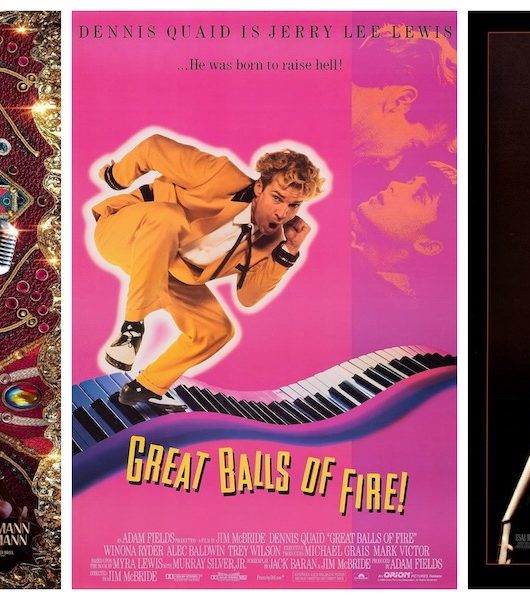
Red Hot, paired with the Riley original Pearly Lee, seemed all set to give Riley the breakthrough he longed for, with even Alan Freed telling him he had a hit on his hands. However, released in September 1957, by the end of the year sales amounted to only 38,000. To Riley’s fury, Phillips cancelled further orders, telling his distributors to concentrate their energy on pushing Lewis’ Great Balls Of Fire. The hot-headed Riley, having tried to wreck the studio, was on the point of leaving Sun, but was persuaded to stay. However, when another single, the distinctly average Wouldn’t You Know bombed, he walked out.
To The Moon And Back
A brief flirtation with Brunswick yielded another space-themed rocker, the dire Rockin’ On The Moon, but soon Riley was back at Sun. There were three more singles, including Baby Please Don’t Go, and a cover of The Regals’ Got The Water Boiling which was paired with One More Time. Riley reckoned the latter was the best thing he recorded at Sun.
In truth, the magic of the earlier sides wasn’t there. Riley went off on his musical travels again, but by the early 70s had largely left the industry. Like so many 50s rockers, a later era would ‘rediscover’ Riley, but in his case he had an especially big-name fan, namely Bob Dylan.
When Dylan invited him to play a guest slot on one of his shows in the early 90s, the singer-songwriter declared to the cheering audience that: “It was the greatest honour in the world to be even standing on the stage with him.”
For more on Billy Lee Riley at Sun Records click here
Subscribe to Vintage Rock here