Sh-Boom was one of the songs that kickstarted the rock’n’roll revolution, and The Chords one of the first by a Black group to cross over into mainstream acceptance – yet its creators still haven’t made the Rock And Roll Hall Of Fame.
Were we able to return to the early 50s, to a street corner in the Morrisania section of the South Bronx, it’s likely we’d find a certain group of five a capella singers serenading the surrounding neighbourhood, who in turn would be expressing their delight from their apartment windows above at the interwoven harmonies permeating the air below.
Their centrepiece? Sh-Boom, a song that both playfully evoked the circling Cold War paranoia, heightened after the detonation of the first H-bomb, while cleverly encapsulating the party spirit now in full swing post-WWII. And perhaps most importantly of all, at its heart lay the spirit and harmony of that beloved Bronx community. For their fellow Bronxites, they cooed, “Life could be a dream”, and Sh-Boom was their ticket out of the doldrums. It was an odd mix of narratives, but one that truly fired.
Doo-wop had been, up until this point, a territory steeped in misty slow-steps, tales of love and love lost, but not Sh-Boom. Here was a very different record, fashioned just as the tide was turning. After the Mills Brothers, The Ink Spots and “bird groups” such as The Orioles and The Ravens had started the doo-wop wave simmering, an exciting breed of jump-blues artists and fired-up vocal groups were on the rise, shopping an unfiltered agenda that transformed R&B into bristling rock’n’roll – and all delivered to an audience of both white and Black kids via pioneering DJs such as Alan Freed, who rebranded the scene for a hopeful new generation. And just as that changing of guard happened, before Elvismania took hold, The Chords were at the vanguard of the revolution.
Life Could Be A Dream…
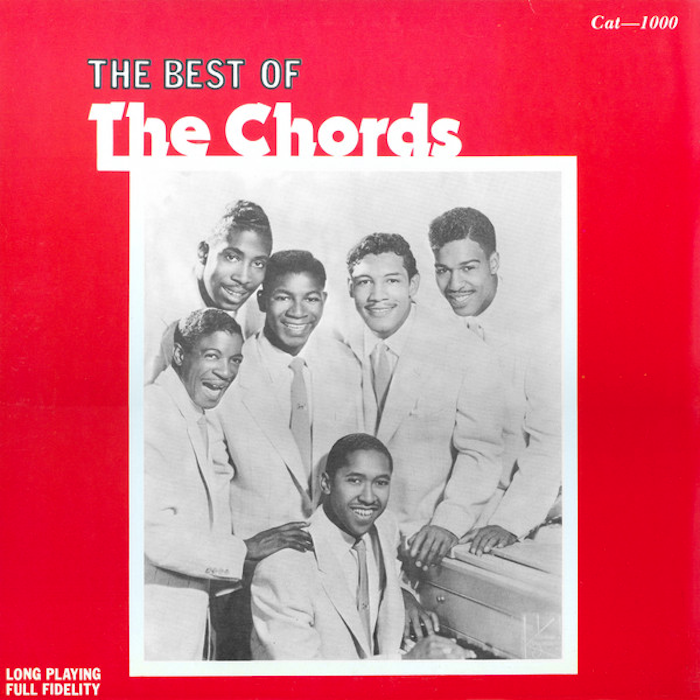
Formed out of three other groups, The Keynotes, The Four Notes and The Tune Toppers, The Chords were made up of first tenor Jimmy Keyes, second tenor Floyd “Buddy” McRae and bass vocalist William “Ricky” Edwards, plus lead tenor Carl Feaster and his brother, baritone Claude Feaster. Enlisting pianist Rupert Branker, The Chords set about summoning the magic: their calling card, Sh-Boom, written in McRae’s Buick convertible one hot summer night.
It was unusual for the time, that the pioneering Chords had written this breezy, jazz-infused confection themselves. The title and lyrics, as explained by Keyes, combined hip street slang (“boom”) fashioned to mirror those atom bomb fears (“shhhhh-boooom!”), the local church bells on their block (“Sh-lang, sh-lang”) and even the Feaster brothers’ booze-loving Uncle Bip, whose pungent odour used to alert them to his presence at rehearsals (“Here comes Bip a flip a doob a dip!”).
After an audition for New York’s Red Robin Records boss Bobby Robinson led to nothing, they took the track to ABC booking agency head honcho Oscar Cohen. An introduction to Atlantic’s Jerry Wexler and Ahmet Ertegun followed, who liked the group’ sound, deciding they’d be ideal for an cash-in Patti Pagecover they’d lined up, albeit with little interest in Sh-Boom. “They didn’t seem to be too happy with Sh-Boom at that time ’cause it was so different,” explained McRae on the Sh-Boom documentary. “But… they had to let us record Sh-Boom because we weren’t going to be satisfied unless we got Sh-Boom recorded.”
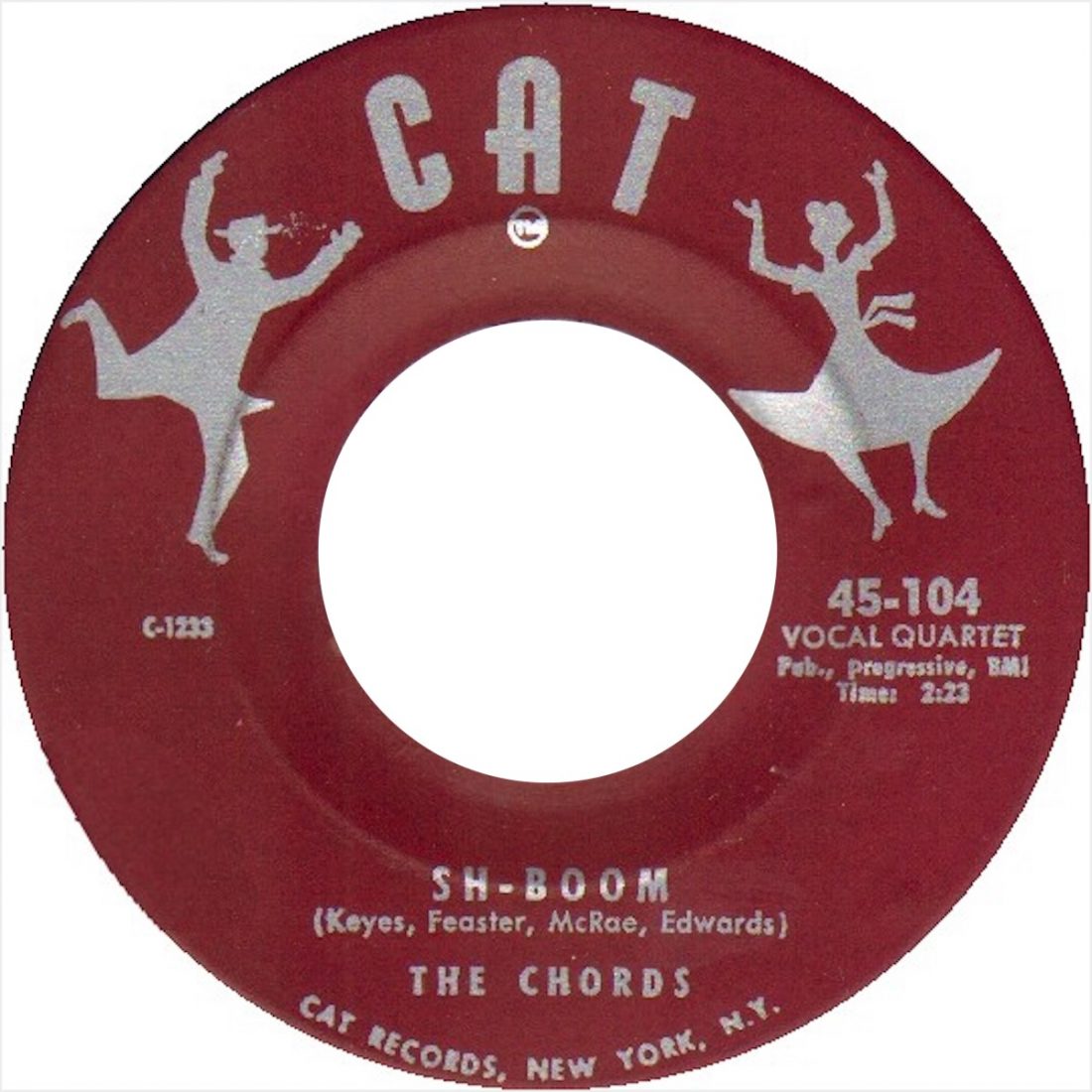
By March ’54 The Chords were in the studio cutting their first four tracks: Page’s Cross Over The Bridge, Hold Me, Never Let Me Go, Little Maiden, and the shuffling Sh-Boom (led by Carl), with Sam “The Man” Taylor on sax and a deft arrangement supplied by R&B mastermind Jesse Stone. For their first 45, issued on the label’s new subsidiary Cat, Cross Over The Bridge took the A-side, while Sh-Boom held the flip.
An Instant Hit
The Chords headed to California to court the tastemakers, including influential KRKD DJ Dick “Huggy Boy” Hugg, broadcasting his late-night sounds from the window of the Dolphin’s Of Hollywood record store. Huggy would go on to introduce Elvis Presley to the Californian live scene in 1956, but when he spun The Chords’ debut waxing two years earlier, a bouncing blues remake of Page’s recent hit, he was curious to know what dwelled beneath. And it turned out to be dynamite.
“I just played it a couple of times and it was an instant hit,” he told the documentary. “I’ve learned in the last 50 years I’ve been playing music on the radio, you just can’t make a hit no matter how many times you play it, it has to be a natural hit, and that’s what that was, a natural hit.”
Just as Elvis’ That’s All Right would light up the switchboard when spun by Dewey Phillips a few months later, Hugg’s listeners went wild for Sh-Boom, its popularity rapidly spreading across L.A. and into Philadelphia, St Louis and Cleveland. “It was just like a miracle happened,” beamed McRae. “The song took off like a rocket.”
Sh-Boom was duly re-pressed as the A-side with Little Maiden on B. Entering the R&B charts in early July ’54, it held for an incredible 15 weeks, peaking at No.2, while making the Top 10 in the Pop charts, the first R&B original on an independent label to do so. One of the first songs by Black artists to cross over, New York City mayoral candidate Robert Wagner even used a newly adapted version on the campaign trail.
Mainstream Acceptance
The Chords had helped initiate rock’n’roll’s breakthrough into mainstream acceptance. “Sh-Boom was a landmark tune in the popularisation of the R&B sound,” writes doo-wop guru Marv Goldberg. “In the past there had been monster R&B hits that crossed over to the Pop charts, but up to this point they had been few and far between. Sh-Boom, on the other hand, was the beginning of a trend.”
The Chords would soon be delighting the notoriously tricky New York Apollo crowd and taking top billing at prestigious venue’s such as the Crescendo in California, arriving in a swanky DeSoto limo with their name emblazoned on the side, upgraded from that Buick convertible that started it all.
White Canadian group The Crew Cuts were quick to pounce on the song, recording their glossier cover for Mercury and reaching No.1 with a far inferior version. Numerous others followed suit. Still, despite being one of the first of the their ilk to reach the heights that they did, with management and labels after a quick dollar, The Chords would stall just as they were on the cusp of superstardom; would-a, could-a, should-a beens.
But as the late Floyd “Buddy” McRae happily conveyed to Michael Guercio, their moment in the sun, “turned out to be a wonderful, wonderful thing.”
Subscribe to Vintage Rock here