Ian Dury called Gene Vincent the first rock’n’roller to smash up hotel rooms. Mesmerising on stage, his recording legacy is greater than is often acknowledged…
Gene Vincent is the rocker’s rocker. Most recognise the top songs of Elvis, Chuck Berry, Buddy Holly and Eddie Cochran. Given a spin at a party, they jive to Bill Haley’s Rock Around The Clock. But Vincent is more remote. Be-Bop-A-Lula aside, none of the other records he made with The Blue Caps have passed into the collective consciousness. Admitting a liking may be a touchstone for the true early rock fan.
Vincent wasn’t easy to be around and had no interest in smooching up to the press. He wasn’t such a female magnet as some of his contemporaries. On the epochal but ultimately tragic tour of the UK in 1960 with Cochran, he started out top of the bill. However, the story goes that as the package rolled round the country, Cochran’s less edgy persona went over better with audiences. There was pressure on Vincent to let Cochran close the shows. Ultimately, the jury is out on who really was the best value. Shrewdies who saw the concerts reckoned they each had their moments.
What is true is that, as primitive rock faded in the 1960s, Vincent kept the flag flying. That period sealed the image of him as the black leather raver, bent over the mic, focusing his troubled gaze up at the ceiling rather than into the crowd. Crippled in a motorcycle accident in 1955 so he’d wear a brace for the rest of his life, sometimes he’d pivot round, swinging his leg over the mic stand, his restricted mobility adding to his otherworldly air.
The Screaming End
Legendarily unpredictable offstage, allegedly he once pulled a gun on his friend Johnny Kidd. At other times he was pussycat polite and quiet-spoken. But while songs like Cat Man had already fostered a reputation as the wild man of rock, the black leather image was the creation of UK producer Jack Good, who found him worryingly mild when he touched down at London Airport for the 1960 tour. Where was the dagger boy? In Good’s hands, the pallid Vincent became a cross between Hamlet and Richard III.
But Vincent was more than an image. On his earliest Capitol recordings, featuring Cliff Gallup’s guitar, he mixed feral rockers with feather-light crooning. These 35 tracks form a standalone body of work as fine as any in the rock’n’roll canon. The following “clapper boy” phase is less referenced, but includes some insanely infectious songs with strong harmonies and a poppier, more danceable feel.
Vincent’s fortunes dived in the 1960s. Forced to spend most of his time on the road to sustain a living, recordings suffered, but there are still gems to be found right up to the end. Vincent’s decline is one of rock’s saddest stories, but his dogged perseverance was heroic.
KEY SONGS
With Be-Bop-A-Lula his only (Stateside) Top 10 hit, quality outweighs commercial success
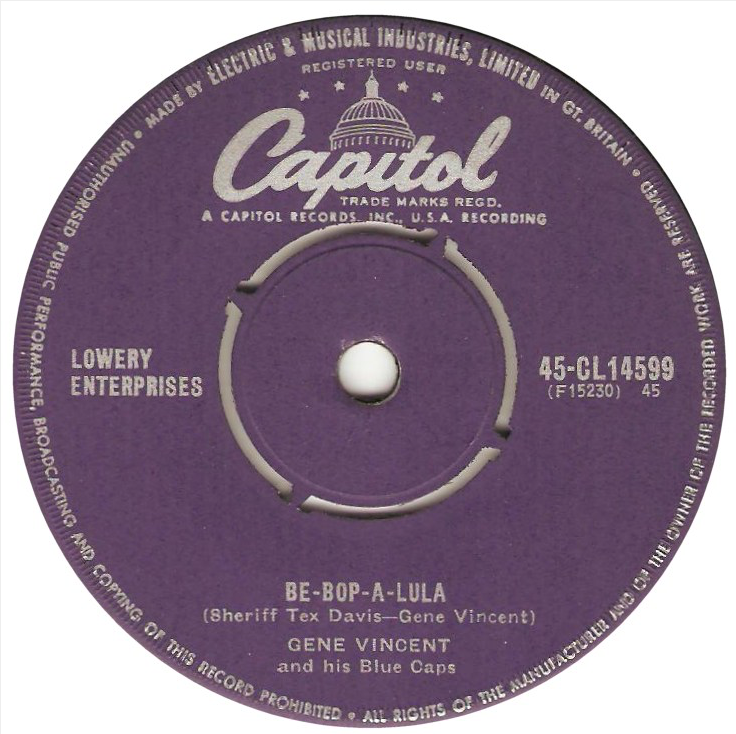
Be-Bop-A-Lula
Vincent’s first Capitol single, so familiar now, it takes a moment to imagine how strange it must have sounded on release in 1956. Cliff Gallup’s Gretsch Duo Jet counterpoints Vincent’s hyperventilating sighs and drummer Dickie Harrell’s screams. Tape echo effects create an alien ambience. Initially planned as the B-side to Woman Love, described as “vocal pornography” by New Musical Express.
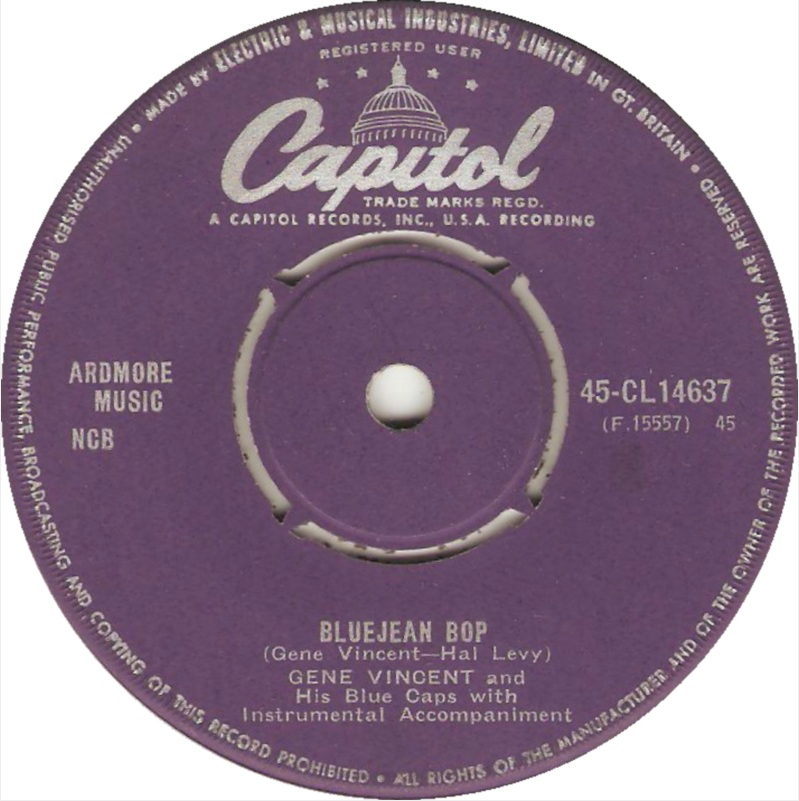
Blue Jean Bop
Top class Gallup-era rockers included Race With The Devil, Pink Thunderbird, Bop Street and Jumps, Giggles And Shouts. None were classier than Blue Jean Bop, starting at a cool tempo, with Vincent softly crooning “Blue jean baby, with your big blue eyes,” before hotting up. Paired with the manic Who Slapped John, it made UK No 16. This was also the title track of the first Vincent album.
Cat Man
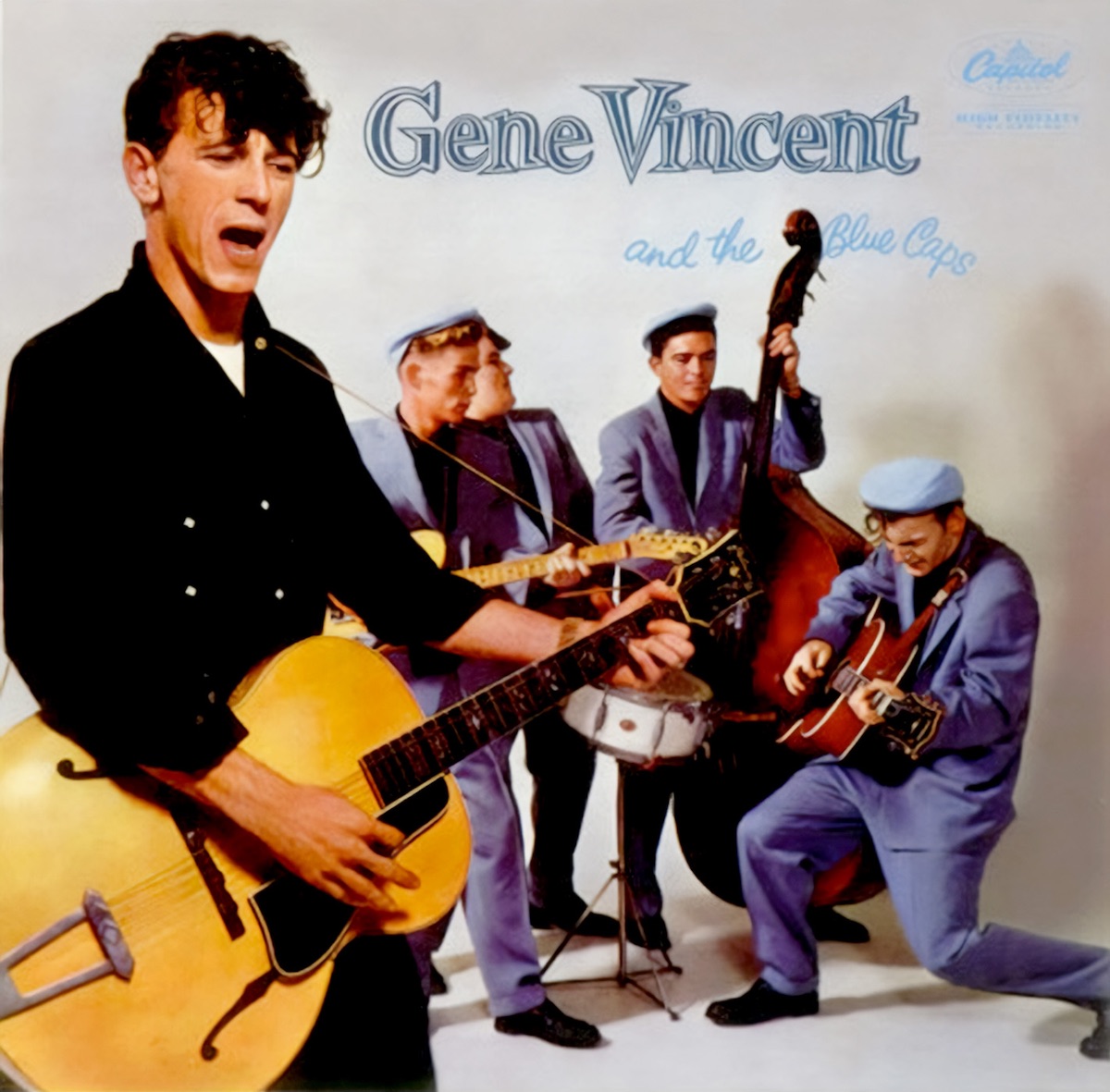
In the Capitol studio, Vincent sang so softly he had to be recorded in a separate room to stop him being drowned out by the guitar and drums. But if you want to know why the label’s marketing department dubbed him as The Screaming End, listen to his unsettling delivery on Cat Man. Harrell’s brushed snares and Gallup, on one of his last sessions, underscore the atmosphere. On second album Gene Vincent And The Blue Caps.
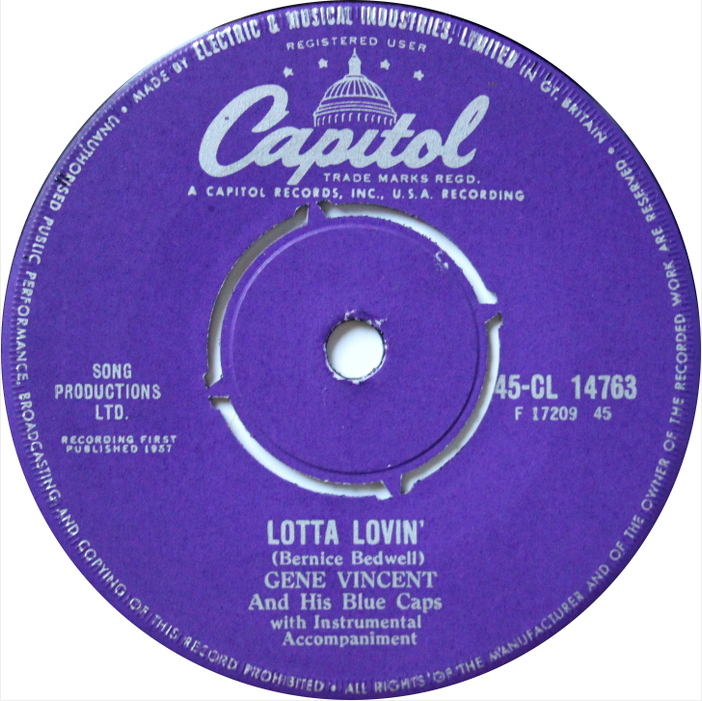
Lotta Lovin’
By 1957, the Vincent style had evolved, with Johnny Meeks, who had a scratchier, choppier guitar style, replacing Gallup, and featuring more harmonies and hand claps. It was poppier, with an R&B undertow, an electric bass, and eventually a piano and sax. Lotta Lovin’ was his biggest hit in the style (No.13 in the States), but others include Rollin’ Danny, I Got A Baby, Lovely Loretta and Pretty Pearly (with Jerry Merritt on guitar).
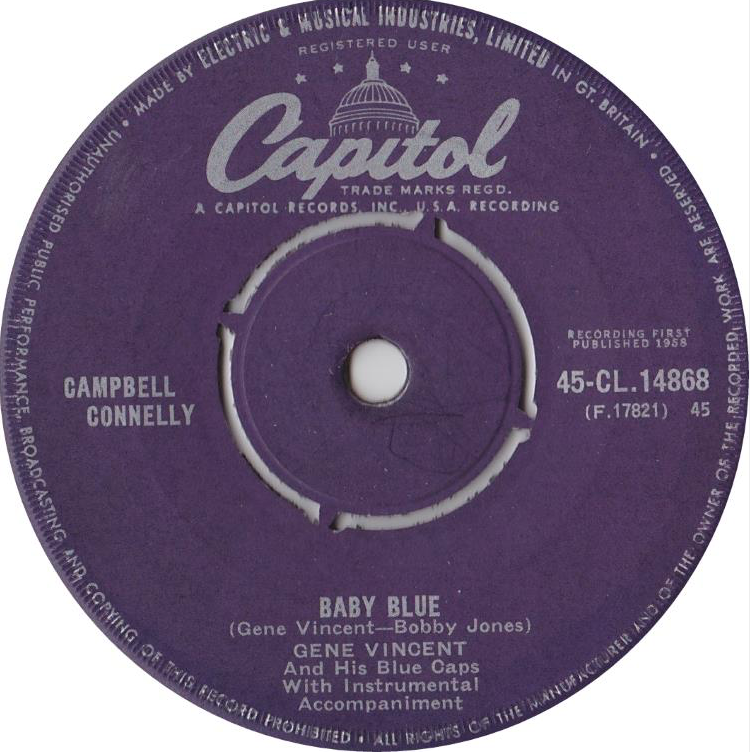
Baby Blue
Written by bass-playing Blue Cap Bobby Jones. Although not a hit as a single, it showed Vincent’s prowess as a blues singer. The harmonies were by “clapper boys” Paul Peek and Tommy Facenda, and they performed it in the film Hot Rod Gang (1958). A later recording was done in Britain with The Shouts in 1964. As Vincent got older his voice coarsened, and this song, long a staple of his sets, suited him even better.
Git It
The period 1957-58 saw Vincent experimenting with a vocal group sound with Peek and Facenda. In My Dreams and You Are The One For Me, that has lovely falsetto and clever use of repetition, were fine efforts. However, the most ambitious arrangement was given to Git It, an uncharting single in 1958, paired with Little Lover. Several observers have suggested the layering of the harmonies anticipate The Beach Boys.
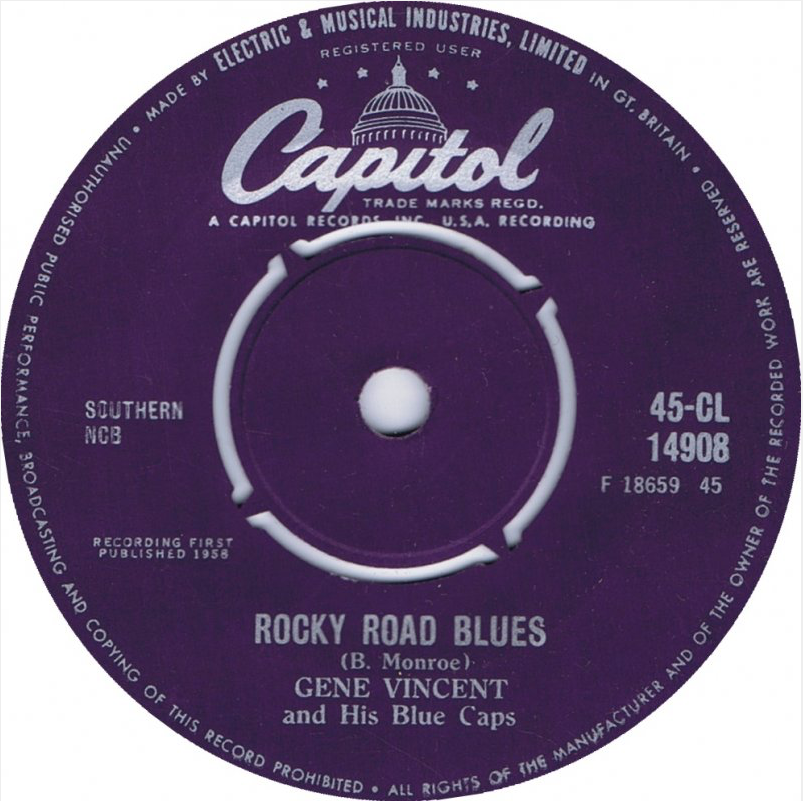
Rocky Road Blues
First recorded by Bill Monroe And His Bluegrass Boys in 1946. Parallels have been drawn between Monroe’s music and rockabilly, but when Vincent’s single was released in 1958, he was in the handclapping phase, and this was more of a scorching, blues rocker. It also has what is surely one of the defining examples of the Vincent vocal style, with his expanded “w-e-e-lls,” “w-o-o-h-s” and “a-a-h-s”.
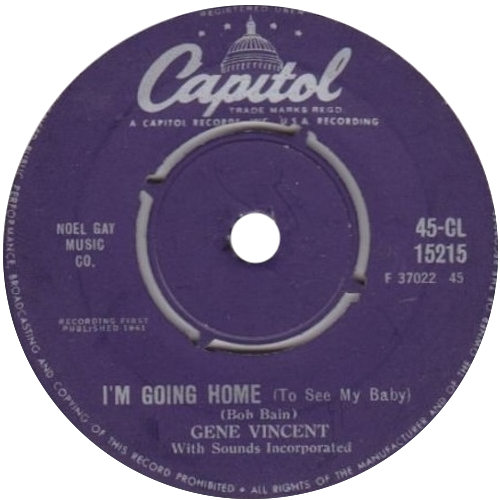
I’m Going Home (To See My Baby)
In 1960 Vincent enjoyed a Top 20 UK hit with a rockin’ revival of the country oldie Pistol Packin’ Mama, recorded at Abbey Road during his tour with Cochran. He was back a year later to lay down this corker, owing a lot to Bo Diddley’s Down Home Special. Backing was by the British six-piece Sounds Incorporated, noted for a blazing sax-driven sound. They backed Vincent on several early-60s tours.
Cruisin’
Another from Gallup’s last run of sessions, and again an example of Vincent And The Blue Caps at their alley cat best. Vincent is “cruisin’ for a bruising,’” and if you’d just seen him in The Girl Can’t Help It, you knew he meant it. Gallup’s rapid licks are flick knife sharp. Recorded the same day as Pink Thunderbird, that saw Vincent at his cheeky, swaggering best. Both tracks went on the second album Gene Vincent And The Blue Caps.
Born To Be A Rolling Stone
By the mid-1960s, Vincent was seen as out of fashion. But in 1966 and 1967 he did some sessions for Challenge Records with pleasing results. Born To Be A Rolling Stone was released as a single and went nowhere, but showed a willingness to adapt, in the studio at least, to the new folksy country rock style of the times. Also on the Gene Vincent 1967 LP, the song title seemed autobiographical.

KEY ALBUMS
Later curiosities add much interest to the Vincent album catalogue…
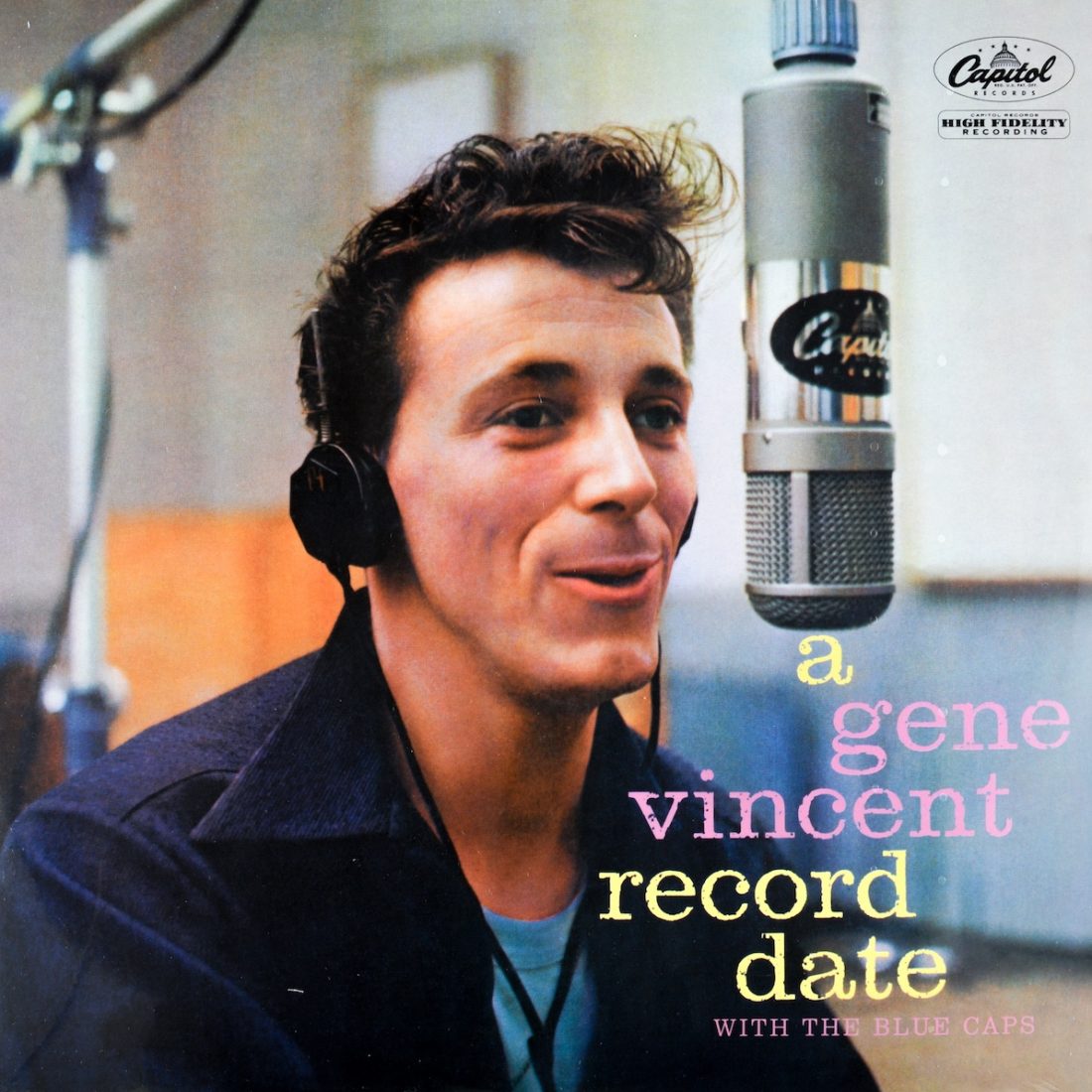
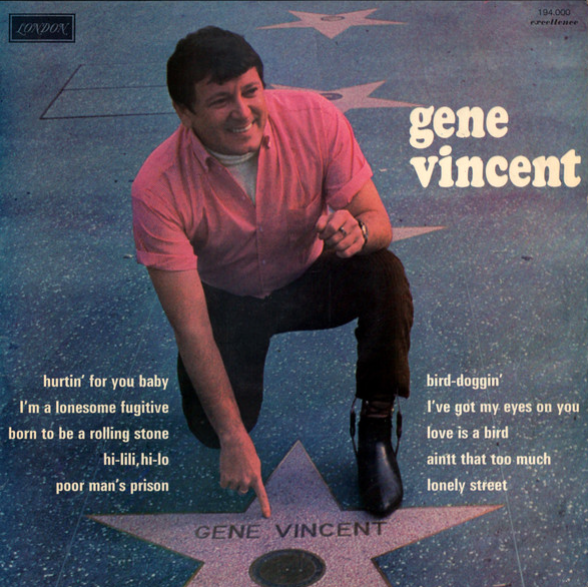
Bluejean Bop!, the harder rocking Gene Vincent And The Blue Caps and the mixed bag that was A Gene Vincent Record Date, were the best albums of Vincent’s peak years with the Blue Caps. Contrary to any idea that the “washed-up” star made no decent records in the 1960s, the simply titled Gene Vincent, released in Britain on London Records in 1967, is also well worth checking out.
Comprising Hollywood recordings made in a bid to offer something in a more contemporary style, it’s a shame Vincent was no longer well enough to properly promote it.
Shakin’ Up A Storm
Zeitgeisty tracks like Born To Be A Rollin’ Stone, Bird Doggin’ and Love Is A Bird work very well, but the standout numbers are a haunted version of Merle Haggard’s Bakersfield classic I’m A Lonesome Fugitive, which suits Vincent to a tee, and Lonely Street. Could not Vincent have shrugged off his mid-career blues by turning, like Jerry Lee Lewis had done, to country?
Incredibly poignant was Vincent’s reading of Bobby Bare’s country favourite 500 Miles From Home on his 1970 album for Kama Sutra, which was also named Gene Vincent. Although that LP took efforts to update his sound too far via the monotonous Slow Times Comin’ and Tush Hog, the follow-up album for the label had no-bull versions of Carl Perkins’ Boppin’ The Blues and Don Gibson’s Oh Lonesome Me. How I Love Them Old Songs and The Woman In Black were solid rockers, the latter in a heavier style that would have fitted the rising pub rock movement. The title track The Day The World Turned Blue, penned by the man himself, carried echoes of the old Vincent.
On a beautiful revival of Nat King Cole’s 1958 hit Looking Back, he wistfully reminisced, “Once my cup was runnin’ over/ But I had nothin’in return.” Actually, Vincent sounded in fine vocal fettle, yet would be dead within 12 months.
GENE ON FILM
Alongside appearances in The Girl Can’t Help It (1956) and Hot Rod Gang (1958), (see Cat Man Style, overleaf), Vincent was filmed dressed all in white, framed by saxes, in the British movie It’s Trad Dad (1962), singing his latest single Spaceship To Mars. This was “swinging 60s” director Richard Lester’s debut feature.
But nothing Vincent appeared in is more affecting than a “fly on the wall” BBC documentary The Rock And Roll Singer, shot on his 1969 British tour. Looking paunchy and older, Vincent was backed by British revival band The Wild Angels. Short of money and physically ailing, his voice was raspier than in his pomp, yet he was still thrilling fans even while being ripped off by promoters. One poignant sequence shows him limping through the London streets alone at night gazing into shop windows, while the soundtrack plays his recent recording of Ernest Tubb’s Rainbow At Midnight.
ESSENTIAL READING
There have been several attempts to write a biography of Gene Vincent, including by Britt Hagarty (The Day The World Turned Blue: A Biography Of Gene Vincent), Mick Farren (There’s One In Every Town) and Susan VanHecke (Race With The Devil: Gene Vincent’s Life In The Fast Lane). A definitive account is still awaited.
Recommended, however, is John Collis’s Rock’N’Roll Revolutionaries, which used the historic 1960 Vincent/Cochran tour of 1960 as the framework for a solidly reliable and economical survey of two stars whose careers were interlinked. Vincent’s character is well conveyed.
For completists, Gene Vincent: A Companion, by Vincent enthusiast Derek Henderson, includes a discography, details of sessions, film and TV appearances, chart listings, a timeline for Vincent and a separate one for The Blue Caps, who reformed for a spell many years after his death. There is also a section on the many Vincent tribute albums released in his honour. Inevitably, a publication such as this is almost immediately out of date, and updates can be found at spentbrothers.com/updates.
CAT MAN STYLE
While he lacked natural charisma, no white rocker surpassed the raw, hypnotic glory of Gene Vincent…
Music historians put Gene Vincent in Elvis Presley’s shadow. Elvis was the consummate entertainer, versatile in his material, a sensational mover and, if not exactly a man of many words, shyly charming. Vincent is not deemed to have been any of these things.
Yet a study of his back catalogue shows a wider talent than we are primed to expect. After the Gallup-era Nashville recordings, part of the holy grail of rockabilly, there was a follow-up phase working in Hollywood on a completely different, yet still compelling sound. He was also an expert balladeer and a fine blues singer. While never a country singer as such, he recorded material from that genre with sensitivity.
He was also a mesmeric performer. In the movie Hot Rod Gang, Vincent stands with the Clapper Boys Tammy Facenda and Paul Peek on either side during performances of Dance To The Bop and Baby Blue. Facenda was teen idol handsome in a way Vincent could never be, causing some jealousy on the latter’s part. But notice how Facenda is smiling and looking directly at the audience.
Baby Won’t You Bop With Gene
He is of this world, and with the passage of time, there’s nothing remarkable about watching him at all. Whereas the raw-boned, rather frail Vincent now looks like a prince. Joe Brown has spoken of the evil eye he could fix on you, but in these scenes, he’s as pure as Joan of Arc.
His habit of averting his gaze from the audience and looking upwards, with his uneasy, almost apologetic smile, gave him an eerie, slightly otherworldly aura. Sometimes that smile became a grimace, partly as an expression of the song’s emotion, but also probably in reaction to the pain he went through in carrying off a show.
Another thing you can’t take away from Vincent is his total dedication to rock’n’roll even after it was well past its sell-by date. Footage survives of his 1963 shows in Belgium and France, when he was in greater pain than ever.
On stage he was compensating for his restricted mobility by vigorous head shaking and banging his mic stand, his face and hair dripping with sweat. He’d gasp “Merci” to ecstatic audiences, before limping off and hobbling back on again to do an encore. It is compelling viewing. Talk about suffering for one’s art.
Listen to Gene Vincent here
Subscribe to Vintage Rock here