Trapped between the end of rock’s first outbreak and the arrival of Merseybeat, Del Shannon was a cross-generational talent whose music stills sounds fresh and surprising…
Even in the early 1960s while still racking up the hits, music writers referred to Del Shannon as an old school rock’n’roller. To them, he probably typified the hardworking performer with a straightforwardly identifiable style, up on the stage night after night with his guitar, giving it his all, with no pretence to high art.
Years later, he would indeed conform to that description, mainly reduced to the club and cabaret circuit, playing to long- time fans who only came out to hear the old stuff. But although he’d started in a band in the late 1950s playing rock’n’roll standards, he did not get his first chart breakthrough with the sensational Runaway until the spring of 1961. By this time, hard core rock was dead in the water, replaced by teen pop, some of it likeable, much of it antiseptic in comparison.
My Little Runaway
Shannon, however, was a different proposition. Born Charles Westover, in Battle Creek, Michigan in 1934 (at the time of Runaway, his debut single, publicists passed him off as a 21-year-old rather than the 26-year-old married father of two that he actually was), this intense, rather nervy man was one of the era’s great, if undervalued, stylists. His obvious spiritual cousin was Roy Orbison, but whereas the Big O seemed like a gentle soul, Shannon conveyed danger and attack. You could picture Orbison sitting alone in a dark room while quietly mulling over memories of failed love and loss.
Shannon was a more unsettling kind of solitary. Delirious on Runaway and Hats Off To Larry, on So Long Baby he sounds borderline homicidal. The falsetto finish on He Doesn’t Care is one of 1960s pop’s creepiest moments. Shannon also favoured a more energetic tempo than Roy Orbison, whose greatest songs tended to be stately beat ballads that built up to a big finish.
Fashionability, or lack of it, cast a mid-career shadow over Shannon, a lifelong depressive, but he kept going and came back strong in the 1980s. Who knows what might have been achieved had he not taken his own life in 1990, a promising new album, Rock On, ultimately issued posthumously, practically in the can. There were rumoured plans for him to join The Traveling Wilburys, replacing Orbison who had died suddenly just over a year before, aged 52.
Two great heartbreakers, both sufferers in their personal lives, gone within 15 months of one another, just when things were looking up. What rotten luck, fortune living up to the discs. Shannon might have found a ready reception in the Americana field. Or maybe the old hacks had it right and he’d have carried on the old school rocker’s trail, revered by those in the know.
KEY SONGS
Unlucky in love, bitter, tormented, feeling like a reject? Del Shannon is your soulmate.
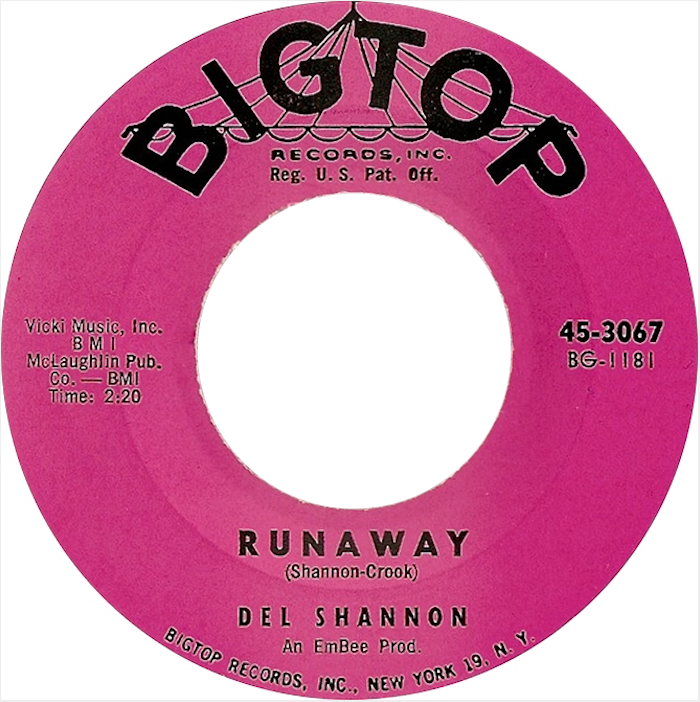
Runaway
One of the great “impact” singles, setting the image of Shannon as the unstable loner, driven nearly mad when ditched by his girl. His desolate voice leaps out at you in a minor key, but angrily jolts into a major key chorus, signalling his tormented state. Even the falsetto sounds petulant, as does Max Crook’s extraordinary shrieking “musitron”, a cheap and cheerful early synth. A double No.1 in the States and the UK in 1961.
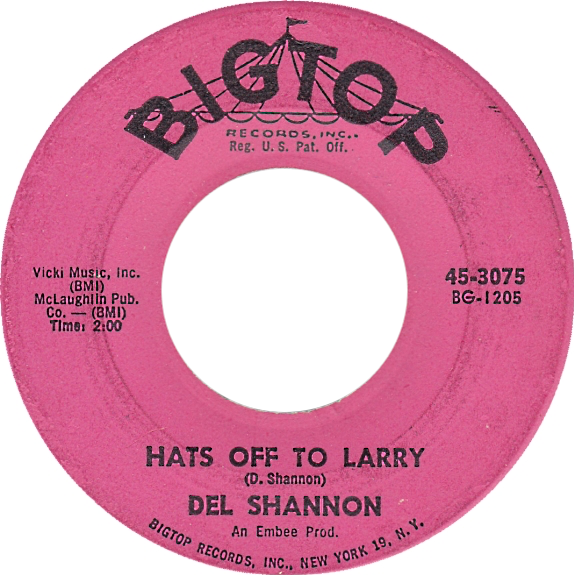
Hats Off To Larry
Maintaining the brittle tension of Runaway, Shannon pitches his psychotic strop a notch higher. His girlfriend ran off with Larry, but now he’s dumped her, so she’s crying. Yay, result! Nasty, but another frantic classic. Shannon rips into his vocal while the musitron simulates ironic teardrops. The singer had to fight his label Bigtop over the slow, troubadour-style intro, but his judgement was vindicated with another transatlantic hit.
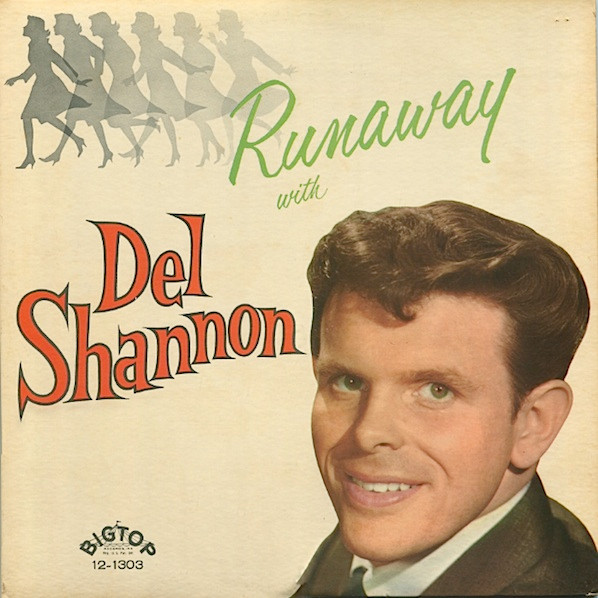
He Doesn’t Care
One of the doomiest pop songs of its era. You’re not sure whether to feel sorrier for the girl or the messenger’s own twisted mental state. A sax tracks the vocal in a stalkerish manner, and the continuous whine of Crook’s keyboards underscores the broody atmosphere. Found on the LP Runaway With Del Shannon. Was its two minutes and nine seconds of unmitigated gloom too depressing to release as a single?
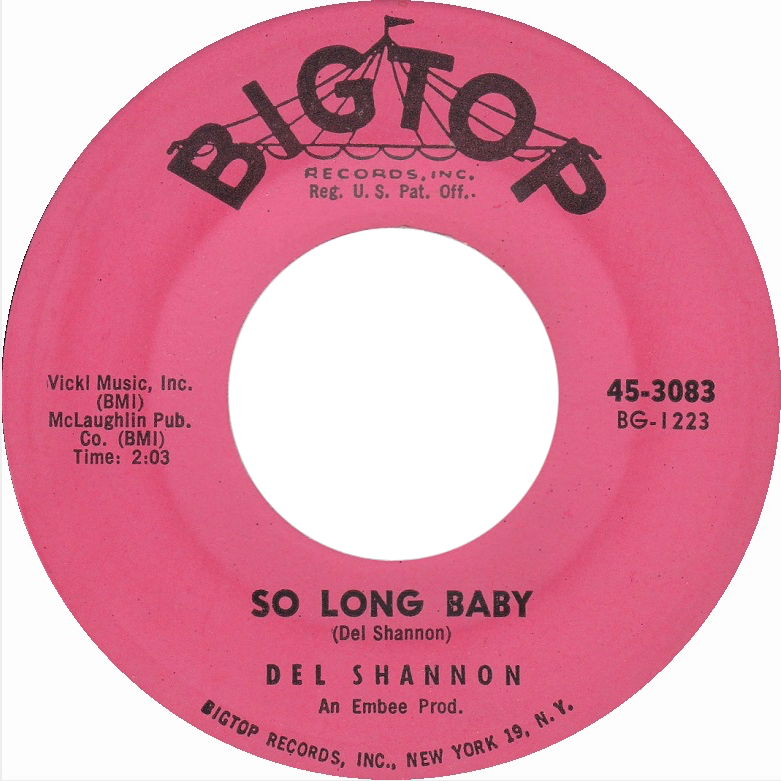
So Long Baby
Shannon’s third hit single of 1961, but while you might think he had hit a rich miserabilist seam and was busy mining it, he was cannier than that. This time another gloriously snarky lyric was barked out over a frisky polka beat and snorting saxes. A kazoo replaced the musitron. Sales hinted that Shannon’s biggest future audience was to be Britain. The song stalled at No.28 in the States, but gave him a third UK Top 10 hit.
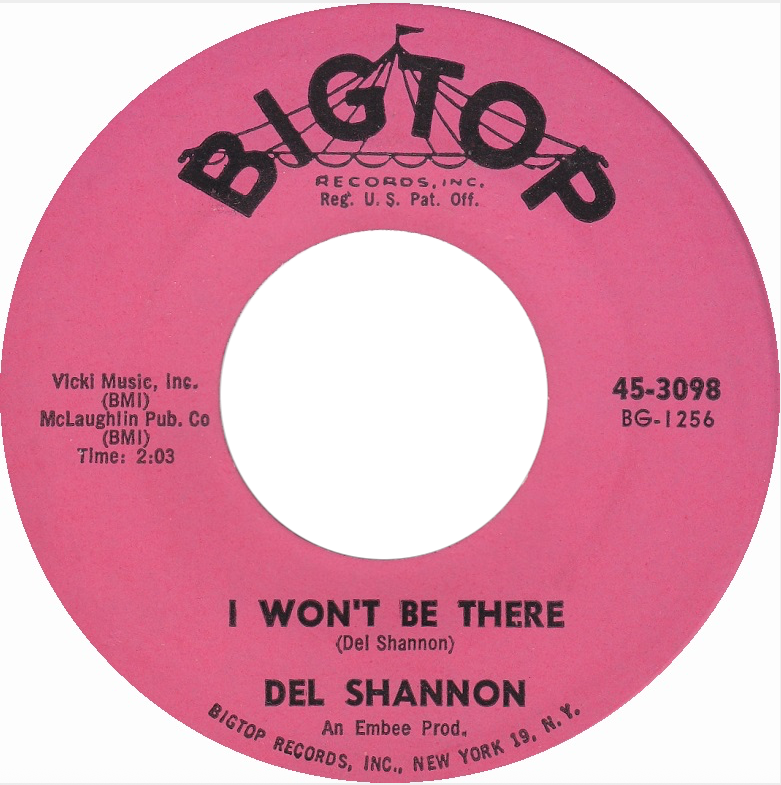
I Won’t Be There
A characteristic of Shannon’s recordings is their immediacy, hooks kicking in quickly. This one, after a ruminative intro, is a case in point. The musitron has gone and, superficially, he sounds less psychotic, merely sad. There’s a sob in his throat. Yet the falsetto is a yelp of pain. Recorded at the same session as the feeble, almost self-parodying Ginny In The Mirror and paired with it as a (failed) single. Also on the Hats Off To Del Shannon album.
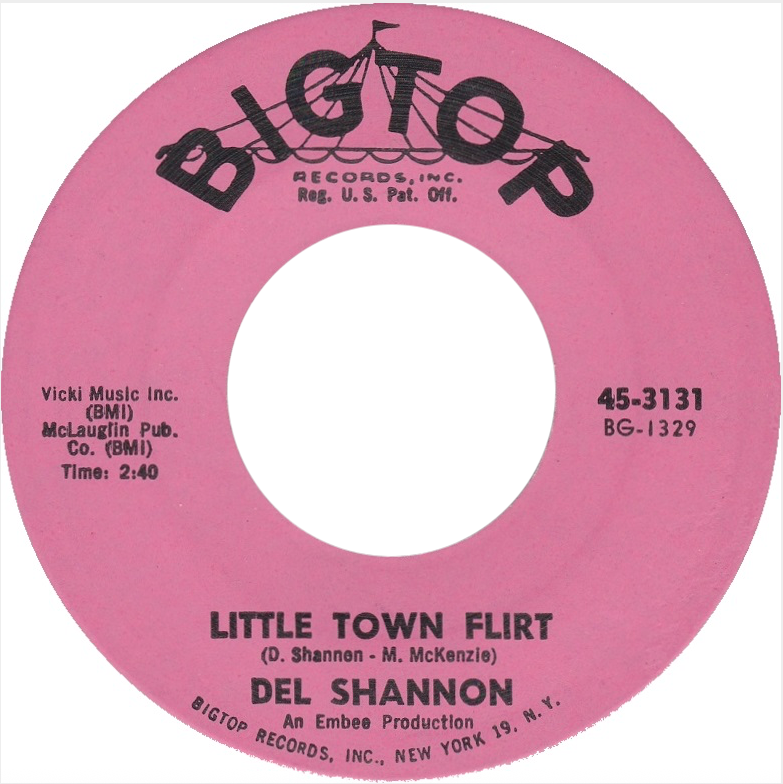
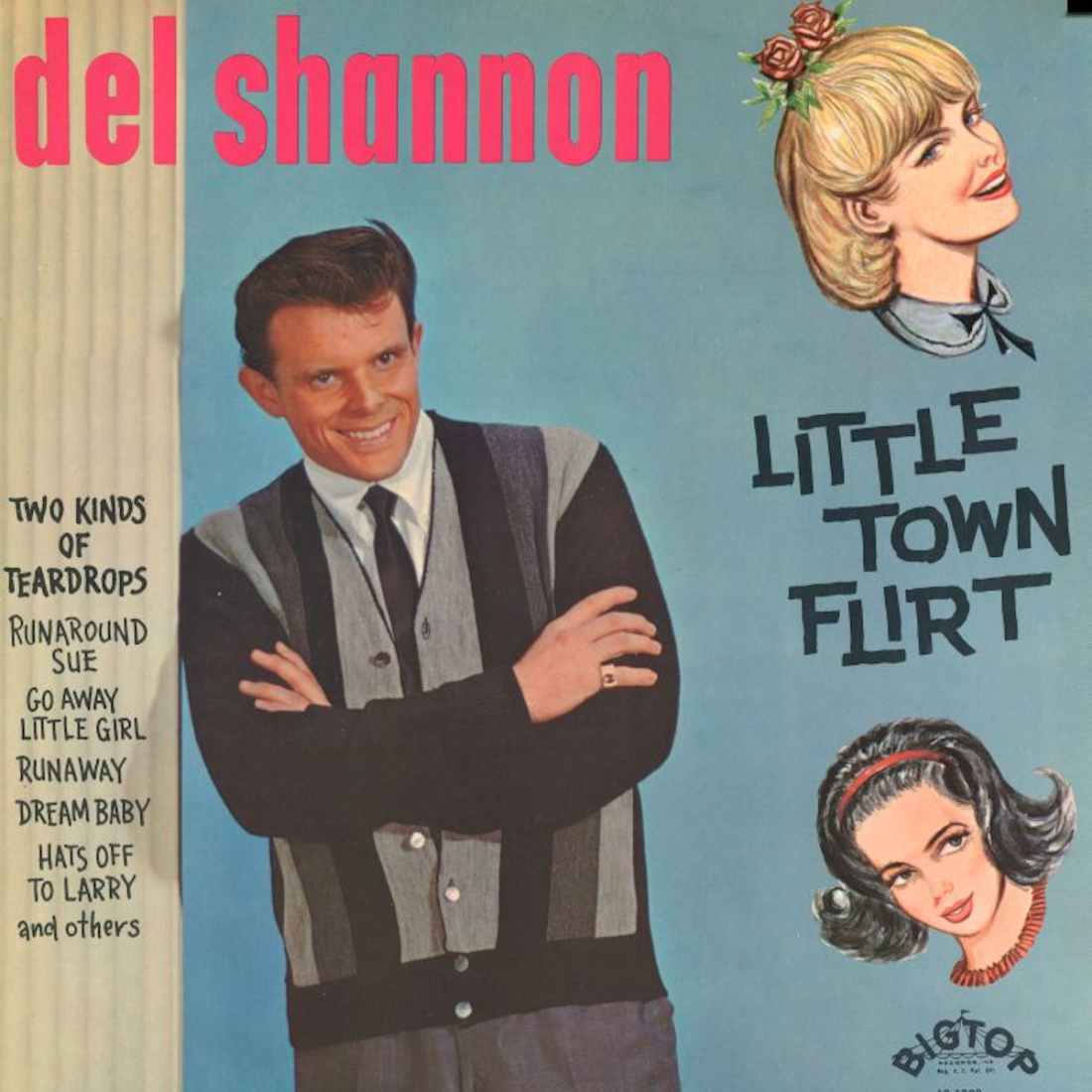
Little Town Flirt
A bit watery compared to earlier hits, this big seller from the end of 1962 anticipated the coming Merseybeat yet had echoes of doo-wop and girl group sounds. Shannon’s music always had a magpie quality, embracing old and coming trends. Months before they hit stateside with I Want To Hold Your Hand, he had taken a Beatles song, From Me To You, with its Shannonish major to minor key switch, into the lower reaches in 1963.
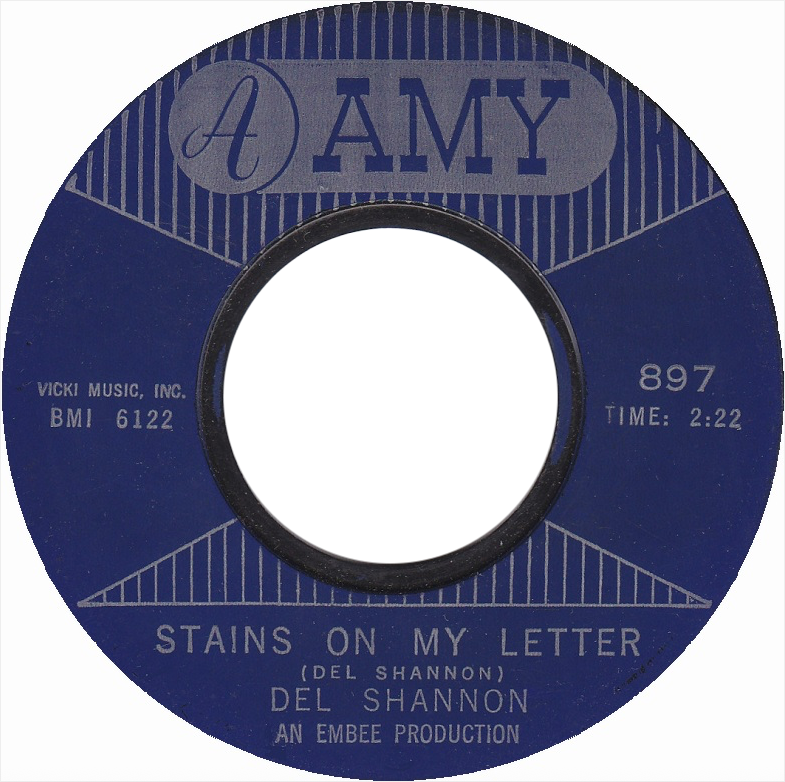
Stains On My Letter
B-side to Mary Jane, which charted in 1964. The top side sounds like Shannon had been listening to Dion. But the flip is definitely our Del, encapsulating desolation, heartbreak, anger and despair in the course of a single vocal performance. The mixture of “teen” crooning, catches in the throat, raspy “woah yeahs” and slightly unsteady falsettos shows he handled beat ballads as well as anyone.
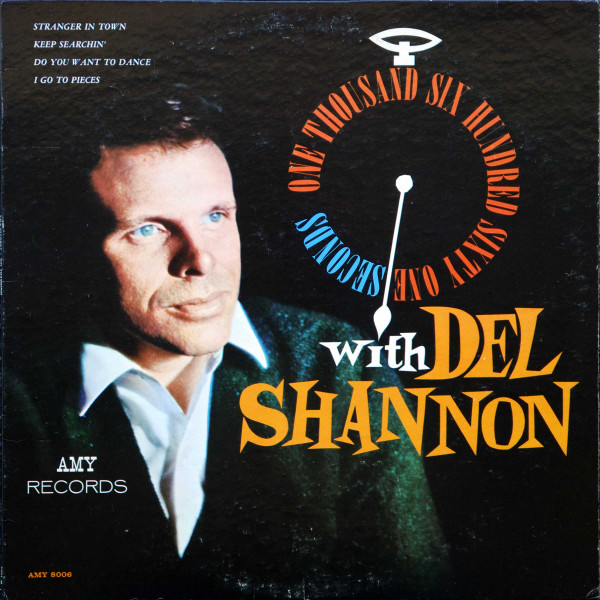
I Go To Pieces
One of Shannon’s favourites had a tortuous gestation. Originally written by him as an uptempo R&B number, early attempts to record it were unsuccessful, and The Searchers turned their noses up when it was offered to them. Eventually British vocal duo Peter And Gordon had a deserved hit with the song in 1965, but the version Shannon cut for his 1965 album 1,661 Seconds With Del Shannon, punchy yet yearning, is surely definitive.
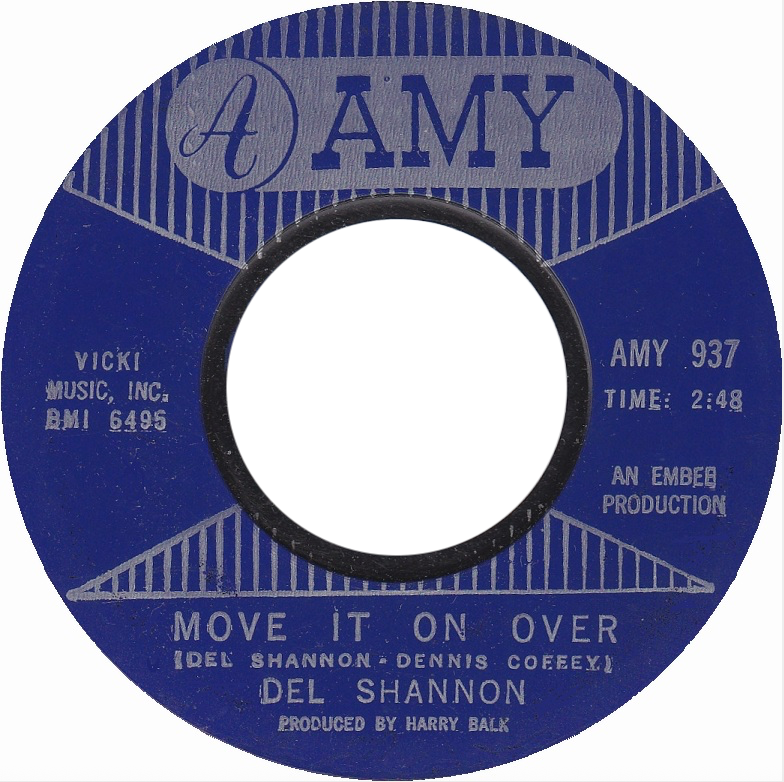
Move It On Over
Keep Searchin’ (We’ll Follow The Sun) and Stranger In Town were successful transplants of Shannon’s haunted outsider image into mid-60s settings. But Move It On Over, much heavier and substituting shouting for his usual soul, didn’t move the dial. A promising old school rock’n’roll guitar break is over in a flash. Shannon, so dispirited by the disc’s failure to sell, chucked a box of singles into the nearest lake.
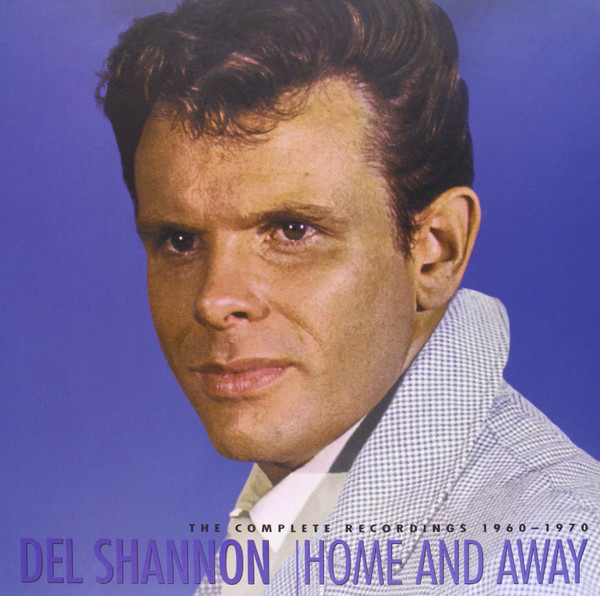
Never Be The Same
This unfinished work testifies to the everlasting wonder of Del Shannon, recorded in Hollywood in 1969 when he was barely registering as a star. Find it on Bear Family Records’ 8CD box set Del Shannon: Home And Away 1960-1970, and Demon’s Stranger In Town: A Del Shannon Compendium(2023). Both are stacked with gems like this where, no matter the style or backing, the unique voice of Shannon is bang centre.
KEY ALBUMS
Although not big sellers, even Shannon’s weaker albums are good listening…
Shannon made his name with a tense, moody style and his first album Runaway With Del Shannon (1961), two-thirds self-penned, doesn’t rein in the melodramatics. It is heartbreak almost all the way through, from Day Dreams to He Doesn’t Care. Only the lovely Jody offers tonal relief. The following year’s Hats Off To Del Shannon favours bubblegum pop, though The Everly Brothers-ish I Don’t Care Anymore evidences versatility. Slippage towards covering other artists’ songs is noticeable on Little Town Flirt and, title track excepted, Shannon’s own compositions are weaker.

Little Town Flirt (1963)
Yet sometimes the covers are high quality. On the 1964 album Handy Man Shannon nails Chuck Berry’s Memphis, The Drifters’ Ruby Baby and Peter And Gordon’s World Without Love (while there was an outstanding Maron McKenzie-penned bossa nova, I’ll Be Lonely Tomorrow). One Thousand Six Hundred Sixty One Seconds With Del Shannon (1965) does likewise with The Four Seasons’ Rag Doll. It also has two of Shannon’s best mid-60s singles, Keep Searchin’ (We’ll Follow The Sun) and Stranger In Town.
After an unsuccessful album project in London working with Andrew Loog Oldham, he dabbles in psychedelia on The Further Adventures Of Charles Westover (1968) and there is nothing tokenistic about the end result.
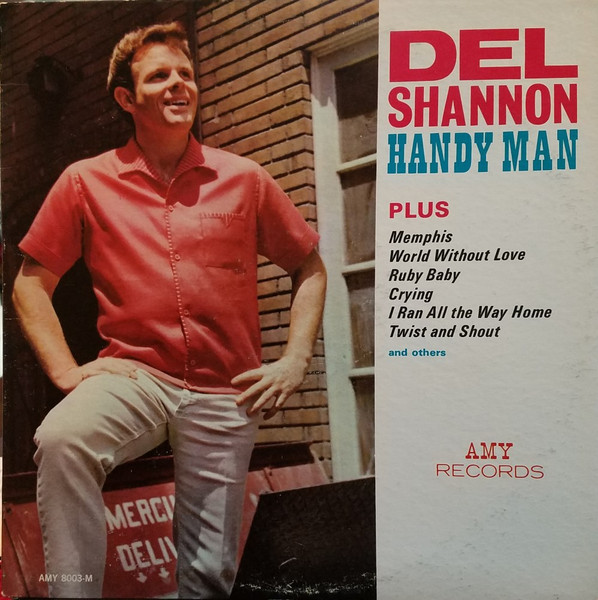
Handy Man (1964)
Sadly, it could not arrest Shannon’s gradual fading from the spotlight in the late 1960s, yet he remained an inspirational figure to many musicians, not least Tom Petty, who sought him out in the late 1970s and produced his “comeback” album, Drop Down And Get Me (1981).
It was favourably received by critics, and a single taken from it, a revival of Phil Phillips’ 1959 hit Sea Of Love, put him back in the US Top 40 for the first time since the mid-60s. Better tracks, though, are Shannon’s own compositions, To Love Someone, which did less well when issued as a single, and Never Stop Tryin’. The sadly posthumous Rock On! (1991) does no disservice to his memory.
THE SHANNON SOUND
How emotional range and a skilled falsetto brought a unique style to Del Shannon’s vocalising
On one reading, Shannon was a medium ranker. Many music histories omit him. His main hit-making period was confined to 1961 and 1962, stretching into 1963 in Britain, where he had a bigger following. Yet while some might boil his career down to Runaway, he had an unforgettable sound, and it wasn’t just down to Max Crook’s musitron keyboards.
Roy Orbison, endlessly acclaimed now, had a longer run of success, but in terms of vocal uniqueness Shannon should be up there with him. Shannon’s first wife Shirley Nash said that when he heard Orbison’s songs, they often reduced him to tears. Naturally he recorded some of them, including Dream Baby, Crying, Running Scared, and Oh, Pretty Woman.
Like Orbison, he was a rare singer able to raise an emotional reaction in the listener from the timbre and power of his voice alone. Dion told Rolling Stone for their Shannon obituary that when he heard him sing “it just did something to my insides,” such was the sense of mental, physical and spiritual attack sustained by Shannon.
Heartbreak Visionary
Raspier than Orbison, his voice had anger and urgency, underlined by the way he favoured key modulations between minor and major. But the killer touch was his exploitation of the falsetto. Shannon claimed he learned to sing it listening to The Ink Spots, but his usage could be chilling, though at other times he conveyed sensitivity and vulnerability with it. His early records did benefit from being made in New Yorks’s Bell Sound studio, with experienced producer Harry Balk in charge. When his vocal on Runaway sounded flat, the tape was sped up by an engineer to get him on key.
Shannon’s early song-writing and demo partner was Max Crook, and it was the high-pitched sound of Crook’s custom-made, three-legged electronic keyboard that had attracted Balk to the idea of recording the pair. Later an electronic sound made a return to some Shannon’s records, such as the covers of good time numbers such as Handy Man, the title track of his 1964 album, and Do You Wanna Dance.
Crook, who recorded in his own right as Maximilian, worked with Shannon again in the early 1970s. He made a guest appearance during Shannon’s show at the Princes Club, Manchester in 1972, released the following year as the album Live In England.
For more on Del Shannon click here
Subscribe to Vintage Rock here