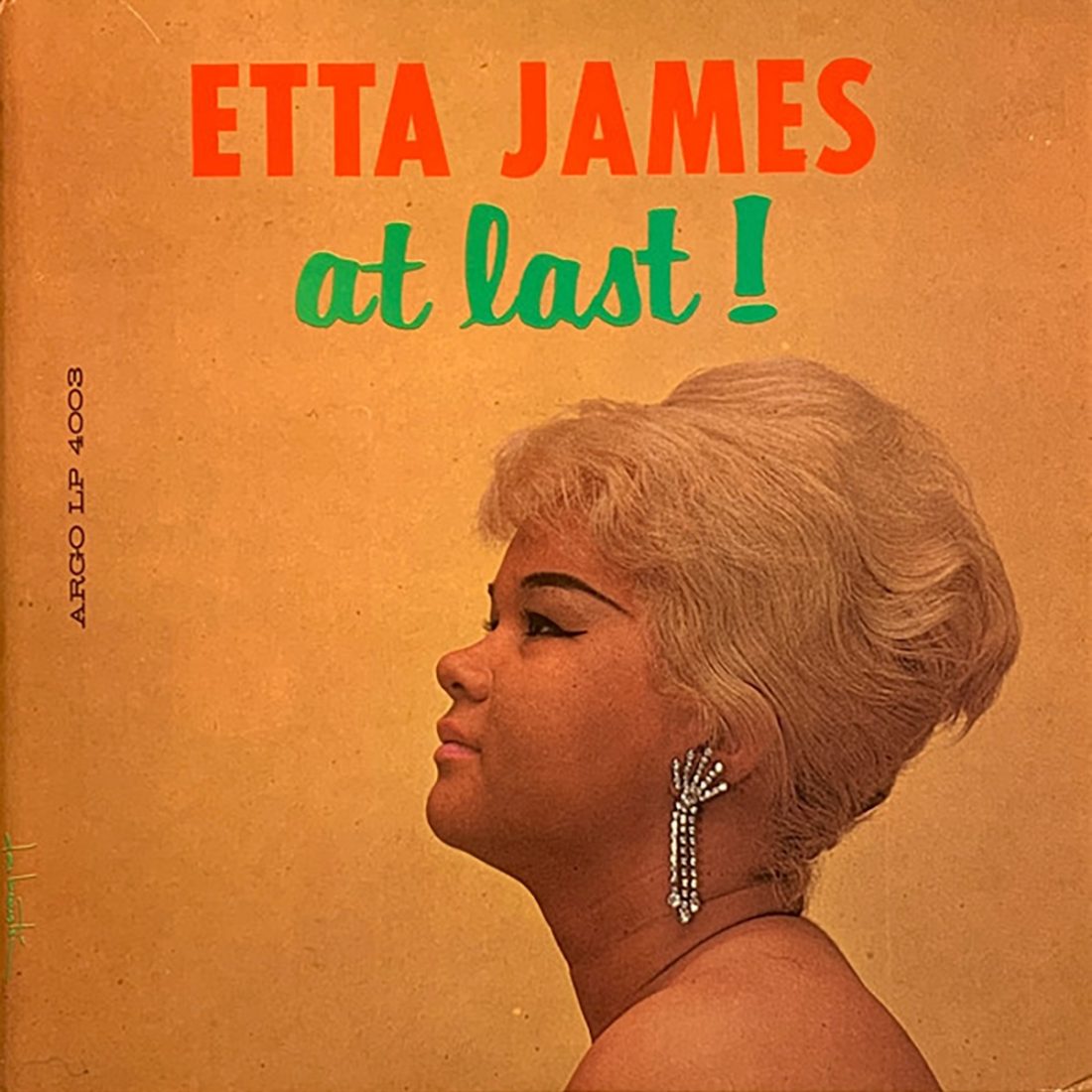
After her R&B and rock’n’roll beginnings stood her out as a serious contender, Etta James made the move to a fresh stable for a new lease of life. Vintage Rock revisits a remarkable and iconic debut album.
“If rock and roll is rooted in teenage passion, teenage rebellion, teenage restlessness, teenage sexuality,” writes David Writz in his Rock And Roll Hall Of Fame tribute, “then Etta James is a rock and roller to the bone.”
Etta James landed with the deliciously rollicking and marvellously risqué 12-bar The Wallflower – more commonly known by its original, far racier title, Roll With Me Henry. An answer song to Hank Ballard & The Midnighters’ million-selling 1954 classic Work With Me Annie, within its bars James sparred with (uncredited) doo-wopper Richard Berry and was sweetly backed by her vocal group the Peaches. Reaching R&B No.1, its heels dug in for a full month, followed into the Top 10 by her – now ubiquitous – solo sizzler, Good Rockin’ Daddy. It looked for a brief moment as if Modern Records had found themselves a new female superstar with the sass, strut and vocal prowess to rival the likes of LaVern Baker and Ruth Brown. But then things went mysteriously quiet.
Shining Bright
It would be a full five years on, after a move to Chess Records subsidiary Argo, and a complete stylistic overhaul, that James would finally drop another charter. Paired up with The Moonglows’ Harvey Fuqua, Etta shone bright on the lilting, rambunctious slow step, If I Can’t Have You. It was also her first entry into the Billboard Hot 100, and while only registering at No.52, Leonard Chess reportedly ran around Chess’ offices gleefully declaring “Etta’s crossed over!”.
Nonetheless, James’ move to Chess, now flirting with a pot pourri of nuanced motifs adopted from blues, soul and jazz, R&B and gospel, and often at the mic enveloped amidst lush orchestration, marked an upturn in her fortunes that would continue right through the 1960s. Putting a firm finger on that musical rebirth, though, is to do her a disservice. “What makes James a myth and a secret at the same time is how hard she is to classify,” agrees US music journalist Robert Christgau. “Blues, jazz, pop, rock, soul – she’s all of these and none, because what she really is is R&B, in its original sense: blues so fetching white people can’t help but love ’em even though they’re aimed at young Blacks.”
However you pitch it, it was a smooth manoeuvre, and it’s telling that Etta’s debut album didn’t arrive until the beginning of that decade with Chess. And as Christgau makes clear, regardless of how she was pitched, that bristling, juiced-up charge that defined her as a brassy teenage renegade never really left her. “Some people go through a period – maybe a year or two or three – where they rail against authority,” contemplated Etta in her memoir Rage To Survive. “In my case, the rebel period lasted for what seemed like several lifetimes. I was a fool who was smart enough to know I was a fool – and dumb enough not to care. Now that’s a real fool. Truth is, I enjoyed being a fool.”
The Blonde Bombshell
As such, the singer made a memorable commotion from the day she burst through her new label’s door. “Etta James was someone who knew how to make an entrance,” recalled Marshall Chess of his father’s new signing’s arrival. “I was in the Chess building when she first turned up in 1960. She walked down this narrow hallway and there was no missing her. She was a big lady in those days, maybe 200 pounds. And she was the first Black woman I’d seen with blonde hair.
“She had quite an entourage with her – a hairdresser, a dressmaker, a bull dyke lesbian dressed as a man, even a midget. It was like a live action Fellini movie. I never did find out the midget’s role in all of it. Etta always liked an entourage. She was a colourful character. She was drinking and taking drugs. She was out there. And she had this voice that my father knew how to get the best out of.”
With a power summoned from the depths of her being, coloured by her life struggles thus far, and with a deliciously husky tone at her disposal, At Last! set James high amongst the elite female singers – Billie Holiday, Ella Fitzgerald Sister Rosetta Tharpe, Big Mama Thornton, Ruth Brown, LaVern Baker, Bessie Smith, Nina Simone and Aretha Franklin – but it wasn’t until much later that her status would be truly recognised.
Turbulent Beginnings
Etta came from turbulent beginnings. And to get any kind of understanding – particularly for the casual listener – of how such seemingly bottomless passion and that enlightened soulful spirit could possibly have been forged, one must return to those early troubled years.
James never knew for sure who her father was, though she suspected it was the pool hustler Rudy ‘Minnesota Fats’ Wanderone, who she later came to meet in 1987 in Nashville and who gifted her a gold watch. Her mother Dorothy was just 14 when Etta, then Jamesetta Hawkins, was born in 1938. Dorothy’s older sister Cozetta and husband James became her legal guardians until she was six months old, before she was passed on to a series of foster parents, experiencing plenty of maltreatment along the way.
James was no doubt a lonely three-year-old when her eventual signature song, At Last!’s title track, first aired, performed by the Glenn Miller Orchestra back in 1941.
Two of her more caring guardians, Lulu and Jesse Rogers, helped her begin her career as a professional singer in her teens, signing her up for tap dancing, ballet and drama classes. She was part of “one of the biggest, baddest, hippest choirs anywhere” at her church, St Paul Baptist Church and would be mentored by its choirmaster, Professor James Earle Hines, as well as taking piano lessons and appearing on local radio.
Lulu’s death in 1950 was surely a tough break and saw James dislocated once again, to Dorothy’s older brother. A period of upheaval followed, with Etta passing through various schools and crossing the tracks to join the Lucky Twenties street gang , where a violent scuffle even led to a short stint in juvenile detention.
A Real Peach
It was with the Creolettes (soon to become the Peaches), formed with her friends Abye and Jean Mitchell, that James, now 16 and with her mother behind bars, found an audience with Johnny Otis – “the one who flipped everything around,” says Etta. Otis gave the singer her new moniker and hooked them up with L.A.’s Modern Records, a move that led to their 1954 recording of Roll With Me Henry. (Known for doing the same with LaVern Baker’s tunes, much to their chagrin, Georgia Gibbs would later cash in, taking her vanilla version to No.1 in the pop chart.)
Those formative years, then, and the hardwon stripes earnt playing the Chitlin’ Circuit, shed some light on the boisterous, salty undertones that carry At Last! somewhere unique to Etta. It was a passage that gave her the guts to know her worth in a male-dominated industry: “I was lucky to have the lungs to keep up with these bad boys,” she quipped in her memoir. “When it came to singing, I was no shrinking violet.” Having tired of what she lovingly called “quickie teenage rockin’,humping and bumping ditties,” At Last! would bear more cultured fruit.
“I was no longer a teenager,” affirmed James. “I was 22 and sophisticated. Or at least I wanted to be sophisticated. So when Harvey [Fuqua, then James’ boyfriend] got out his Book Of One Hundred Standards and began playing through old songs, I got excited. I saw in that music the mysterious life that my mother had led when I was a little girl, the life I secretly dreamed of living myself. I wanted to escape into a world of glamour and grace and easy sin.”
While the songs picked out for her debut had been conceived – and performed – by others, the feelings and depth of emotion with which they were so deftly delivered no doubt resonated with that chequered history – and became entirely hers.
Show Of Strength
At Last! is a sparkling achievement, its jazzy arrangements and R&B essence melding in a singular mix, its songs exploring love and relationships, yet bottling – distilling – deep feelings of isolation and loneliness alongside an equally powerful show of strength. It’s perhaps telling that, at 59, James released a collection entitled Love’s Been Rough On Me, a sentiment that plays out throughout At Last!
Some have decried conductor Riley Hampton’s arrangements on the LP as unprogressive, generic, staid and rather unimaginative, which holds some weight, yet while his orchestrations follow the straightest of paths in service to the song, they at least for the most part hold up Etta as the main attraction.
Opening with the yearning cry of “I’m so blue/ ’Cause I’m worried over you” introducing the lilting, string-soaked bars of Anything To Say You’re Mine, it’s a lonely love letter of hope to a departed lover, penned by R&B bandleader Sonny Thompson, that encapsulates that fleeting feeling of lost love slipping through grappling fingers.
It’s followed by yet more verses of devotion and love, from the twitching sway of My Dearest Darling through the piano-led Trust In Me, James voice at its most affecting as she becomes her lover’s pillar of strength – “Love will see us through/ If only you trust in me.”
The smoky jazz-inflections of Louis Prima’s Sunday Kind Of Love slinks sweetly along, Etta inhabiting “a lonely road that leads to nowhere”, still on the search for her someone, breathing renewed life into the lines that only a select group could muster. Thrusting us to the dancefloor with its jittering R&B groove, Tough Mary stirs things up to close Side One, resting on some overly saccharine, lightweight backing that only serves to elevate the immensity of Etta’s tones.
Walking The Walk
Flip the record over for James’ defining version of Muddy Water’s Willie Dixon-penned 1954 hit I Just Want to Make Love To You. It’s blues-meets-jazz at its core, but it’s Etta’s impassioned delivery – seamlessly slipping from honking scream to creaseless softness – that commands the attention. It’s another tune that turns up everywhere these days, not least – rather depressingly – as the soundtrack to Diet Coke breaks everywhere.
And then, of course, comes At Last. Penned by hit Hollywood songwriting duo Mack Gordon and Harry Warren for a 1941 musical romcom, Sun Valley Serenade, the album’s title track made the charts via a rearranged version, again by the Glenn Miller Orchestra, but this time with vocals sung by Ray Eberle and Lynn Bari for the Orchestra Wives movie. James’ timeless rendition revamped it completely and made R&B No.2, just missing the Pop Top 40, the year after the album landed.
Plaintive, feather-light and resting on a simple twinkling piano and distant backing vocal chorus, All I Could Do Was Cry is a moonlit, doo-wop-inspired prom night delight. As Etta sings “She was standing there with my man/ I heard them promise ’til death do us part/ Each word was a pain in my heart”, it’s left many an audience dewy-eyed – no one can sing about rice being thrown in such a poignant way. It’s a wondrous soul confection and sets the stall for the toned down mood of Side Two. A starlit take of the much-covered torch song Stormy Weather maintains the melancholia, no sun in the sky for a protagonist once more at sea without her love. Etta takes Ethel Waters’ 1933 original release and drives it eloquently forward. (The Five Sharps’ rough-cut version from 1952 is a collector’s holy grail and worth an absolute ton.)
The soulful teen-pop of Girl Of My Dreams wraps up the album adequately, Etta switching up the genders, yet again yearning for her man. It’s not one of the LP’s shining moments, and an odd choice to close the curtain, but decent enough.
Crowning Masterpiece
While punters enjoyed a more glamorous, sophisticated Etta on record and in concert halls up and down the country, her life outside of the public realm was as wayward as ever and her love of heroin soon set in hard, dwelling in “the never-never land of unreality, the place of spaced-out cool”; James even stealing and pawning her own band’s equipment to pay for her habit. By 1964, she was under lock and key, serving a four-month-stint in Cook County Jail.
It wasn’t until her fifties that Etta escaped the charm of the chase, finally rid of her demons and rightfully heralded as a musical legend. In 1993, when belatedly inducted into the Hall Of Fame, over three decades after her debut album’s release, James celebrated the occasion with a roof-removing rendition of that sumptuous title track. A fitting song for the moment if ever there was one. It was the centrepiece of a collection that is, for many, her finest recorded achievement. When that crowning masterpiece landed in 1960 it was a miracle, and tuning in over six decades later its elegance has ripened delicately with time – and will likely continue to do so for generations to come.
And while it’s perhaps equally as apt that Beyoncé performed At Last at Barack Obama’s inaugural White House ball in 2009, in characteristic form, James was having none of it, an opinion aired over the mic at one of her shows shortly after (“She has no business up there, on a big ol’ president day, singing my song,” she scowled to MTV).
“Etta James is one of the few vocalists, whether it be R&B, blues, country or rock’n’roll, who sings truth into every note,” gushed KD Lang as she introduced James to the Hall Of Fame. “For a song cannot be sung until its singer has learned and has a grip on both its freedom and its cage. Etta James has seen truly both sides in her life and in her music… Her passion allows us to read between the lines and to understand fully the emotion of the song. For she has lived what she sings – that’s what makes Etta James great.”
Stream Etta James here
Subscribe to Vintage Rock here