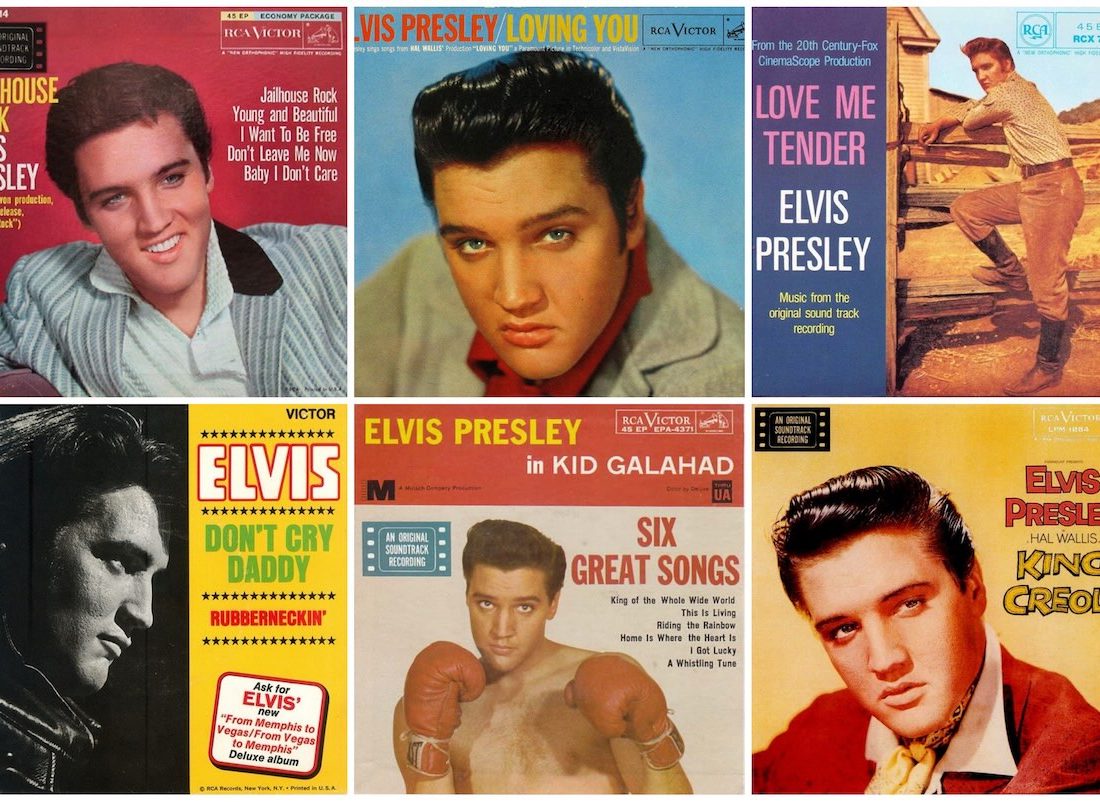
Elvis Presley cut a diverse catalogue of music to accompany his many movies from wild rockers to epic tearjerkers and while some songs are best consigned to history, there’s plenty that deserved the bright lights of Hollywood… Here we presents our Top 20 Essential Elvis Presley Movie Tracks
In 1956 Elvis Presley told the press he “wouldn’t care too much about singing in the movies,” but by the end of March that very year he was lip-syncing to Blue Suede Shoes at a screen test for Paramount movie producer Hal Wallis. It seems Presley was a victim of his own ability as Wallis witnessed that undeniable presence translating effortlessly from stage to screen before his eyes.
Elvis would go on to record songs for every one of his motion pictures, a fair proportion of which get a bad rap. But when we consider he’d arrived as a wild young rockabilly only to become little more than a cash cow for Hollywood’s saccharine profiteering, it seems churlish to criticise those sappy, silly and underwhelming tracks that even Elvis himself knew all too well fell far short of his usual standard.
In truth, though, Elvis’ movie catalogue holds many treasures from enduring classics to under-the-radar gems. The stats say it all. Of the 14 soundtracks that made the Billboard Top 20, all bar three were Top Ten with four stealing the summit. Plus, in amongst that lot, he had four No.1 singles. Not too shabby for a period that can all too often elicit a disapproving sneer. With that in mind, we’re coming in loaded with our handpicked playlist of 20 of Elvis’ finest big-screen productions. Enjoy!
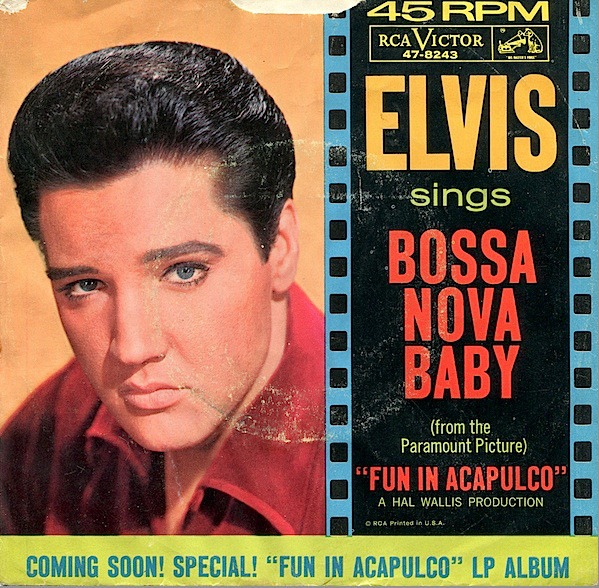
20 Bossa Nova Baby (Fun In Acapulco – 1963)
Performed during the club scene in throwaway musical comedy Fun In Acapulco, this classy Hollywood-meets-Latino dancer was written by Lieber and Stoller and cut at Hollywood’s Radio Recorders in January of 1963. Elvis handled it well, but Mike Stoller still favoured the original, released the previous year. Titled The Bossa Nova (My Heart Said), the first incarnation was a soulful, light-stepping take cut by R&B group Tippie And The Clovers and issued through Lieber and Stoller’s own Tiger imprint – Roosevelt “Tippie” Hubbard’s enchanting lead alone makes this well worth tracking down. Unsurprisingly, it was Presley’s version that stole the glory, landing in the Billboard Top Ten and scoring a perfectly heathy No.13 in the UK.
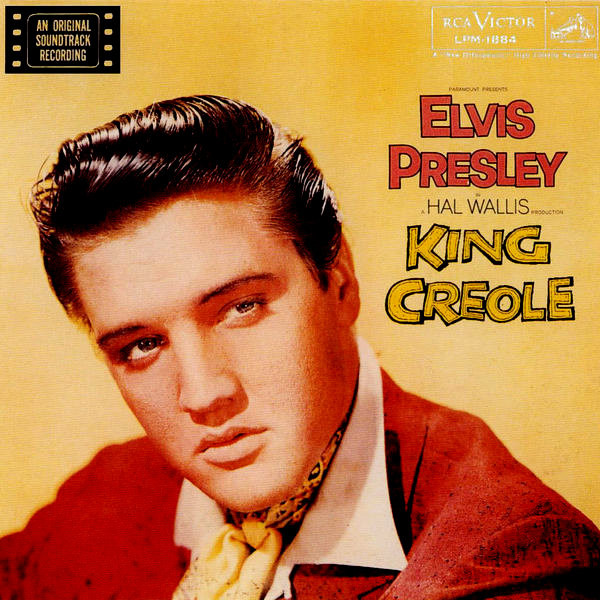
19 Trouble (King Creole – 1958)
Not to be confused with Elvis’ mid-70s single T-R-O-U-B-L-E, this brassy number finds Lieber and Stoller borrowing heavily from Muddy Waters’ 1954 stop-time blues Hoochie Coochie Man (written by Willie Dixon) for a movie song that was supposedly intended as a joke. Cut in January 1958 with Scotty Moore on guitar, Elvis performs this lurching New Orleans-style romp as bus boy Danny Fisher in King Creole, Presley’s own personal favourite of his movies. He clearly loved the song as well, choosing it to open the ’68 Comeback Special. Other artists to take it on include Jackie DeShannon, who cut it in 1959, Vince Taylor And The Playboys, and Johnny Hallyday, whose French language version, La Bagarre, was released in 1962.
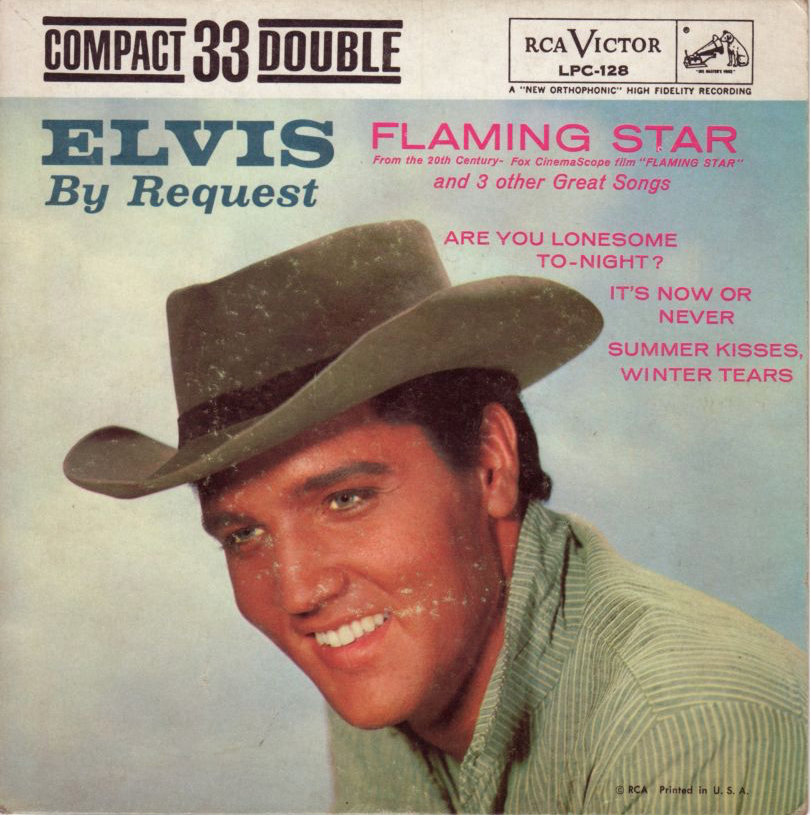
18 Flaming Star (Flaming Star – 1960)
Despite the soundtrack for his previous film G.I. Blues performing well, Elvis insisted attention be focused on his acting ability in Flaming Star, a gritty western widely considered as one of his better performances. Of just two tracks that appear in the film, this dogged cowboy theme is the superior with the “flaming star of death” as its brooding subject. In fact, the song was originally darker still, recorded as ‘Black Star’ before being re-cut when the movie’s title was changed. Flaming Star remained unreleased until a DJ bootlegged the song in the cinema and cheekily dispersed it over the airwaves, pushing RCA into an official release. It appeared on the Elvis By Request EP, to help promote Elvis’ USS Arizona Pearl Harbor benefit show.
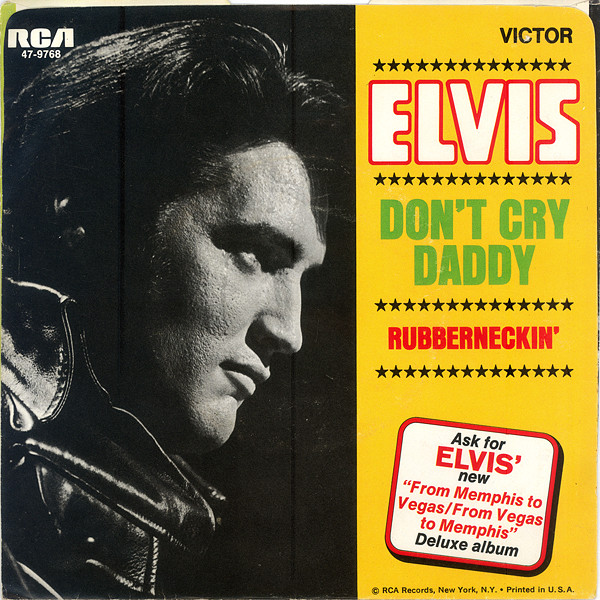
17 Rubberneckin’ (Change Of Habit – 1969)
The excellent Rubberneckin’ was recorded during Elvis’ first session in Memphis since he’d left Sun Records back in 1955, having cut his RCA material in Hollywood or Nashville. Mere weeks after his triumphant ’68 Comeback Special, Elvis and band indulged in all-night sessions at the humble American Sound Studio with owner Chips Moman behind the desk, and the resulting material is amongst his finest. Dory Jones and Bunny Warren’s Rubberneckin’ is a fine example, featured in the last of Elvis’ movies, Change Of Habit, but released alongside Don’t Cry Daddy, making Billboard No.6. In 2003, DJ Paul Oakenfold recast the track into a floorfilling UK No.5 hit, a single from RCA’s ELVIS: 2nd To None compilation album.
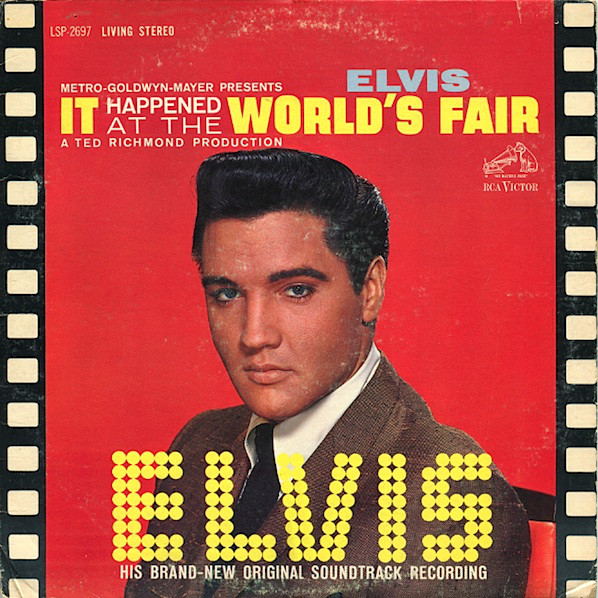
16 They Remind Me Too Much Of You (It Happened At The World’s Fair – 1963)
Appearing in It Happened At The World’s Fair whilst a pensive Elvis rides a monorail with seven-year old co-star Vicky Tiu and a giant red teddy, this tranquil ballad almost didn’t make the film. “There was a moment, when I had to fight for They Remind Me Too Much Of You, when someone mentioned that it resembled Chapel In The Moonlight…” said songwriter Don Robertson. “I was afraid they were going to throw the song out of the session, so I worked out new opening notes at the piano. Then I went over to Elvis where he was standing in front of his vocal mic and I sang him the new notes.” Luckily for us, it worked!
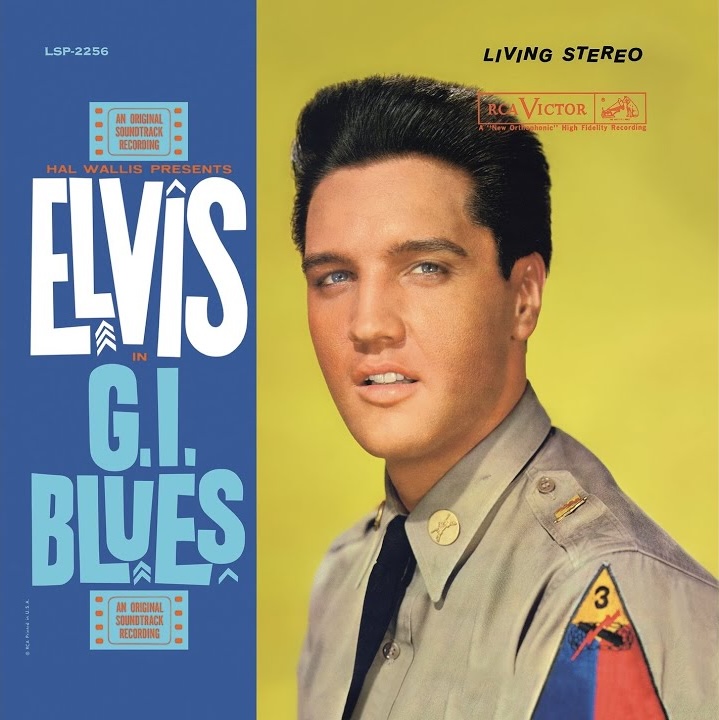
15 Pocketful Of Rainbows (GI Blues – 1960)
This strangely enchanting piece of balladry from Fred Wise and Ben Weisman was given an otherwordly sheen thanks to some sirenic backing vocals from soprano Loulie Jean Norman, delivered in the movie as Elvis and co-star Julie Prowse are hanging in a cable car above the German hills. The song was put together on the third and final session for the movie in May 1960 using a cast of top West Coast sessioneers including pianist Dudley Brooks, guitarist Tiny Timbrell, and some accordion from Jimmie Haskell. While purists will run for cover, those in search of something different may wish to seek out Agostino Carollo Spankox’s Re:Volution album with a reggae (yes, reggae!) remix of this dreamy serenade.
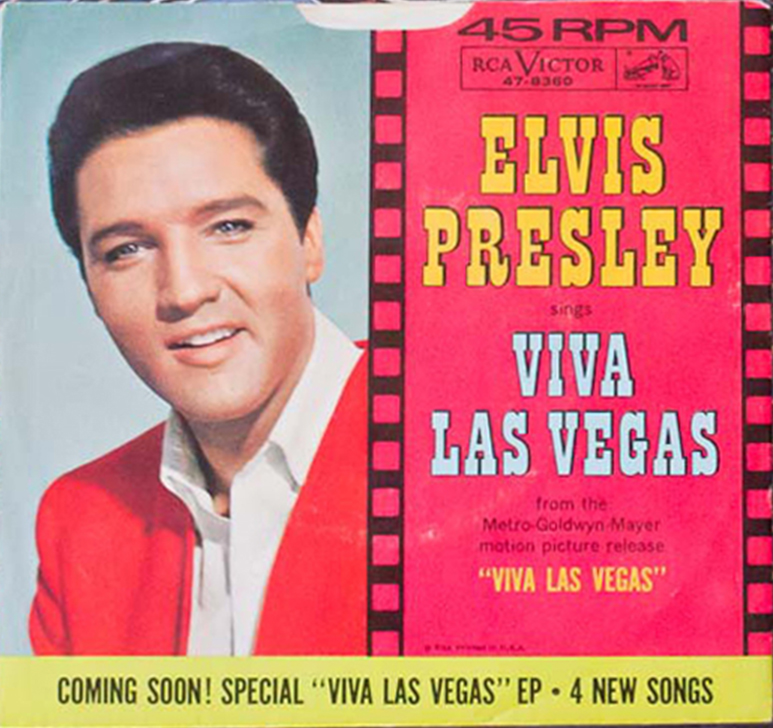
14 Viva Las Vegas (Viva Las Vegas – 1964)
Doc Pomus and Mort Shuman provided this excitable, latin-flavoured perennial for MGM’s glitzy film of the same name, outlining the joys – and hazards – of Sin City. Their song would, of course, become one of Elvis’ biggest and grow in stature as the Vegas theme tune – with a little help from Dead Kennedys’ 1980 punk version, ZZ Top’s 1992 UK Top Ten version and plentiful airings on TV and in cinemas. Elvis cut the song in Tinseltown in July 1963, backed by the largest number of musicians he had ever worked with (note the frantic rhythm from a trio of drummers (!) and some fluid soloing from Billy Strange). Issued as a single, backed with a hot take on Ray Charles’ What’d I Say, it made No.29 in the US.
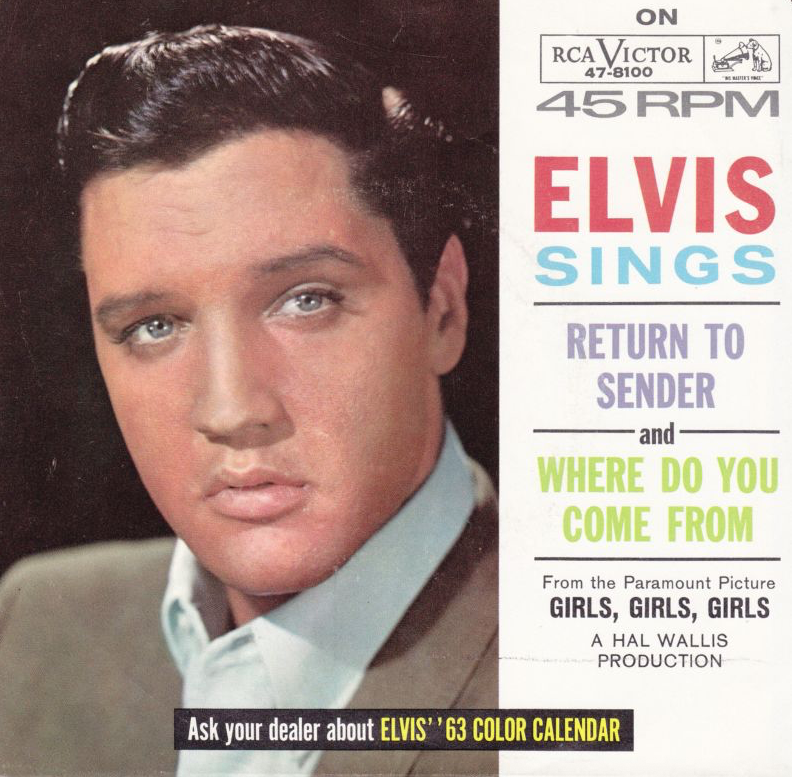
13 Return To Sender (Girls! Girls! Girls! – 1962)
This pop classic came from the prime pairing of Otis Blackwell (who penned seven brilliant songs for Elvis) and Winfield Scott (who’d supplied R&B greats such as LaVern Baker). The pair were inspired having been returned a demo stamped with the words now so familiar in the lyrics. Luckily for the duo, producer Hal Wallis loved it so much that he re-wrote the script solely in order to fit it in. With Boots Randolph’s sax to the fore, the song made UK Christmas No.1, falling one shy in the US. It sold in excess of two million and became Elvis’ third platinum record of the year, triggering a run of wrongly addressed mail, posted in order to receive the ‘Return To Sender’ stamp, a trend repeated in the 90s when the US Post Office issued an Elvis stamp.
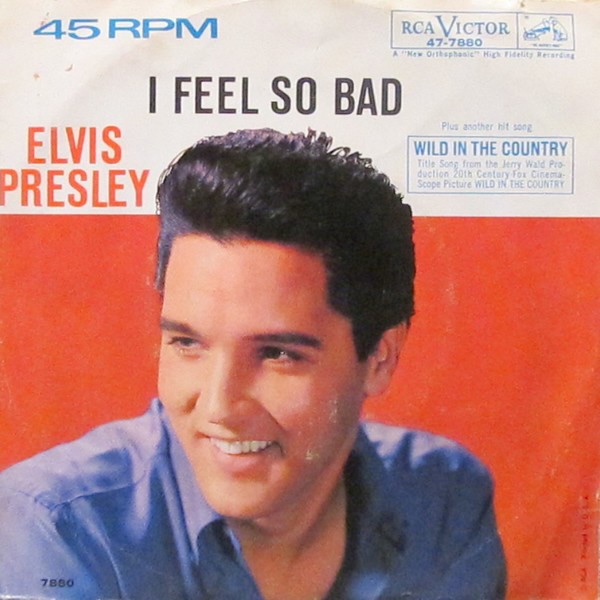
12 Wild In The Country (Wild In The Country – 1961)
Filming began for Elvis’ seventh feature in November 1960 after the decision had been made to adapt Clifford Odets’ original screenplay to include songs. Six ballads were laid down at the session with four making the final film, one being the title tune, cut in the first week of the month, with overdubs added later (the unfinished studio takes are well worth a listen too). Elvis turns on his most immaculate vocal tone over this gentle piece of acoustic balladry, augmented by some equally sublime supporting harmonies from The Jordanaires. Issued in May 1961, the single reached No.26 on the Billboard and made the UK Top Five with help from a few glowing reviews: NME’s David Cardwell thought it “Elvis’ best so far!”
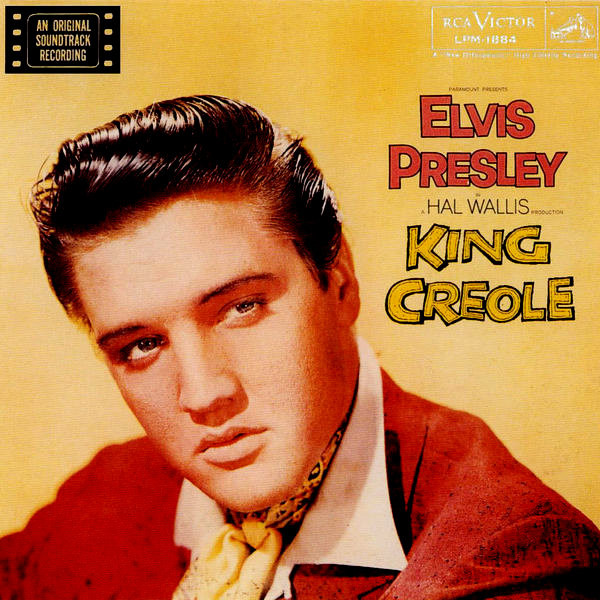
11 Crawfish (King Creole – 1958)
Paramount’s King Creole gets underway in the French Quarter of New Orleans with Elvis’ character Danny Fisher casually leaning out of his apartment window to duet with the crawfish vendor on her cart in the street below, a bit-part perfectly executed by jazz singer Jean “Kitty” Bilbrew (aka Kitty White). It’s easy to forget that the two characters are singing about the qualities of a freshwater crustacean and not some illicit dalliance, although the lyrics are open to some interpretation. Penned by Fred Wise and Ben Weisman, two of the most prolific of Elvis’ movie songwriters, this creeping delight was cut in seven takes on the first day of the King Creole studio sessions at Radio Recorders in Hollywood.
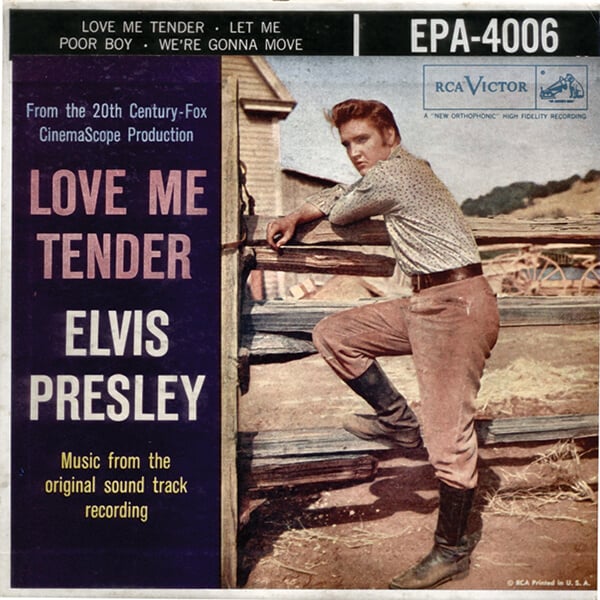
10 Love Me Tender (Love Me Tender – 1956)
Love Me Tender took almost a century to reach Elvis. Published in 1861 as Aura Lea, the track became a favourite amongst the troops, before being adapted by barbershop quartets post-Civil War. It appeared in 1936 movie Come And Get It, 1952’s The Last Musketeer, and in 1955’s The Long Grey Line, before being recast for the Hillbilly Cat with new lyrics, likely written by the musical director Ken Darby. Elvis’ first ballad was finally cut in August 1956 on Fox’s soundstage with Darby’s Trio in support. Love Me Tender became the first single in history with advance orders of over a million, holding the US No.1 for five weeks having knocked Elvis’ own Don’t Be Cruel/Hound Dog from the top spot.
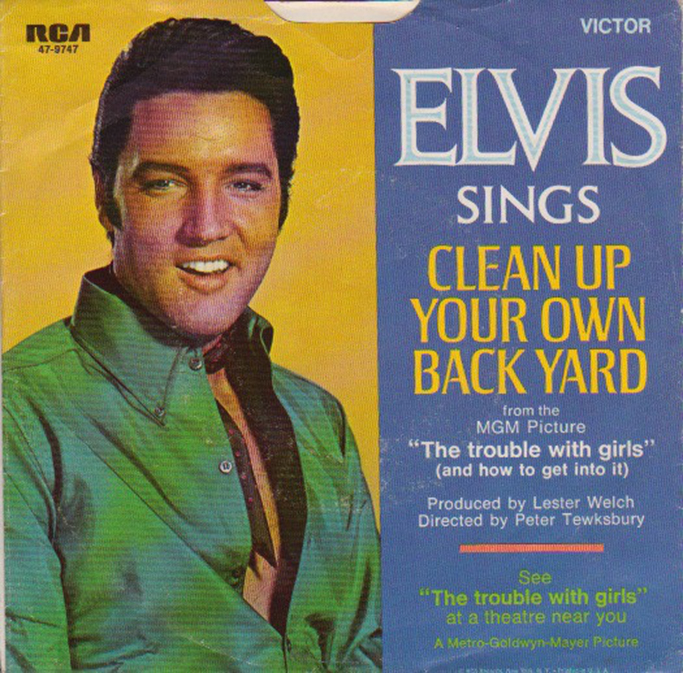
09 Clean Up Your Own Backyard (The Trouble With Girls – 1969)
Elvis appears in pristine cream suit, brilliant white tie and sky blue shirt to croon Billy Strange and Mac Davis’ Clean Up Your Own Backyard to a beaming audience in MGM’s The Trouble With Girls. It’s a groovesome blend of bluegrass, country blues and gospel, with some great lines lambasting ‘back-porch preachers’, ‘drugstore cowboys’ and ‘armchair quarterbacks’ and it instantly makes the movie a whole deal better. Cut in October ’68, enhanced via gospel overdubs from The Blossoms (Darlene Love, Jean King and Fanita James), and released in summer ’69, this cool, calm and collected gem just squeezed into the US Top 40.
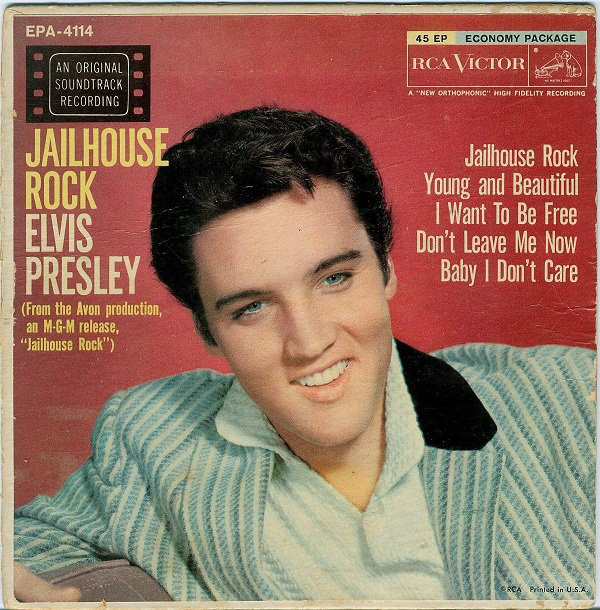
08 (You’re So Square) Baby I Don’t Care (Jailhouse Rock – 1957)
Lieber and Stoller’s Baby I Don’t Care is notable for the fact that it features Elvis on electric bass – he laid down the part on the new instrument when a frustrated Bill Black had struggled to make the transition from upright. It was the final track recorded during the Jailhouse Rock sessions and by then the studio was really cooking on gas. “The fourth song was the most fun because by then Elvis was deep into our producing style,” recalled Lieber. “Elvis’ initial shyness had totally melted away and he was completely in the spirit of the music…” The rest of the band were deep in flow too with Scotty’s playful riffing marrying perfectly with Fontana’s thumping rhythm.
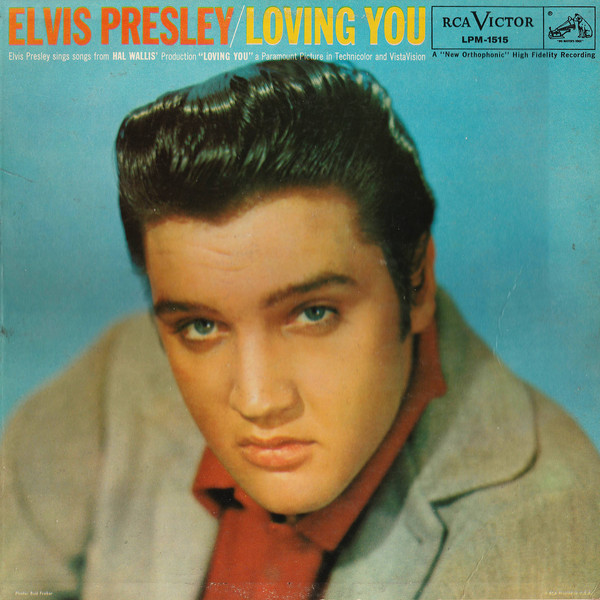
07 Got A Lot O’ Livin’ To Do! (Loving You – 1957)
This rocking hillbilly boogie gave a welcome lift to Elvis’ sophomore movie Loving You. In fact, the track was performed twice in the film: once at the beginning when Elvis (as Deke Rivers) appears with Scotty, Bill and DJ (all in western gear) at a governor’s campaign rally, and again broadcast on TV at end, with a hip-shaking Elvis in double denim causing a stir amongst the older members of the audience (including a cameo from Elvis’ parents). From its exuberant backing to its tremulous vocals, this track sparked a lasting relationship with songwriter Ben Weisman, one of the better examples of Elvis’ output after the move to RCA. Weisman would write more for Elvis than any other – this one he co-wrote with Aaron Schroeder.
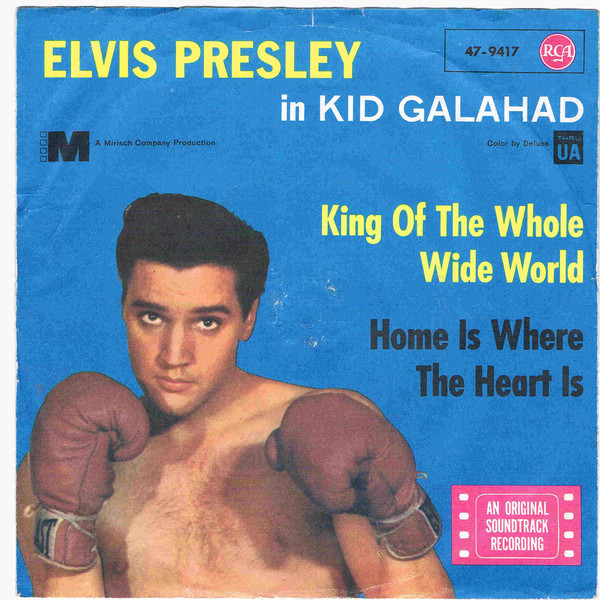
06 King Of The Whole Wide World (Kid Galahad – 1961)
Recorded in October ’61 and released on the Kid Galahad EP in August ’62 to coincide with the film’s premiere, this big band rocker took two whole days to nail down. Written by Ruth Batchelor and Bob Roberts (who wrote for Clyde McPhatter and would pen plenty more for Elvis), this track and the surrounding sessions featured a heady cast of talent including the ever-present sax of Boots Randolph and lead guitarist Tiny Timbrell. In the movie it was aired over the opening credits as Elvis’ character Walter hitches a ride on the back of a flat-bed truck returning from army duty. The song reached No.30 on the Billboard, while the EP hit the summit in the UK.
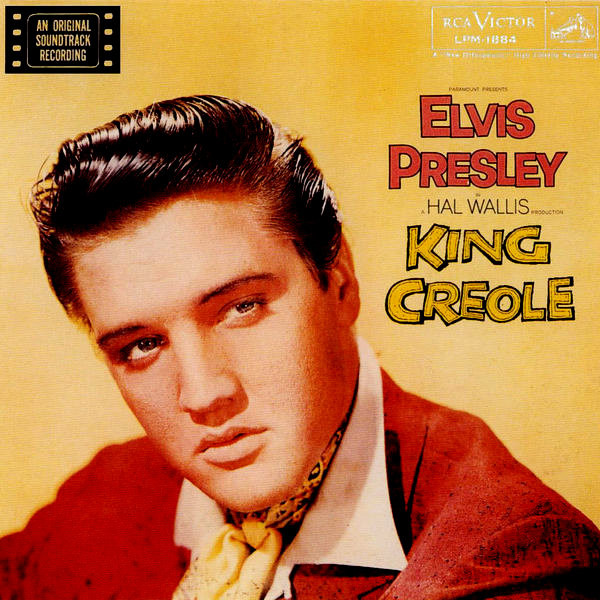
05 Hard Headed Woman (King Creole – 1958)
It’s all over in under two hot minutes, but it took 10 takes to complete this horn-driven classic. Written by Claude Demetrius, who penned tracks for the great Fats Domino amongst others, Hard Headed Woman features only as background music in King Creole, but soared when uncoupled from the film. With Elvis serving in Germany, the single held the Billboard summit for two weeks, becoming the first rock’n’roll platter to secure gold certification and, despite potentially inflammatory biblical references leading to a ban from the prudish British airwaves, it still made UK No.2. Wanda Jackson flipped the lyrical misogyny on its head when she growled her way into music history with her riotous take aired on Town Hall Party the same year.
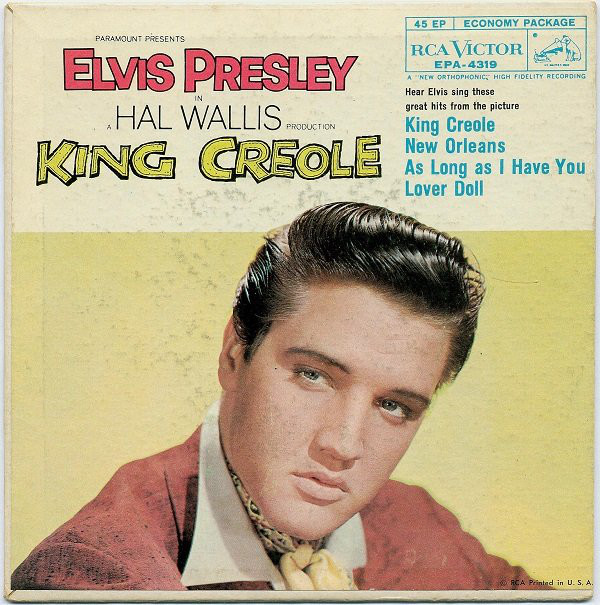
04 King Creole (King Creole – 1958)
Hollywood big fish Marlon Brando was poised for the role of antihero Danny Fisher in the noir-leaning black and white drama King Creole, but thankfully turned it down. Had he accepted, one of Elvis’ better performances and one of his finest soundtracks would not have come to pass. Even previously poison-tongued critics bowed to his efforts on seeing the movie (“Well cut my legs off and call me Shorty, Elvis Presley can act,” opined New York Times critic Howard Thompson). Presley was clearly comfortable in amongst a seasoned cast and a clutch of stellar songs – Crawfish, Hard Headed Woman, Trouble and this super-slick theme – took care of business. Initially split into two EPs, the complete soundtrack made UK No.1.
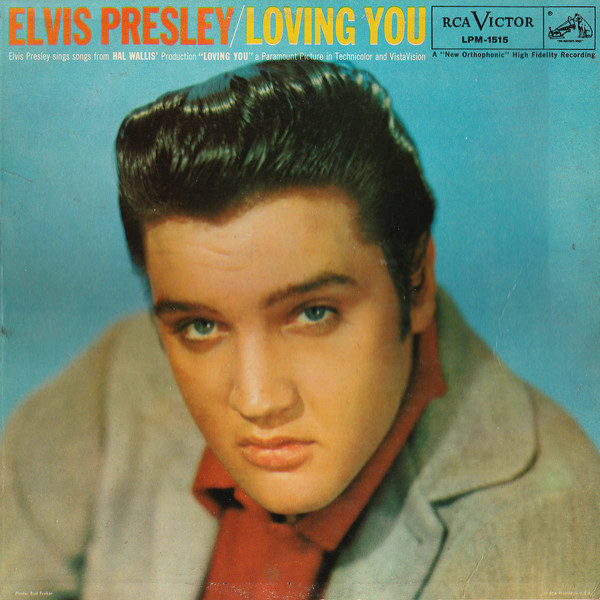
03 Mean Woman Blues (Loving You -1957)
Claude Demetrius’ strident 12-bar was first commandeered by Elvis for Loving You and recorded shortly after his 22nd birthday – and the announcement that he was soon to be drafted. In the juke joint scene in which it appears, Elvis’ character Deke Rivers is strong-armed into performing by a truculent ne’er do well. As he launches into this rousing classic, encouraging his impromptu audience into clapping in unison, his moves get the whole diner jumping, albeit his combatant the only cat in the room reluctant to move to the beat. “Well you ain’t bad, sideburns,” concedes his aggressor, before their exchange swiftly descends into fisticuffs, Elvis eventually leaving his assailant KO’d against the jukebox.
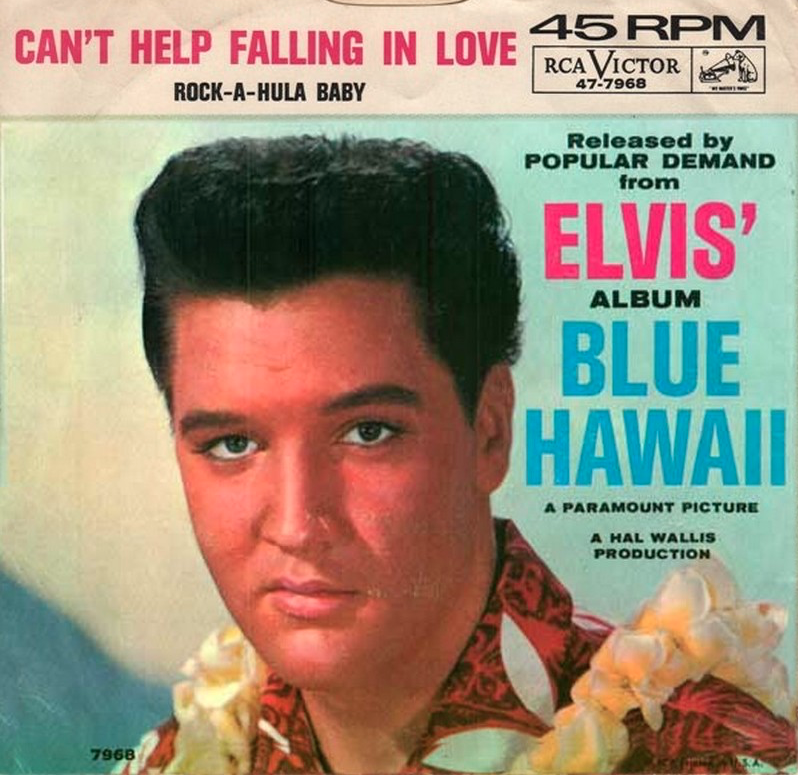
02 Can’t Help Falling In Love (Blue Hawaii – 1961)
This slightly downtrodden yet amorous gospel ballad appears in 1961’s woozy rom-com Blue Hawaii sung along to a music box that Elvis (as Chad Gates) gifts to his paramour Malie’s grandmother before, rather bizarrely, serenading the two ladies simultaneously. It also successfully charmed the world: outside of the film’s Billboard-topping, now multi-platinum selling, soundtrack, this soothing satellite stole the peak of the UK charts in 1962 and was only kept from repeating the feat in the US by Joey Dee And The Starliters’ dance craze cash-in, Peppermint Twist. Elvis often closed his shows with a grandiose rendition of this enduring love-lilt, selecting it for the climax of his epic 1973 satellite broadcast Aloha From Hawaii.
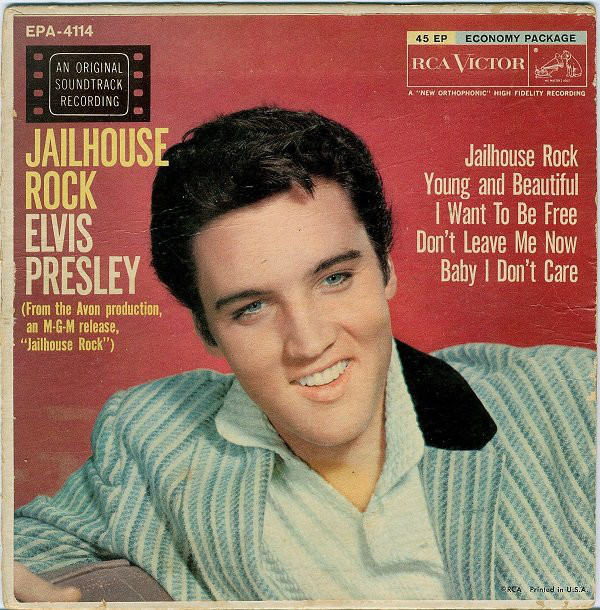
01 Jailhouse Rock (Jailhouse Rock – 1957)
Lieber and Stoller were locked in their hotel room by Elvis’ music publisher Jean Aberbach until they’d hammered out the songs promised for the Jailhouse Rock movie, and Elvis later recalled the eventual recording session as one of his most challenging, but the results were worth it. The writers gelled with their charge instantly bonding over the blues and with the help of Scotty, Bill and DJ, with The Jordanaires in vocal support and Dudley Brooks at the 88s, the ensemble completed the title track by the close of day one. “At the end of the day, Elvis was as high on the music as Jerry and I,” recalled Stoller. Aired during the iconic shadow-dancing cell block scene, the sequence would preempt the music video. A classic Billboard No.1.
For more on Elvis click here
Enjoy this article? Check out Silver Screen Songsmiths