Join Vintage Rock as we highlight 40 of the greatest Buddy Holly songs. Arranged in chronological order, they paint a distinct picture of his evolution as an incredible artist.
As a singer, songwriter, guitarist and record producer, Buddy Holly had few equals during the 1950s. His professional music career only encompassed slightly over three years, but he left behind almost 200 recordings made during that short span. Adding various home and demo sessions to that total makes for an incredibly diverse and prolific legacy.
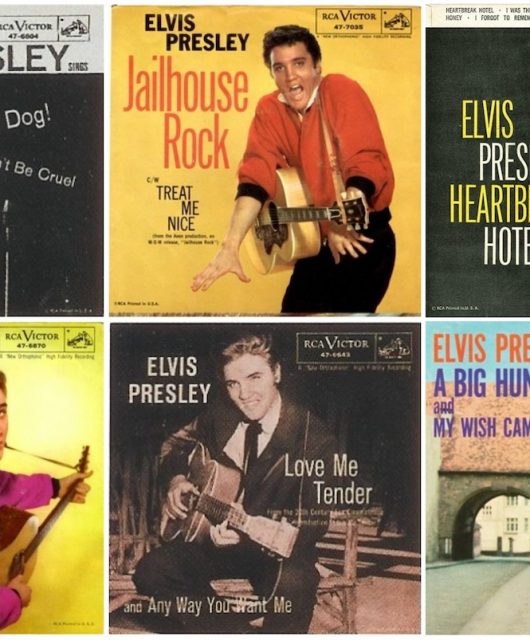
Holly’s love and fascination with the recording process fuelled that legacy. He began as a hardcore country performer, but everything changed when he witnessed an Elvis Presley performance in 1955. Many white teenagers, including Holly, loved both country and R&B, but few made the leap to fusing the two in the exciting and dynamic way that Presley mastered. Holly quickly became a close follower of Presley’s style; eventually, his full talents as a performer and songwriter began to emerge, and he developed a strong personal voice that fused his many influences into a unique sound.
Prolific Catalogue
Throughout the early years of his career, Holly made several home recordings on fragile acetates, and spent the time and money to travel to professional recording studios to cut demos. None of these discs were intended for wider release, but they demonstrate how the very act of recording held a special appeal for Holly. In 1956, he signed with Decca Records and recorded a string of excellent rockabilly tracks demonstrating his debt to Elvis. After his Decca contract expired, his talent fully came into its own and enjoyed the unusual advantage of having simultaneous contracts with two records labels, as he produced material under his own name and as the lead member of The Crickets. Because of Holly’s fascination with the recording process, each stage of his career was documented on record, from his earliest hillbilly days to the astounding innovations he made in the studio, before his death in 1959.
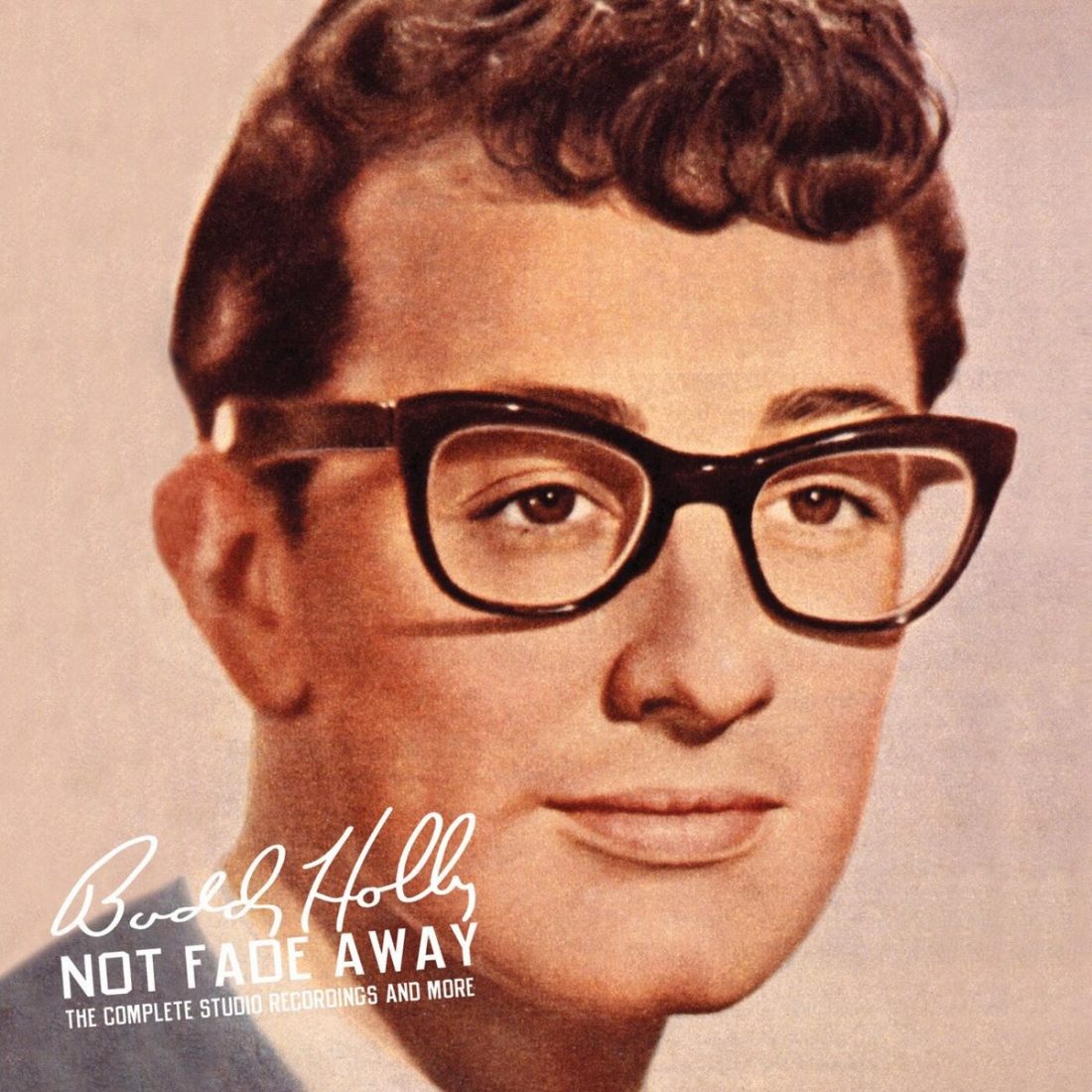
Many of Buddy Holly’s earlier recordings and later demo recordings were modified after his death in order to make them more marketable by the standards of the time. Unless otherwise noted, all the selections refer to the original versions of the recordings, before any post-mortem ‘improvements’ were added, and are available on the 2009 boxset Not Fade Away: The Complete Studio Recordings And More. Words by Randy Fox
01 FLOWER OF MY HEART
Recorded Circa Late 1954-April 1955 Buddy Holly’s path as a musician began in the autumn of 1949 when he entered Hutchinson Junior High School in Lubbock, Texas and met fellow music lover Bob Montgomery. The pair loved country of all varieties, from the hardcore honky tonk of Hank Williams to the complex instrumentation of Bill Monroe’s bluegrass. Forming the duet act Buddy & Bob, they emulated the style of popular duos like The Louvin Brothers and Johnnie & Jack. During their junior year at high school, the pair entered a school talent contest and won first prize with the Bob Montgomery song Flower Of My Heart. A year or so later they recorded the song at the Nesman Recording Studio in Wichita Falls, Texas, in what is believed to be Holly’s first session in a professional recording studio.
02 BABY, LET’S PLAY HOUSE
Recorded Mid-1955 On 6 January 1955, Elvis Presley played in Lubbock, Texas at a country music revue at the Lubbock Fair Park Coliseum. A month later, on 13 February, Presley returned once more to Lubbock and this time Buddy & Bob were chosen to open the show. This one-two punch of Presley performances was a knock-out blow to all the young people of Lubbock, but particularly Buddy Holly, who was galvanised both by the effect Elvis had on the female part of the audience and by the music itself. Naturally, it would not be long before Buddy began to emulate Elvis’ style. In the summer of 1955, a few short months after those Elvis shows, Holly made his first stab at recording rockabilly at the Nesman Recording Studio with this almost note-for-note cover of Presley’s fourth Sun single.
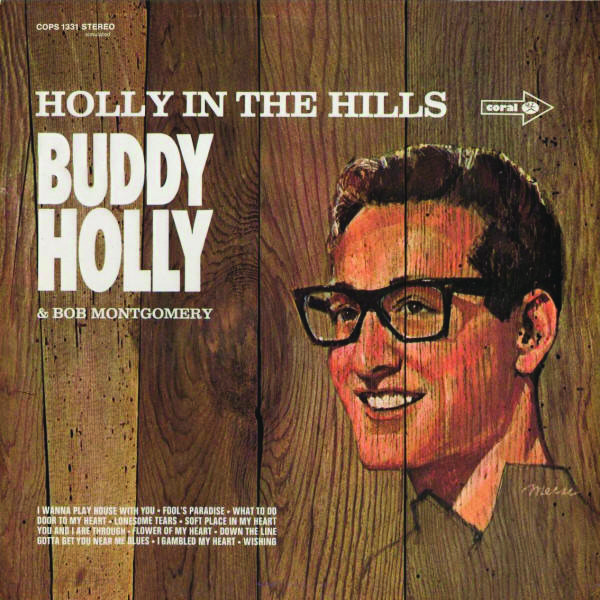
03 DOWN THE LINE
Recorded 7 June 1955 Although it would still take more than a year for Holly to develop his own unique rock’n’roll voice, he was soon trying his hand at writing original rockers. This gear-jammin’ country bopper was co-written by Buddy & Bob and displayed the influence of another early rockabilly duo, Jimmy Lee and Wayne Walker. Regulars on the Louisiana Hayride, Lee and Walker recorded the rockabilly bopper Love Me for Chess in early 1955 and appeared at the February 1955 Lubbock Fair Park Coliseum show with Elvis and Buddy & Bob. Holly recycled the title of Lee & Walker’s Chess single for his first Decca release. Down The Line also received ‘improvements’ from Norman Petty and The Fireballs and first appeared on the 1965 Holly In The Hills LP.
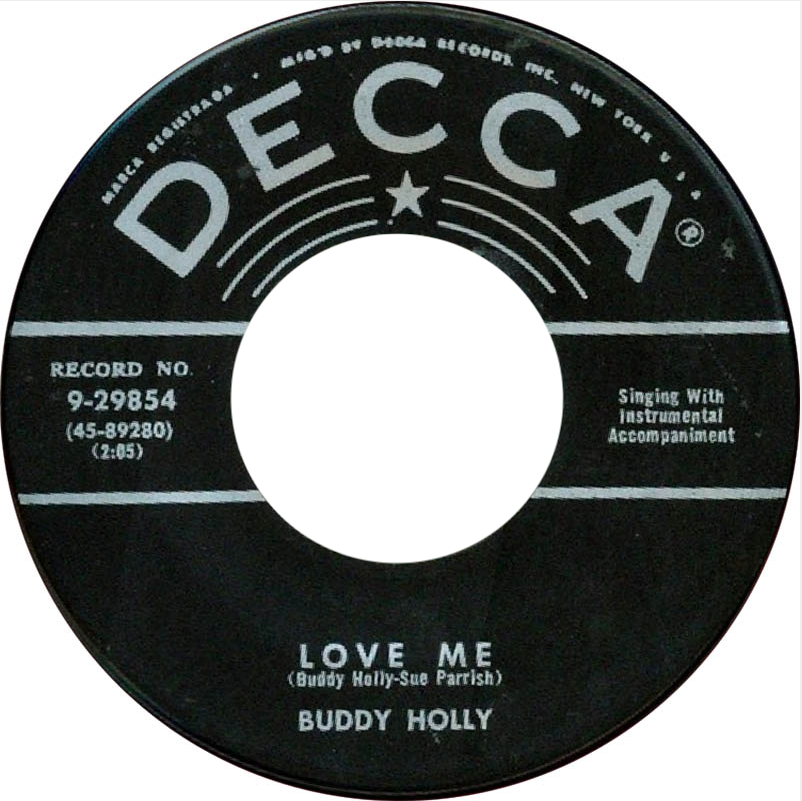
04 LOVE ME
Recorded 26 January 1956 In December 1955, Holly sent four song demos to Nashville-based talent agent Eddie Crandall to shop to major labels in Nashville. Crandall had seen Buddy & Bob perform in Lubbock that fall and had focused on Holly as the potential star. Although Holly was initially hesitant to break his partnership with his longtime friend, Montgomery soon convinced him. Within a few weeks, Holly and his new band headed to Nashville to record his first single for Decca. Straight out of the gate they cut this medium tempo rocker, co-written by Holly and Lubbock-based songwriter Sue Parrish. While Holly delivered a great performance, the Elvis influence was still plainly evident. Released in April 1956, it announced the arrival of a new rocker, even if sales didn’t keep pace with Holly’s hopes.
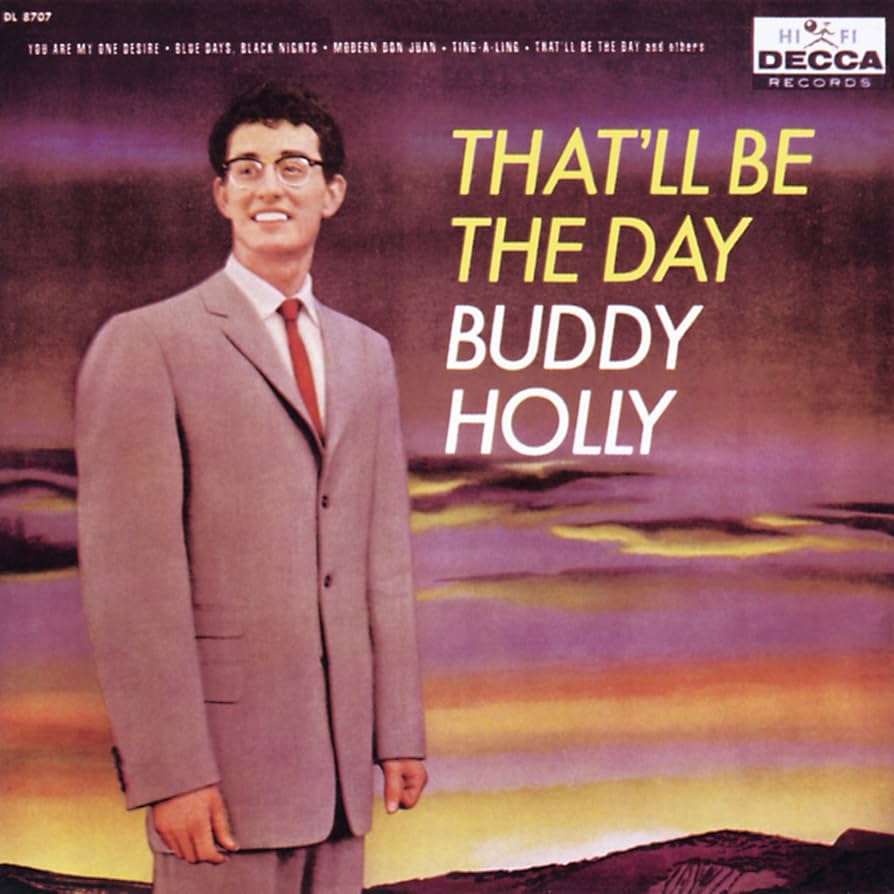
05 MIDNIGHT SHIFT
Recorded 26 January 1956 Jim Denny, the head of Cedarwood Publishing who engineered Holly’s recording deal, also brought several songs to pitch to the young singer for his first Decca session, including Midnight Shift. With its story of Annie’s nocturnal search for good times and the high life, the song obviously drew inspiration from the massive 1954 Midnighters hit, Work With Me Annie, and its various sequels and answer songs. Credited to ‘Earl Lee & Jimmie Ainsworth’, Midnight Shift was actually written by country and rockabilly artist Luke McDaniel, who wrote the song under a pseudonym and split the credit with a friend. Although Decca passed the song over for single release, Midnight Shift made its debut on the 1958 LP That’ll Be the Day that was issued to cash in on the success of Holly’s post-Decca hits.
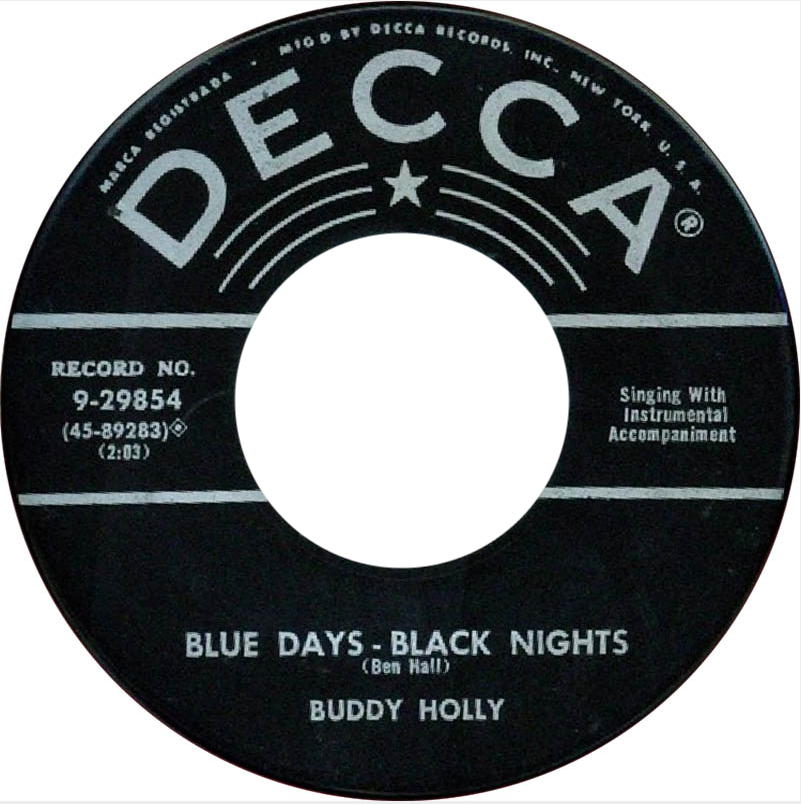
06 BLUE DAYS BLACK NIGHTS
Recorded 26 January 1956 Holly knew he needed good material prepared for his first Decca session, and was not hesitant to ask for help from friends. In addition to the songs he had written, he called Ben Hall, looking for good tunes. Hall was a deejay at radio station KDAV in Lubbock and a fellow songwriter, and as luck would have it he had just written Blue Days Black Nights with Holly in mind. Recorded at Holly’s first Nashville session, it became the B-side of his first single. Like all the tracks cut at his first session, it was an excellent hillbilly bopper that perfectly captured the sound, feel and energy of Elvis Presley’s Sun recordings… but that was also the problem. Holly was still searching for his own musical voice, a process that would take several months and yet more trips to recording studios.
07 BABY WON’T YOU COME OUT TONIGHT
Recorded February-April 1956 Holly had been aware of Norman Petty’s studio in Clovis for quite some time. Nevertheless he continued to make the 200-mile trip to Nesman Recording Studio in Wichita Falls to record demos out of his familiarity with the studio. After his first Nashville session in January 1956, Holly desired more time to work out arrangements for new songs. Between February and April 1956, he and his band made several trips to Clovis to record. The trip was shorter, but more importantly, Petty charged a flat rate for a completed demo rather than by the hour. Petty was also astute at knowing when to offer advice and when to step back and let Holly have his way. It was an ideal arrangement, allowing Holly the time to perfect numbers like this driving, Elvis-influenced rocker.
08 CHANGIN’ ALL THOSE CHANGES
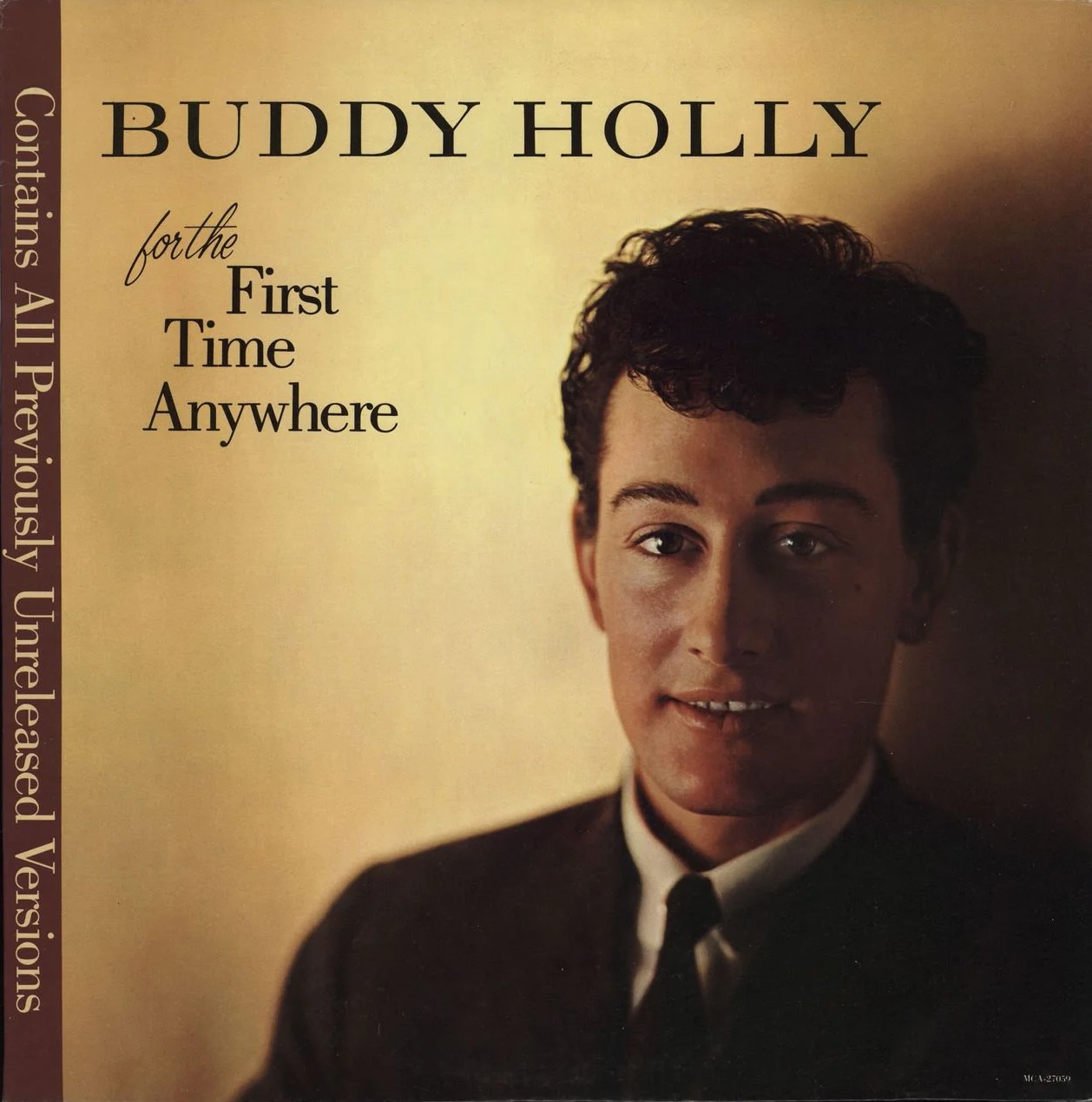
Recorded February-April 1956 Of the seven songs that Holly recorded at Petty’s studio in early 1956, Changin’ All Those Changes was the only one he later recorded for Decca. While both versions displayed the influence of Elvis, the earlier demo version has a more confident, swinging rhythm, and Holly sings the song with great assurance… perhaps a by-product of the less stressful atmosphere in Clovis compared to the clock-watching sessions in Nashville. In 1962, Norman Petty overdubbed fuller backing tracks by The Fireballs onto this song and several others from the Clovis demo sessions and they were released on the 1963 LP Reminiscing. The original, undubbed masters of the Clovis demo sessions were believed to be lost until they were discovered in 1982 and released the next year on the LP For The First Time Anywhere.
09 I’M GONNA SET MY FOOT DOWN
Recorded February-April 1956 Another hot rocker written by Holly in early 1956 and recorded in Clovis, I’m Gonna Set My Foot Down is yet another example of Holly’s skill as a performer at this stage of his career. However, it’s also a prime example of his musical voice continuing to be tied to that of Elvis Presley. As with all the Clovis recordings, the track features the pre-Crickets combo of Sonny Curtis on guitar, Don Guess on bass and Jerry Allison on drums. The same band accompanied Holly on his next recording session for Decca in Nashville, but they would find that they missed the free-wheeling atmosphere they had discovered in Clovis. As with the other Clovis demos, I’m Gonna Set My Foot Down received the Fireballs treatment, diluting the powerful simplicity of the original recording.
10 ROCK AROUND WITH OLLIE VEE
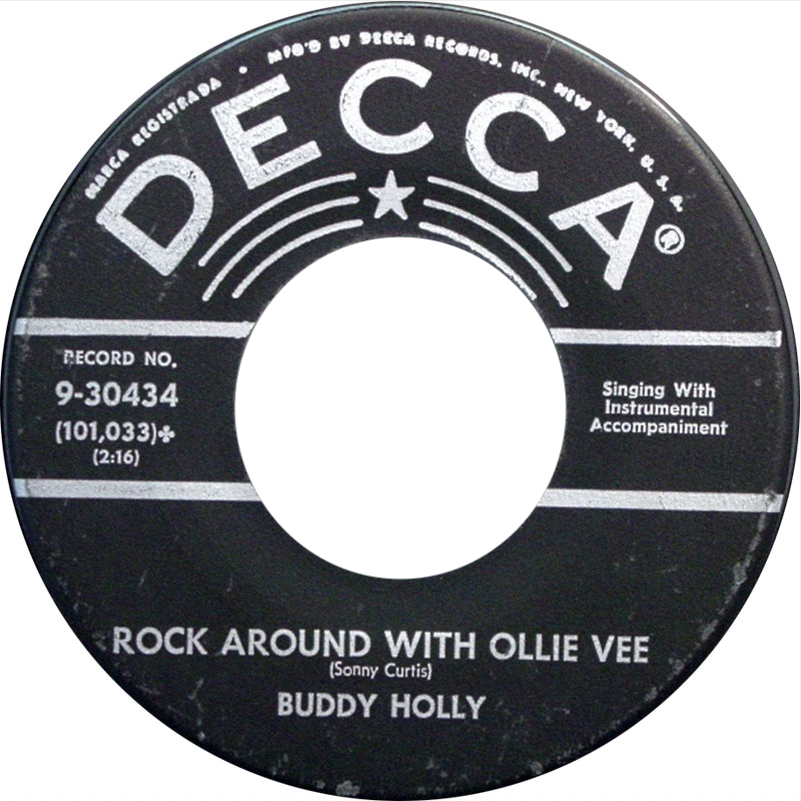
Recorded 22 July 1956 At Holly’s second Nashville session, his full band was in attendance and he was allowed to record songs of his own choosing with his own arrangements. Right out of the gate, Holly cut this magnificent rocker, one of the best tracks he recorded for Decca. Written by Sonny Curtis, who also delivered the blistering lead guitar on Holly’s Fender Stratocaster, the recording was inexplicably rejected by Decca executive Paul Cohen, who refused to release any of the tracks from the July session. Holly re-recorded the song at his final Decca session in November 1956, this time with ace session man Grady Martin playing the lead. While both recordings are excellent, the original version barely edges out the remake on pure excitement and energy. The original version made its debut in November 1957 on the That’ll Be The Day LP.
11 TING-A-LING
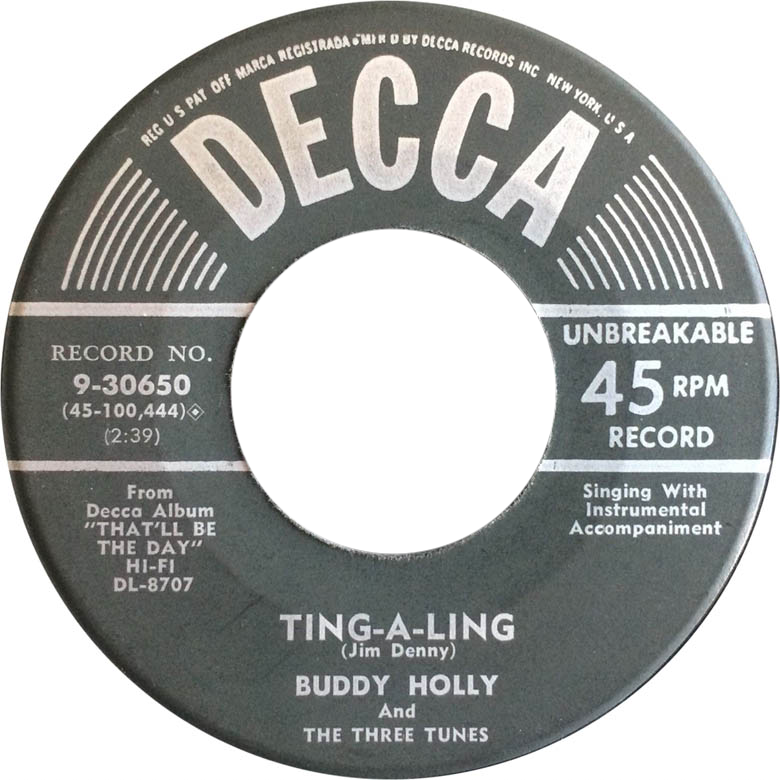
Recorded 22 July 1956 Holly’s Nashville sessions have often been portrayed as the ‘establishment’ placing needless restraints on his budding genius. In fact, Holly was given a very free hand to do what he wanted in Nashville, but his musical vision was still forming. He also lacked the skills to capture a perfect take in the time period allotted for professional sessions. That was especially true of his second Nashville session: Holly recorded 19 takes of That’ll Be The Day, with the best version of the lot still sounding rushed, derivative and not fully formed, especially when compared to the 1957 version that would become a hit. On the other hand, some of Holly’s developing genius did shine through, as on this brilliant cover of the 1952 Clovers hit. Decca initially refused to release the song, but it was issued later as a single in 1958.
12 MODERN DON JUAN
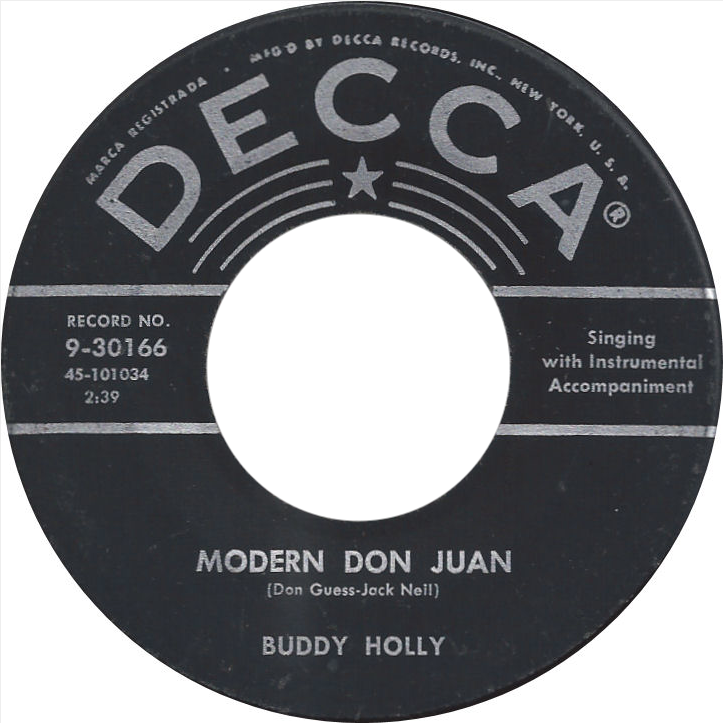
Recorded 15 November 1956 At Holly’s final Decca session in November 1956 he chose to work primarily with Nashville session men. Part of the decision was out of necessity, as Sonny Curtis had left Holly’s band shortly before the session for a job with country singer Slim Whitman’s band, and Jerry Allison was unable to join him on the trip to Nashville. Holly also wanted to try something new in the hopes of scoring a smash. After recording a new version of Rock Around With Ollie Vee and a rather lacklustre Don Guess ballad, You’re My One Desire, Holly set his sights on this Don Guess & Jack Neil composition. Backed by a swinging point-counterpoint between Grady Martin’s guitar line and Dutch McMillin’s honking sax, Holly delivers a charming performance that revealed him moving beyond his Elvis influences and into his own as an artist.
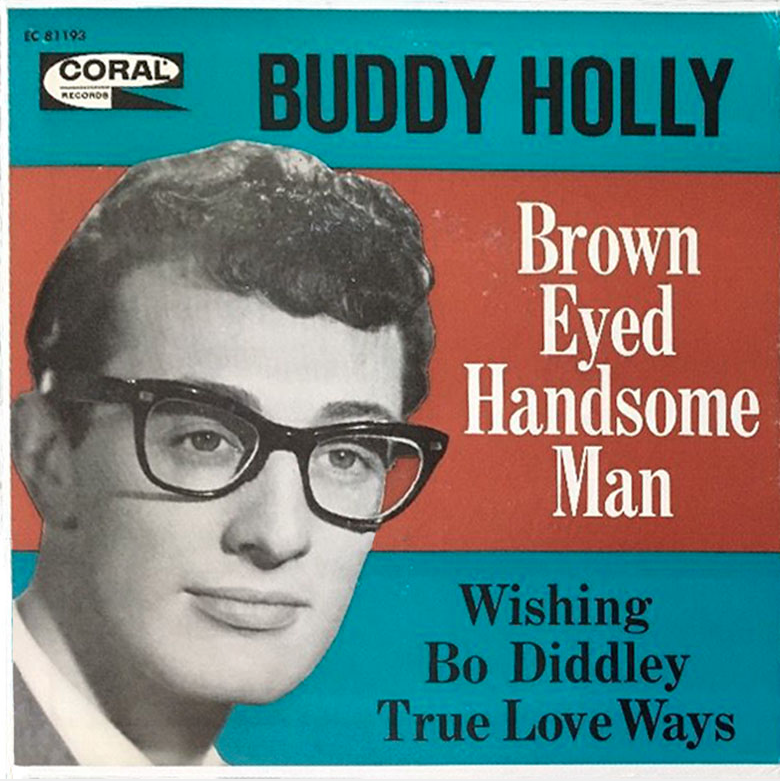
13 BROWN EYED HANDSOME MAN
Recorded December 1956 In December 1956, Holly decided to make another trip to Norman Petty’s studio in Clovis. It’s unclear why he chose to spend the money on a professional recording session at this point; both the songs he cut, Brown Eyed Handsome Man and Bo Diddley, were covers, and his band for the session was an ad hoc group consisting of Jerry Allison on drums, Lubbock musician Larry Welborn on bass, and Holly’s older brother Larry Holley on rhythm guitar. Whatever the reason, the experience led to more sessions in Clovis that would soon dramatically change the course of Holly’s career. As with the songs cut at the December session, they would later receive the Petty-Fireballs treatment. Released as a single in 1963, Brown Eyed Handsome Man hit No.3 in the UK, four years after Holly’s death.
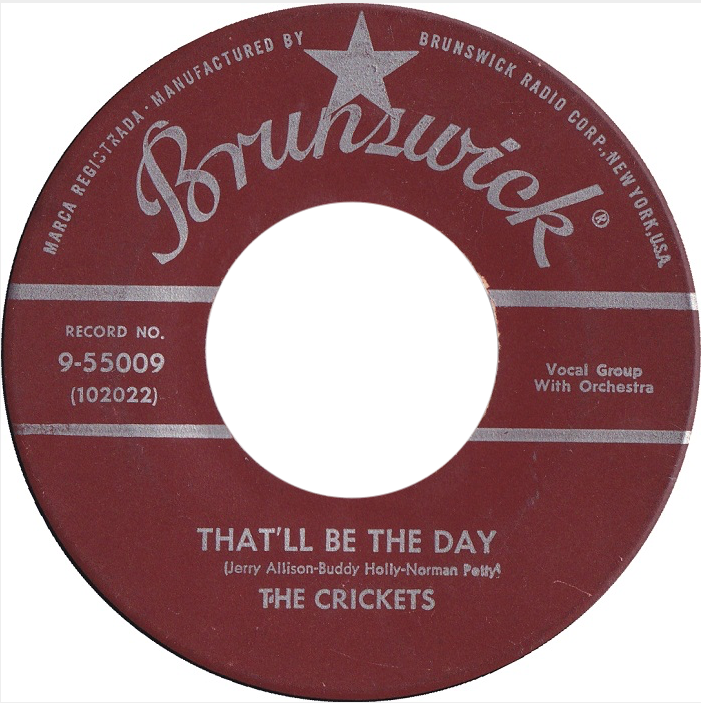
14 THAT’LL BE THE DAY
Recorded 25 February 1957 Holly’s contract with Decca Records expired on 26 January 1957. While it might have seemed like a defeat, for Holly it was just a reason to start again. Both he and Allison believed the song That’ll Be The Day could be a hit if they could just capture the perfect version. Throughout the last part of January and into February, Holly, Allison and bass player Larry Welborn refined the arrangement of the tune, capturing a sound that moved beyond rockabilly and into Holly’s own unique vision of rock’n’roll that had an irresistible pop appeal. By the last week of February, Holly was ready to record the song. The assembled group headed for Norman Petty’s Clovis studio with the idea of cutting a demo. It would turn out to be something much, much bigger.
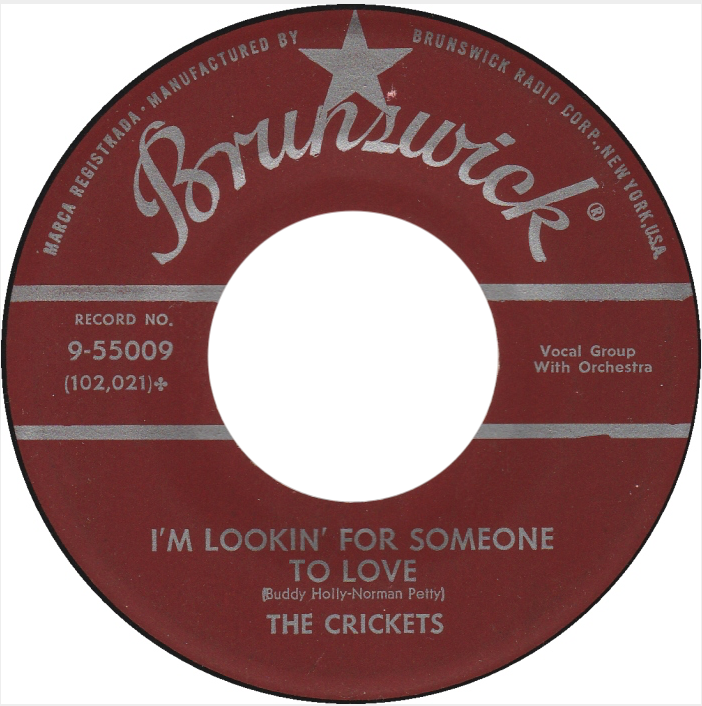
15 I’M LOOKIN’ FOR SOMEONE TO LOVE
Recorded 25 February 1957 Before tackling That’ll Be The Day in the studio, Holly recorded this suburb rocker that would become the B-side of The Crickets’ first single. Based around a standard 12-bar blues progression, Holly’s influences — country, R&B, pop and more — fused together in a reaction that resulted in a sound far greater than the sum of its parts. Holly also made a tremendous jump forward with his vocals as he cast off the last remaining vestiges of the Elvis imitation and fully embraced his own style, just as legal technicalities resulted in him being unable to use his own name. Because of his contract with Decca, he was legally barred from re-recording any song he had cut for Decca. In the hope of sneaking That’ll Be The Day past Decca’s notice, Jerry Allison suggested ‘The Crickets’ – and one of the great rock’n’roll combos was born.
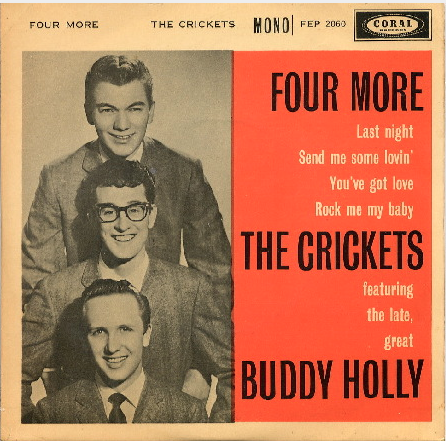
16 LAST NIGHT
Recorded 12 March 1957 After cutting That’ll Be The Day in February, Holly sent a copy of the master tape to Roulette Records in New York. Roulette passed on the recording (a very fortunate occurrence considering Roulette’s unsavoury reputation and ties to organised crime). Meanwhile, Norman Petty’s connections in New York soon led to a contract with Coral Records. While Holly was waiting for the legalities to be worked out, he solidified the Crickets’ line-up with Niki Sullivan on rhythm guitar and vocals, and Joe B Mauldin on bass. Mauldin, just 16 years old at the time, brought this ballad with him. Originally written for Mauldin’s previous band, the Four Teens, the Crickets cut it at their first session with the new Crickets line-up. It shows the tremendous leap forward Holly had made with developing his own vocal style.
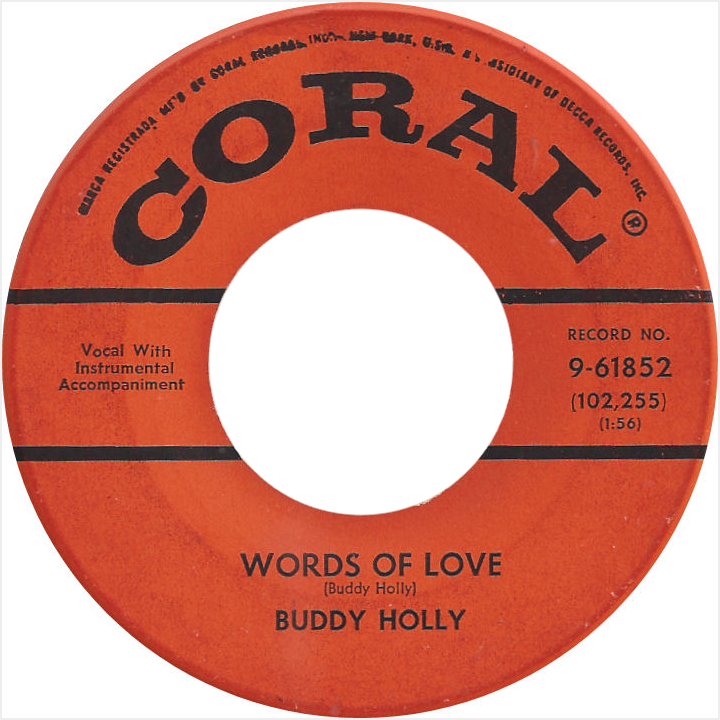
17 WORDS OF LOVE
Recorded 8 April 1957 After the Crickets signed with Coral Records on 19 March 1957, the decision was made to release their recordings on the Coral subsidiary, Brunswick. Shortly thereafter the band cut this delicate love ballad. Not only was Holly’s growing songwriting talent on full display, but the recording featured the first instance of Holly double-tracking his vocals, allowing him to sing a duet with himself. When Coral Records head Bob Thiele received the master in New York, he was so impressed that he suggested the idea of signing Holly as a ‘solo’ artist to Coral Records proper. Released on Coral just three weeks after That’ll Be The Day made its debut on Brunswick, Words Of Love failed to chart but a cover version by the vocal group The Diamonds scored as a No.13 pop hit.
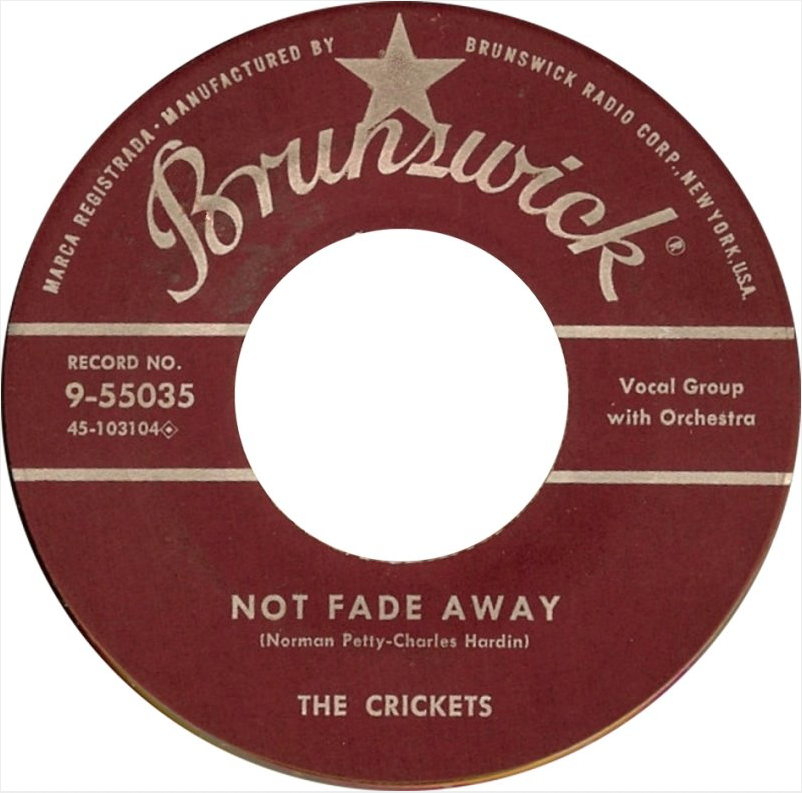
18 NOT FADE AWAY
Recorded 29 May 1957 Recorded just two days after the release of That’ll Be The Day, Not Fade Away demonstrated that The Crickets weren’t sitting on their hands waiting for success to find them. Instead, they were forging ahead with every recording, both creatively and technically. Built around a ‘Bo Diddley beat’, the rhythm was driven by Jerry Allison’s drumming on a cardboard box rather than a drum kit and vocal “bop-bops” that were overdubbed by Niki Sullivan and Holly. This unusual arrangement softened the volume of the backbeat while losing none of its excitement, allowing Holly’s vocals and lead guitar work to soar above the mix. Released in October 1957 as the B-side of The Crickets’ second single, Not Fade Away did not chart, but has since become an essential rock’n’roll classic.
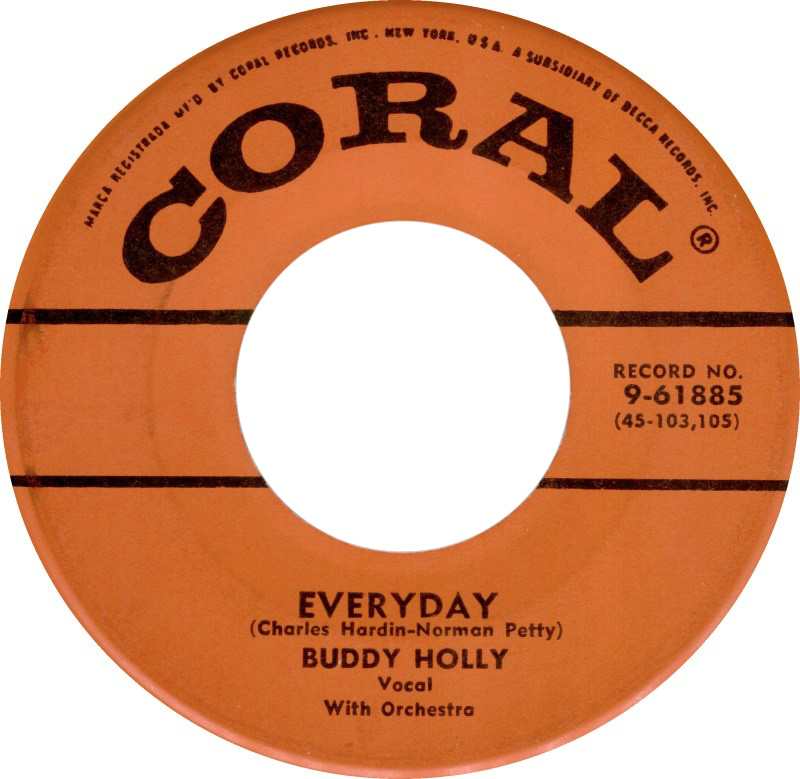
19 EVERYDAY
Recorded 29 May 1957 Cut at the same session as Not Fade Away, Everyday is another incredible recording showcasing how far Holly’s talent had progressed in just a few months. It’s also a prime example of Holly’s willingness to pursue unusual musical arrangements and the role that Norman Petty played in encouraging such explorations. The celesta – a keyboard instrument with a sound similar to a glockenspiel – used in the recording was in Petty’s studio by chance, having been left over from an earlier session. While Holly was working up the arrangement for the song, he began playing with the celesta, which led Petty to suggest using it for the recording. With just Petty on the celesta and Jerry Allison slapping on his leg for a backbeat, Holly delivered a classic, timeless love song.
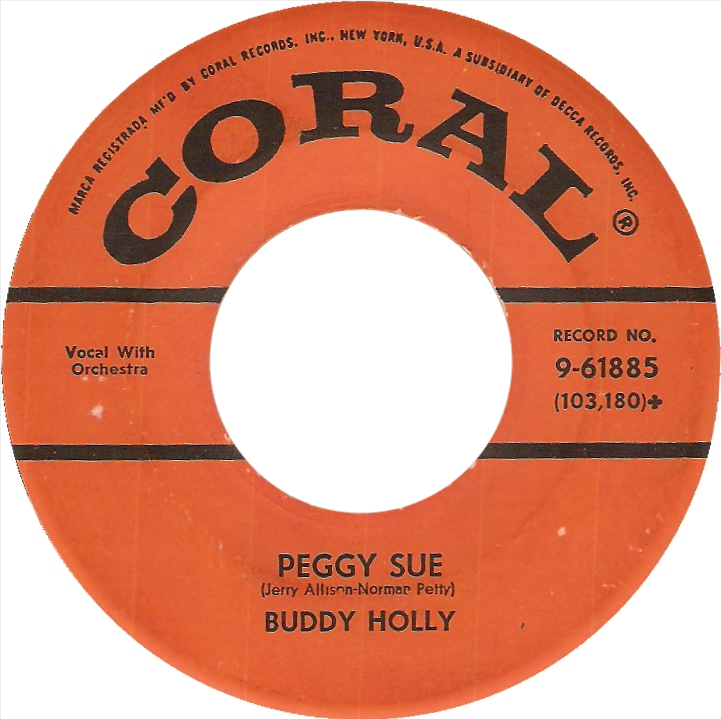
20 PEGGY SUE
Recorded 29 June-1 July 1957 Peggy Sue is a masterpiece of minimalism as Holly was able to achieve knock-out rock’n’roll pyrotechnics with a simple arrangement of drums, guitar and voice. Originally written as Cindy Lou and named after Holly’s niece, Jerry Allison suggested changing the name to ‘Peggy Sue’ in honour of his girlfriend (and future wife). To achieve the echo-laden backbeat Allison set up his drums in the reception area outside the studio while Petty flicked the echo chamber switch on his control board up and down in time with the beat. Meanwhile, Holly sang and played the downstroke guitar rhythm while Niki Sullivan stood ready to flick the switch on Holly’s Stratocaster for the lead break. The record reached No.3 on the Billboard Top 100 and eventually sold over five million copies.
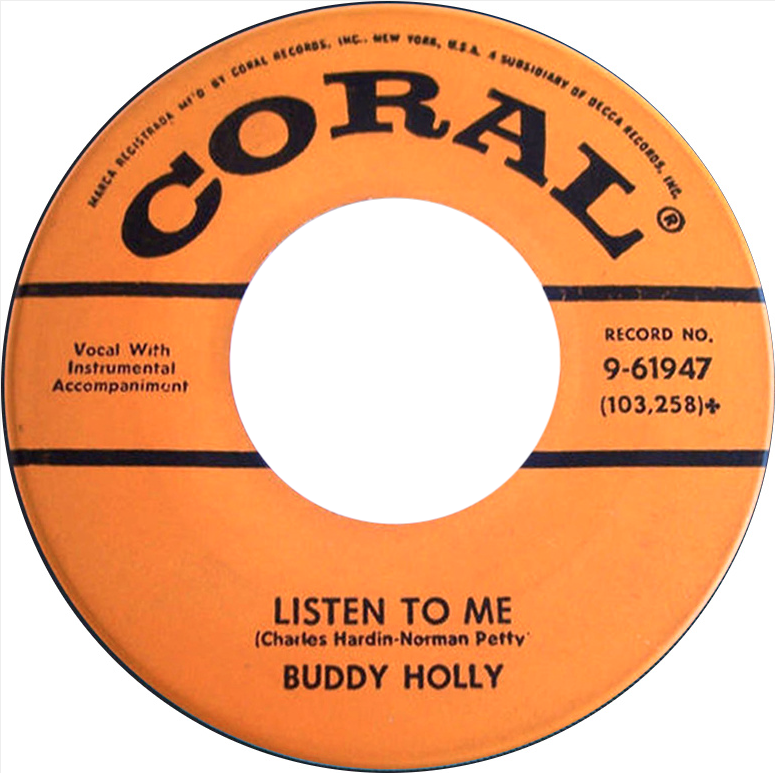
21 LISTEN TO ME
Recorded 29 June-1 July 1957 Recorded during the same three day session that produced Peggy Sue and Oh, Boy!, Listen To Me was another triumph for Holly’s persistence and musical vision, along with Norman Petty’s skill in the studio. The standard session length for most professional studios was three hours, but at Petty’s studio, Holly was able to tinker with songs for much longer. Holly’s sessions would frequently run all night, with the Crickets grabbing a few hours of sleep on two beds that Petty kept in an extra room off the studio. Those hours of work paid off on recordings like Listen To Me with its distant, almost hypnotic guitar sound and double-tracked lead vocals. Released as the B-side of I’m Gonna Love You Too in May 1958, the record failed to chart but has since become another Buddy Holly classic.
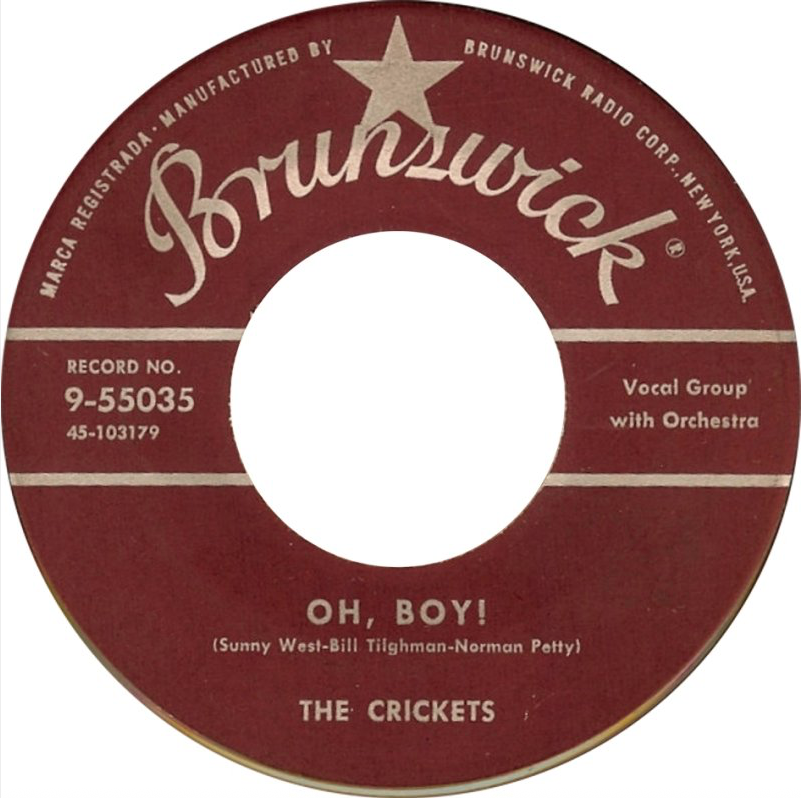
22 OH, BOY!
Recorded 29 June-1 July 1957 When it came to recording there were never set rules of what constituted a ‘Crickets’ record and a ‘Buddy Holly’ record. At first, the choice was left up to label head Bob Thiele to decide which recordings were to be released on Brunswick (by the Crickets) and which were to be on Coral (by Buddy Holly). Gradually, a distinction evolved — Crickets records featured backing vocals, and Buddy Holly records did not. However, most backing vocals were added later by Norman Petty, without The Crickets’ involvement, so the band frequently did not know which records were which until they saw the label. This hot rocker, credited to The Crickets, became the second hit for the group when it rose to No.10 on the Billboard Top 100 in the autumn of 1957.
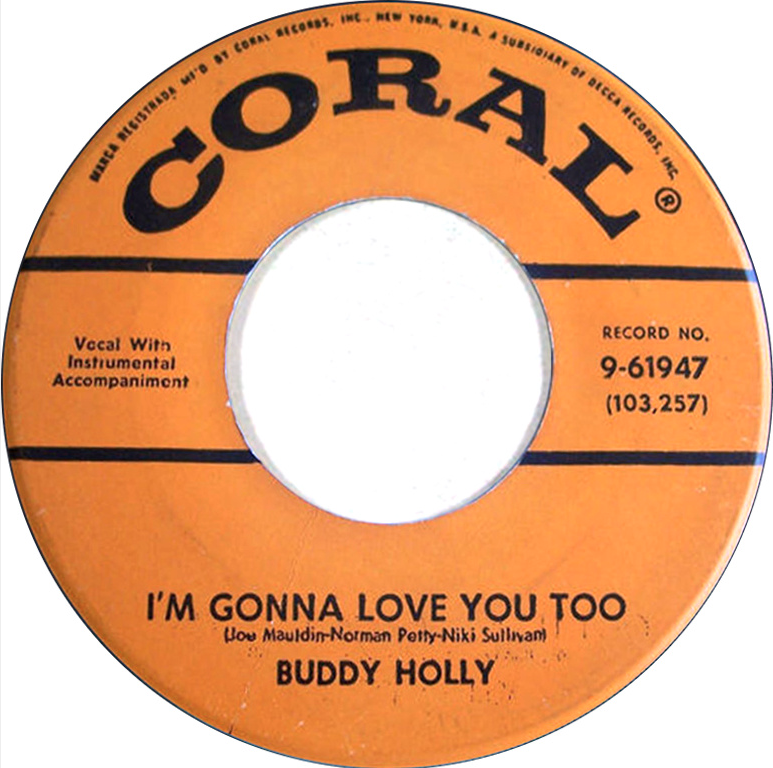
23 I’M GONNA LOVE YOU TOO
Recorded 1 July 1957 When That’ll Be The Day was released in May 1957, the record initially generated little interest. After individual deejays took notice of it in the northeast, however, sales began to take off regionally. During the 1 July recording sessions, Norman Petty received a telegram notifying him that the single had sold 50,000 copies and was on its way up the charts. The group was so focused on finishing their session they took little notice of the news and went right on working. This excellent rocker ended up with a surprise performance courtesy of an actual non-human cricket who found its way into the studio. It can be heard chirping away in time at the end of the record – which, ironically, was released as a Buddy Holly solo disc instead of the credit going more appropriately to The Crickets.
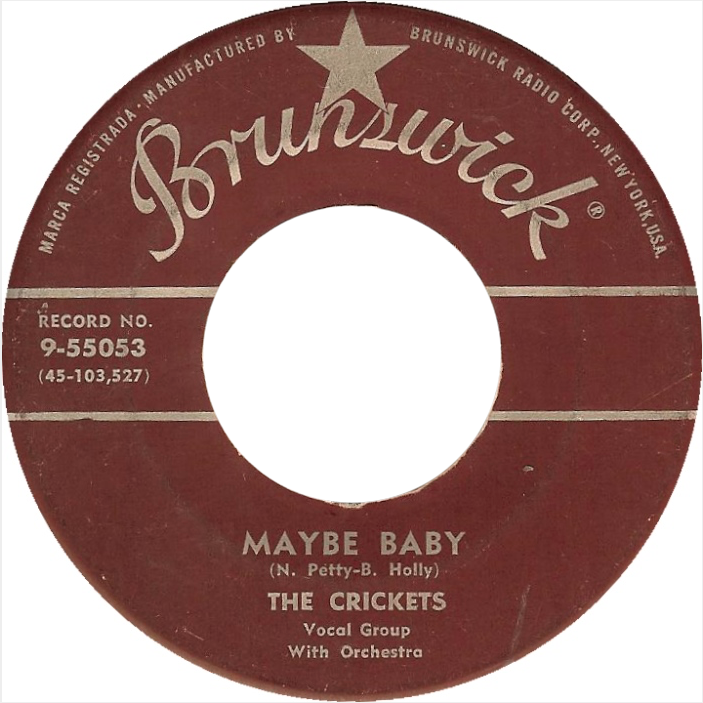
24 MAYBE BABY
Recorded 28 September 1957 Recorded during a makeshift session in the Officers Club Lounge at Tinker US Air Force Base in Oklahoma City while The Crickets were on tour, Maybe Baby was inspired by a handful of lyrics written by Holly’s mother, Ella Holley. The Crickets first recorded the song at the March 1957 session that produced Last Night, but Holly wasn’t completely happy with the tempo of the recording. After tinkering with the arrangement for several months, they tried it again and finally nailed a perfect version. First released on The ‘Chirping’ Crickets album in November 1957, Brunswick also issued the song as The Crickets’ third single the next month. The single scored No.17 on the Billboard Top 100 in March 1958, and the album hit No.5 on the UK Albums Chart in April 1958.
25 LITTLE BABY
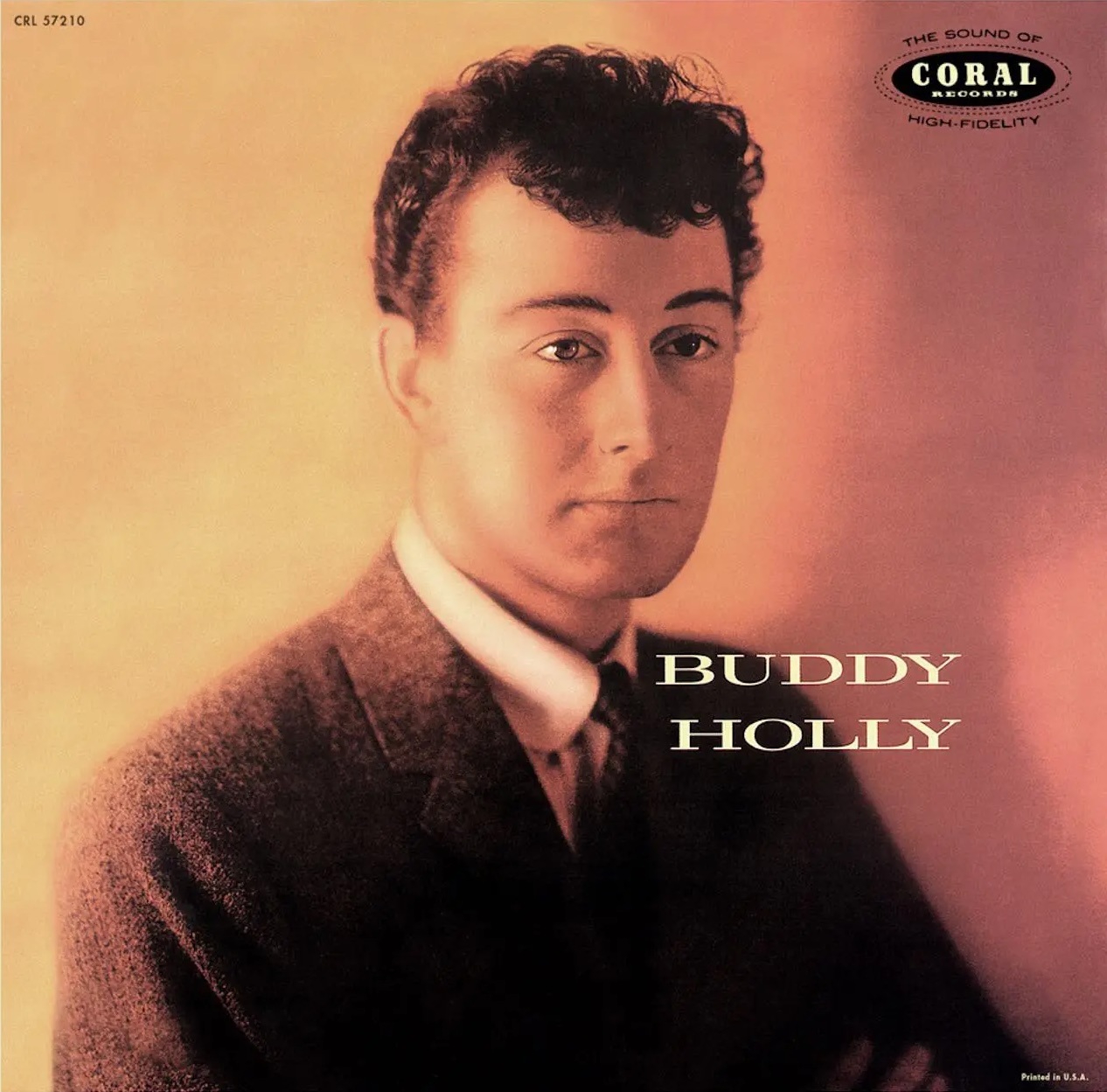
Recorded 17 December 1957 Little Baby was co-written by Holly and pianist CW Kendall, Jr. who was in Clovis at the time to undertake some recording with his own rock’n’roll combo, The Big Beats. For the session, Kendall joined The Crickets, providing a rollicking boogie-woogie style backing. The addition of a piano gave The Crickets a much fuller sound – especially since the band was now a trio, as Niki Sullivan had left at the beginning of December over various conflicts with Allison and Holly and the desire to launch his own solo career. Little Baby first appeared as a track on Holly’s eponymous debut album on Coral that was released in March 1958. The Big Beats eventually opened several shows for The Crickets; Kendall continues to play piano today, and still performs with The Big Beats in the Dallas, Texas area.
26 RAVE ON
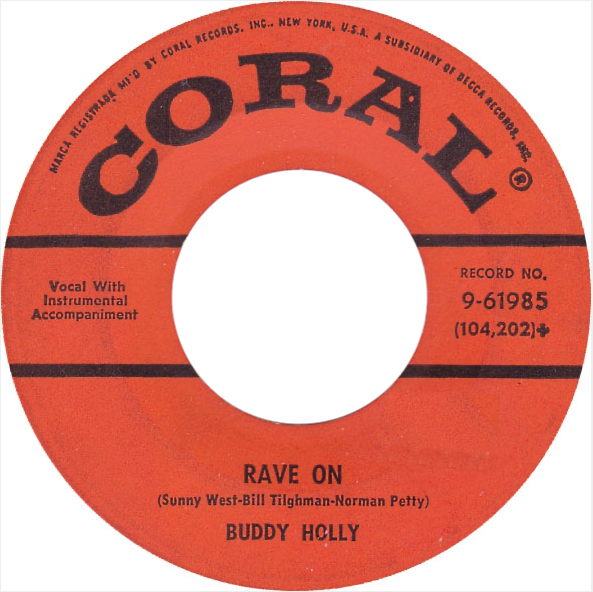
Recorded 25 January 1958 One of the most exciting and dynamic records ever recorded by Buddy Holly, Rave On was written by Sonny West and Bill Tilghman, the same team that composed Oh, Boy! for Holly. The title exclamation was most likely inspired by Carl Perkins’ rockabilly anthem Dixie Fried, but Holly’s recording of the song transcends its rockabilly roots in a seamless joining of country, R&B and pop – in other words, pure rock’n’roll. Recorded in New York at the famous Bell Sound Studio with Coral Records head Bob Thiele producing, it demonstrates that Holly’s magic wasn’t the sole province of Norman Petty and his studio. Originally released on the Buddy Holly LP in March 1958, Coral also released it as a single one month later. Rave On reached No.37 on the Billboard Top 100 and scored a No.5 hit in the UK.
27 WELL… ALL RIGHT
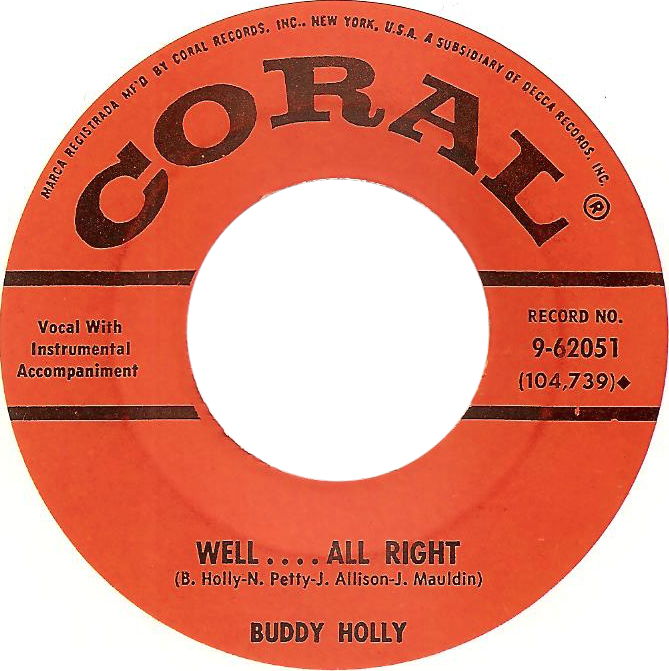
Recorded 12 February 1958 After touring for several months, including a trip over to Australia, the Crickets returned to Clovis to record this classic number of teenage angst and optimism. Although Chuck Berry was the poet laureate of teenage rebellion and passions, Buddy Holly’s songs often captured the anxieties and ambivalence of young people on the edge of adulthood, and Well… All Right is one of his finest examples (Joe Mauldin, Jerry Allison and Norman Petty are credited too). It’s a masterpiece built around a favourite exclamation of Holly’s tour-mate Little Richard that Holly redirected down a very different path. With the bare bones of Holly’s acoustic guitar and Jerry Allison time-keeping on the hi-hat, Holly produced a magnum opus built from equal parts of insecurities and optimism. Released as the B-side of Heartbeat in November 1958, it’s now considered one of Holly’s finest recordings.
28 THINK IT OVER
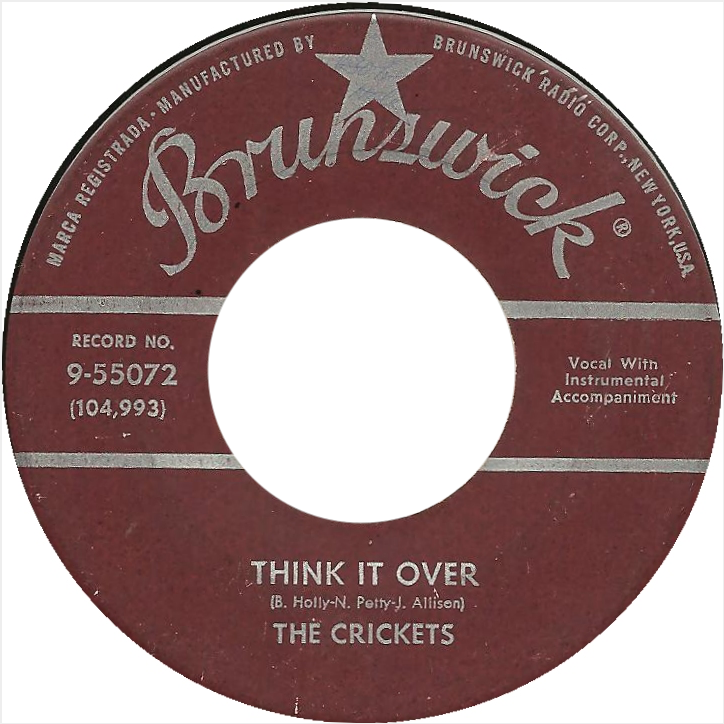
Recorded 13 February 1958 After being on tour from August 1957 through January 1958, the Crickets returned home, tired from the road, but brimming with ideas for new songs. They holed up in Norman Petty’s studio for four days in February and recorded a string of knock-out tunes. Think It Over was a cocky, self-assured rocker echoing the themes and beat of That’ll Be The Day. Although the song was originally written with a straightahead rock rhythm, once the Crickets began working it up in the studio, they decided a shuffle beat similar to That’ll Be the Day was a better fit. With overdubs from vocal group The Roses and a piano solo from Norman Petty’s wife Vi, the single scored a double-sided hit with Fool’s Paradise on the flipside in the summer of 1958.
29 TAKE YOUR TIME
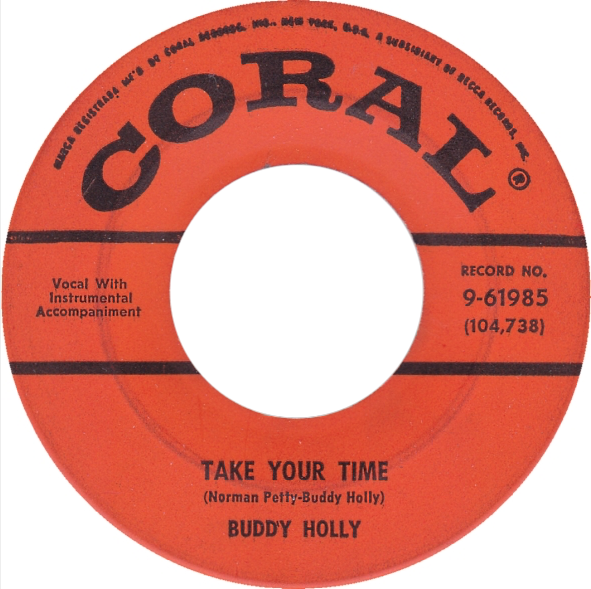
Recorded 13 February 1958 Even though Norman Petty was infamously listed as a co-writer alongside Holly or other members of the Crickets on many of their songs, Petty actually contributed very little in terms of lyrics or melody. At first, Holly didn’t mind relinquishing a portion of the credit, but over time he came to learn that the situation was worse than he had thought – Petty was actually taking a double portion out of every song by being both the publisher of the song and a co-writer. In the case of Take Your Time, Petty actually contributed to the lyrics in addition to playing organ on the recording. Ironically, Petty’s primary contribution, the line “Heartstrings will sing like a string of twine” was Holly’s least favourite line in the song. Take Your Time was released in April 1958 as the B-side of Rave On.
30 IT’S SO EASY
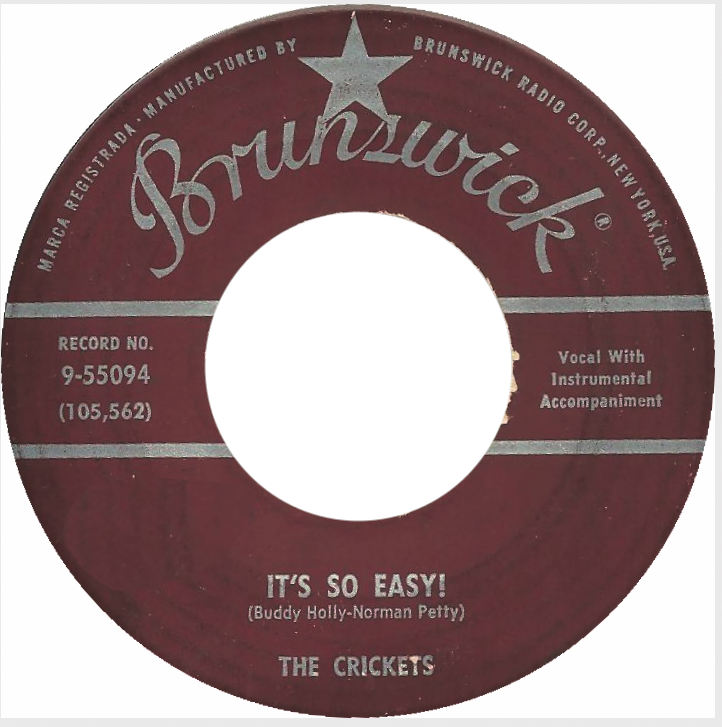
Recorded 25 May 1958 The Crickets were on the road for most of March and April 1958, and finally returned to Clovis on 25 May where they cut the power-packed rocker It’s So Easy. For the session, Holly added guitarist Tommy Allsup to the line-up. Five years older than Holly, Allsup was already a veteran musician, having spent several years playing with Johnny Lee Wills (brother of Western swing legend Bob Wills), and also leading his own Western swing band, The Southernaires. In April 1958, Allsup moved to Clovis to work as a session musician in Norman Petty’s studio. After meeting Holly, the pair hit it off and Allsup joined The Crickets in the studio and on the road as an unofficial member. His contributions were immediately apparent on the classic lead guitar line he laid down for this rocker.
31 HEARTBEAT
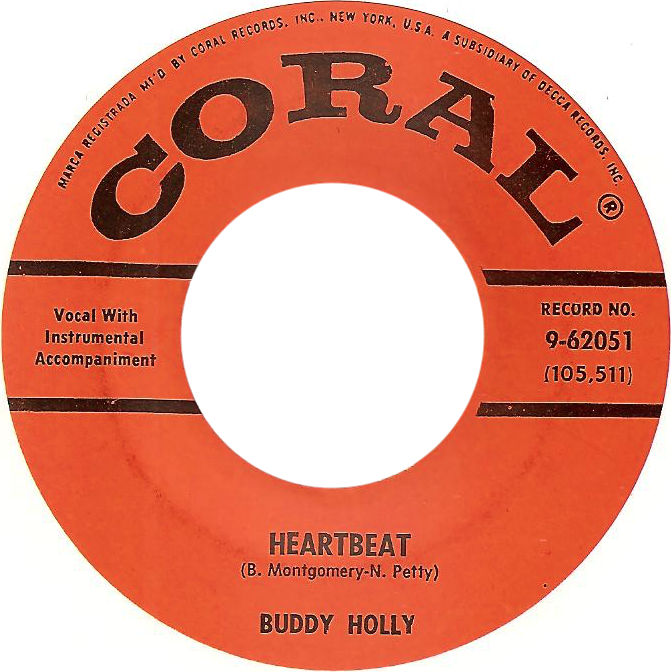
Recorded 25 May 1958 Cut during the same session as It’s So Easy, Heartbeat was built around the Tex-Mex/Latin rhythms that Holly had used on many other songs. He co-wrote the song with his former musical partner Bob Montgomery in a songwriting session that also produced Love’s Made A Fool Of You and Wishing. Holly’s recording showcased the guitar work of Tommy Allsup as his crisp lead work alternates with Holly’s vocal lines in a swinging call-and-response. Released in November 1958 with Well… All Right as the B-side, the single inexplicably sold poorly compared to Holly’s other releases, especially since the pop market was undergoing a resurgence of Latin rhythms. Heartbeat only rose to No.82 on the Billboard Top 100 and No.30 on the UK Singles Chart, but has subsequently become a Buddy Holly classic.
32 LOVE’S MADE A FOOL OF YOU
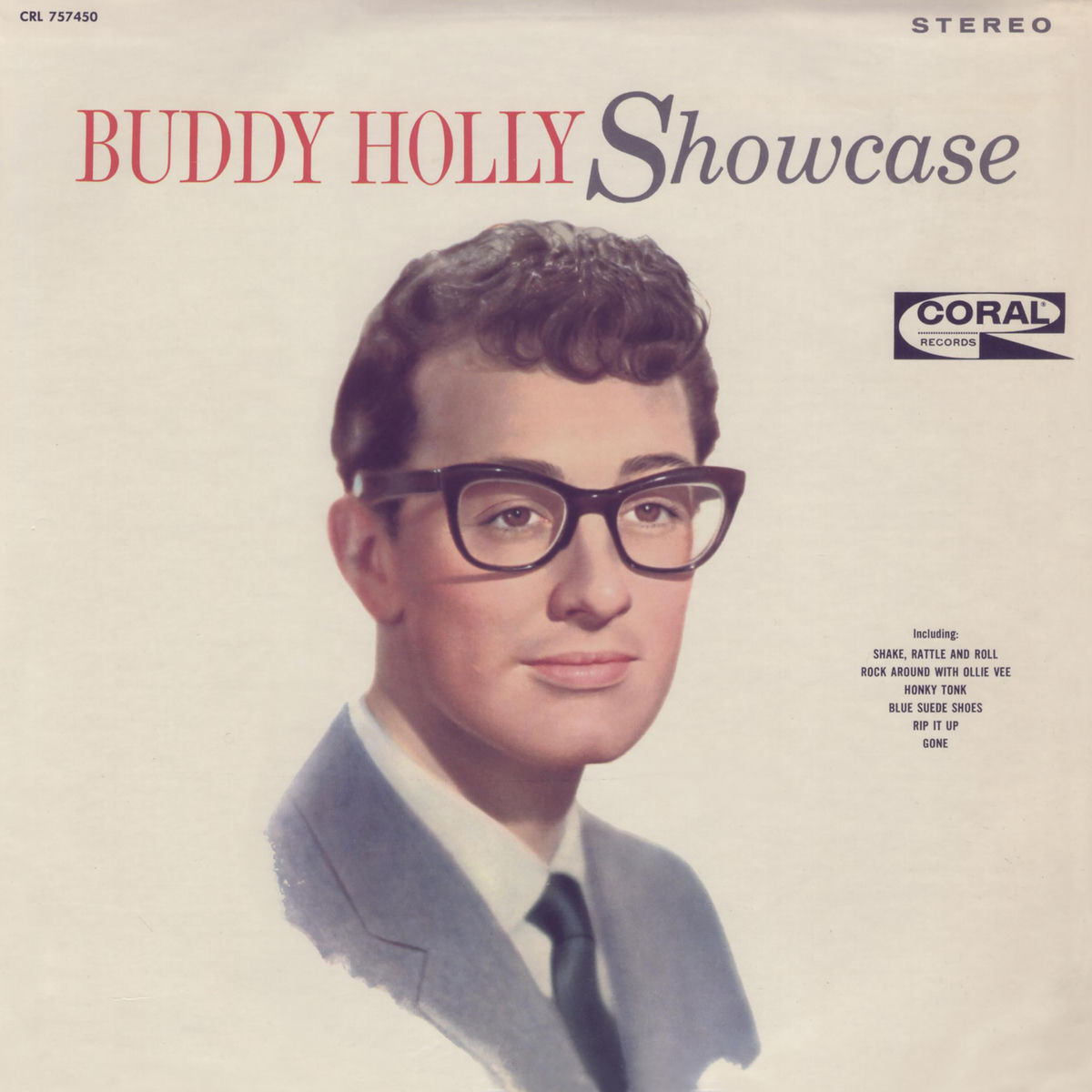
Recorded 2 June 1958 While touring in late 1957, Holly met and befriended the Everly Brothers. Several months later when Holly reconnected with his old duet partner, Bob Montgomery, the pair wrote several songs together, including two specifically composed with the Everlys in mind. With plans to pitch them to the Everlys, Holly cut demos of both in Norman Petty’s studio with Tommy Allsup on guitar and session musicians Bo Clarke on drums and George Atwood on bass. On a trip to Nashville, Holly pitched the songs to Everlys’ manager, Wesley Rose; Rose turned them down, but suggested that Holly release them himself. Instead, Holly moved on and both of the tracks remained in the can until after his death. Love’s Made A Fool Of You was released by the Crickets in 1959, while Buddy’s version first appeared on the 1963 album, Showcase.
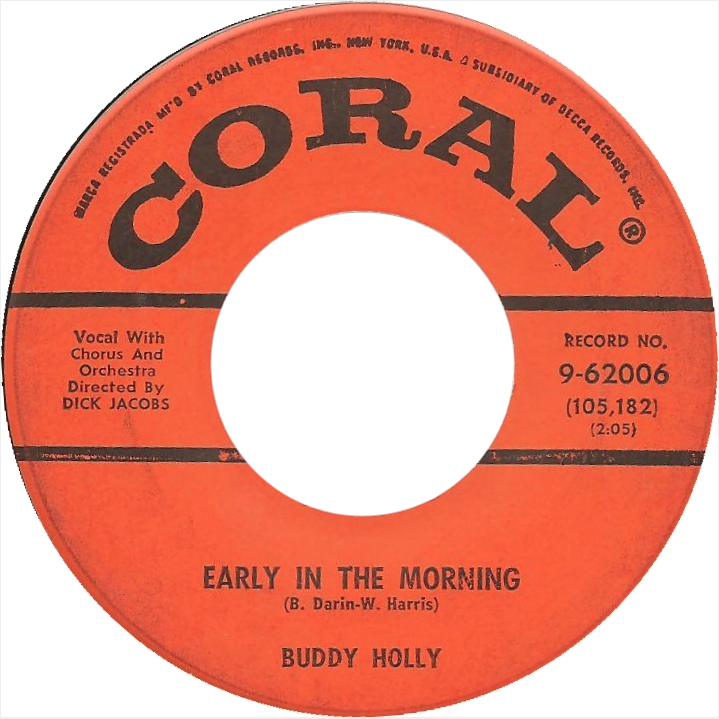
33 EARLY IN THE MORNING
Recorded 19 June 1958 In June 1958, singer Bobby Darin was expecting to be dropped by Atco Records. Dick Jacobs at Brunswick offered to pick up Darin’s contract and, in expectation, recorded the Darin composition Early In The Morning for release once the Atco renewal option expired. Just days before the date of expiration, Darin’s Atco single Splish Splash suddenly took off, and Atco renewed his contract. Stuck with a potential hit he couldn’t release, Jacobs asked Buddy Holly to record the song, using the same arrangement and musicians used by Darin. Working with the Helen Way Singers, a black gospel chorus, and famed studio saxophonist Sam ‘The Man’ Taylor, Holly quickly nailed the gospel-influenced rave-up, scored a #32 hit on the charts, and opened new doors for his musical career.
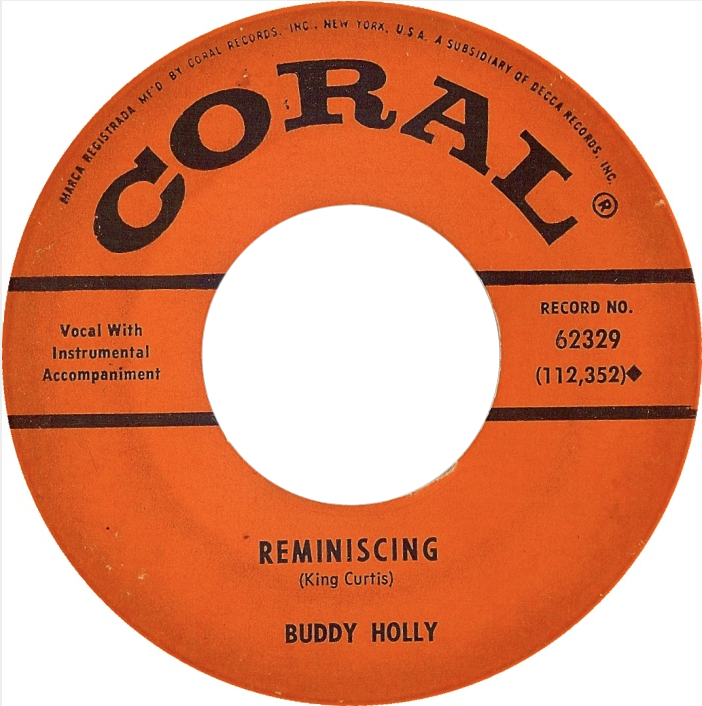
34 REMINISCING
Recorded 10 September 1958 The New York session that produced Early In The Morning inspired Holly to expand his musical range even more. He had long been a fan of famed R&B saxophone player King Curtis, famous for his work on records by The Coasters. Holly befriended Curtis when they both appeared on Alan Freed’s rock’n’roll revues in 1957. In September 1958, Holly hired Curtis for a session in Clovis and paid for his airfare to New Mexico. Curtis brought the song Reminiscing with him and Holly cut it with The Crickets in what turned out to be Holly’s final session in Petty’s studio. Holly clearly enjoyed the session, as his playful vocals echo Curtis’ leads on the saxophone. Although it was a great rock’n’roll cut, the song would not be released until after Holly’s death.
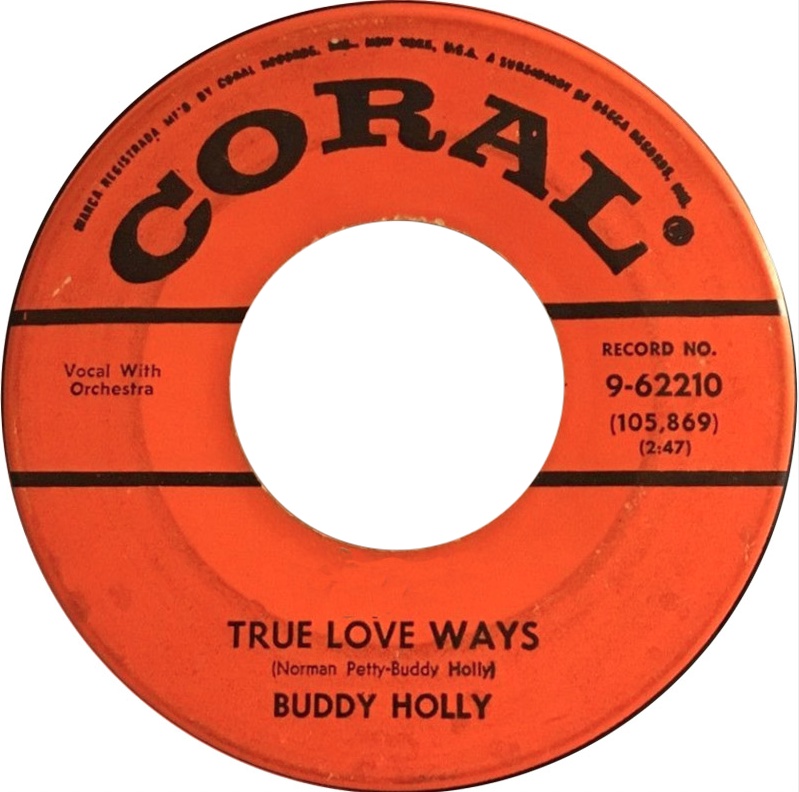
35 TRUE LOVE WAYS
Recorded 21 October 1958 By the late summer of 1958, Holly was spending more of his time in New York City, learning more about recording and the music business. Holly soon had another reason to spend time in the Big Apple when he met María Elena Santiago in the offices of Peer-Southern music publishing in New York and married her on 15 August 1959. Eager to expand his range, Holly decided to try recordings aimed directly at the pop market. Recorded at Decca Records’ Pythian Temple Studio in New York with the Dick Jacobs Orchestra, True Love Ways was written by Holly for his new bride. Despite its lush orchestration, the song was similar to the slow dance rock’n’roll ballads that were popular at the time, and could have easily been recorded with the Crickets.
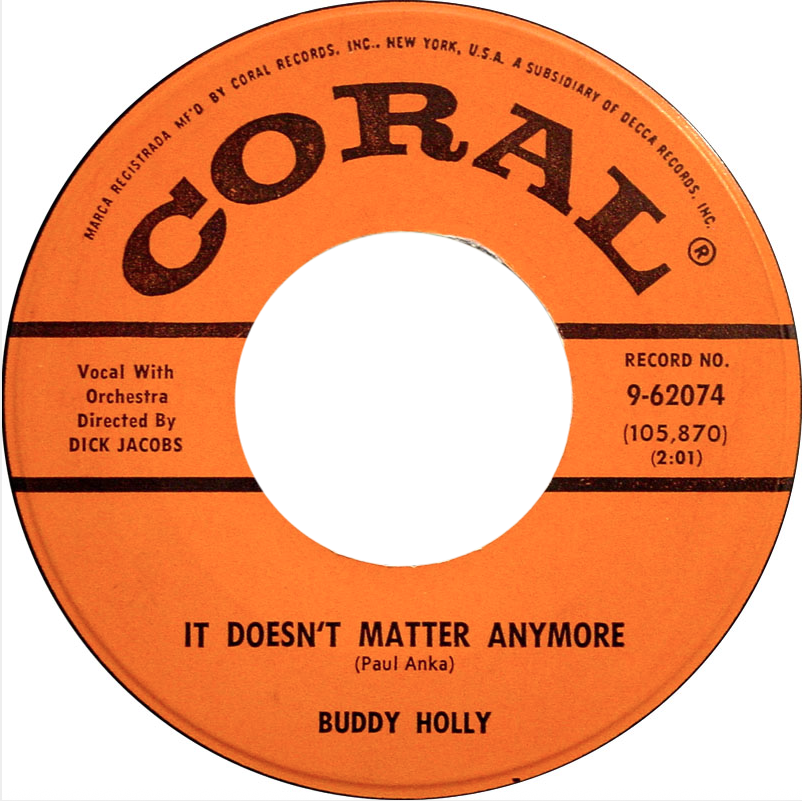
36 IT DOESN’T MATTER ANYMORE
Recorded 21 October 1958 The second track recorded at Holly’s Pythian Temple session was written by teen singer and songwriter Paul Anka, another friend Holly acquired while on tour. Anka wrote the song specifically for Holly and delivered it to him just two hours before the start of the session. Holly and Dick Jacobs quickly created an arrangement for the song, and rather than attempting to write full violin orchestrations, Jacobs had the musicians pluck the strings of their instruments, giving the song a driving rhythm similar to many of Holly’s rock’n’roll numbers. Released in January 1959, the song reached No.13 on the Billboard Top 100 after Holly’s death and was his last top 20 hit. In the UK, It Doesn’t Matter Anymore was the first posthumous No.1 hit in UK chart history.
37 WHAT TO DO
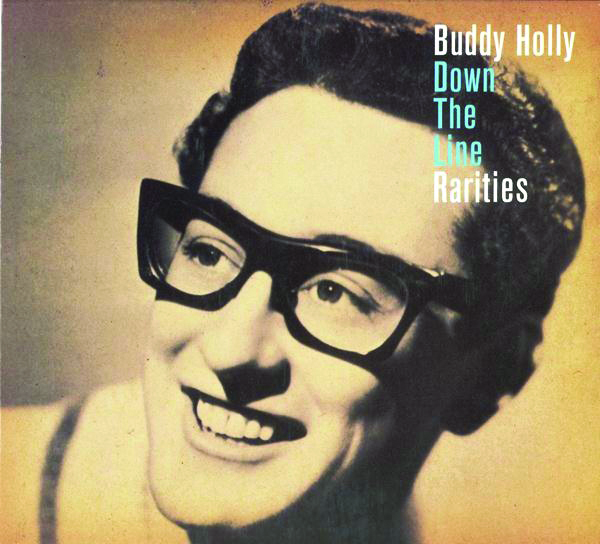
Recorded 3 December 1958 In the fall of 1958, big changes were underway for Holly’s career when he split with the Crickets and Norman Petty. Holly’s departure from the band was an amicable one, but that was not the case with Petty as Holly began a legal battle to recover royalties. Holly and Maria Elena were living in an apartment in New York’s Greenwich Village, and Holly spent most of the month of December working on new songs. Before the split, Holly bought a portable Ampex 401A tape recorder from Petty. Holly used it to record new songs and covers of some of his favourite rock’n’roll tunes. The so-called ‘Apartment Tapes’ are some of the finest solo recordings he made, demonstrating his maturity as both a songwriter and performer, as on this song of unrequited love. Holly’s solo versions all feature on Down The Line: The Rarities.
38 PEGGY SUE GOT MARRIED
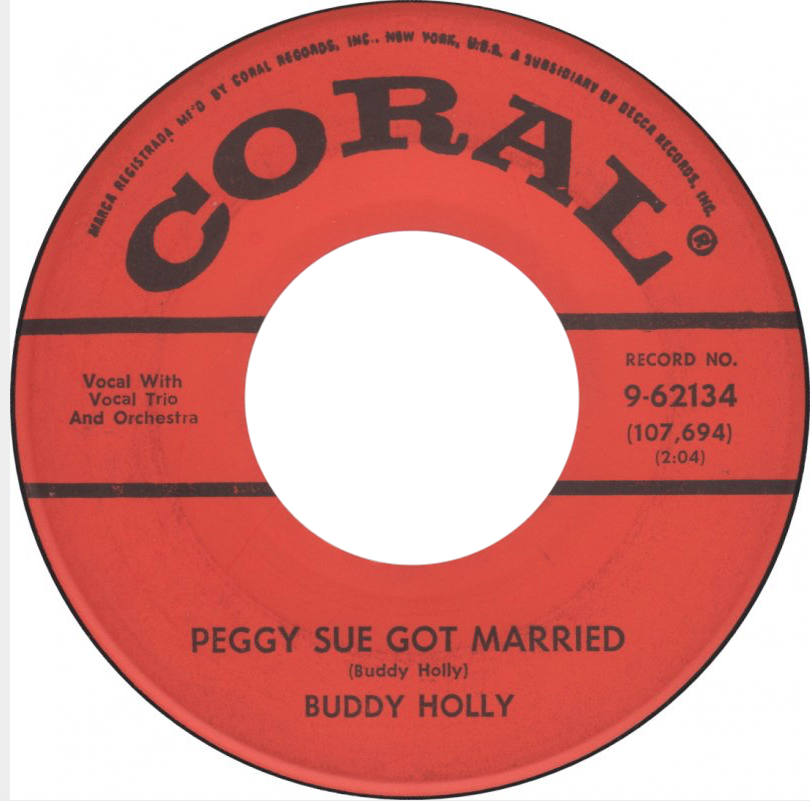
Recorded 5 December 1958 Since its release in 1957, Peggy Sue had become more than just one of Holly’s biggest hits: the song’s titular character had jumped from the record’s grooves to become a pop culture icon, with references to her appearing in Bobby Darin’s Queen Of The Hop and Richie Valens’ Ooh My Head. Holly’s father suggested the title Peggy Sue Got Married for a possible sequel, and the real-life Peggy Sue Gerron married Jerry Allison in June 1958. When Holly decided to return to the popular saga of Peggy Sue, he did so with wit and charm, creating a sequel that playfully drops in musical quotes from the original song without sounding like a retread. After Holly’s death, Norman Petty heavily overdubbed several songs from the ‘Apartment Tapes’ to make them more commercial, destroying a large portion of their simple charisma.
39 CRYING, WAITING, HOPING
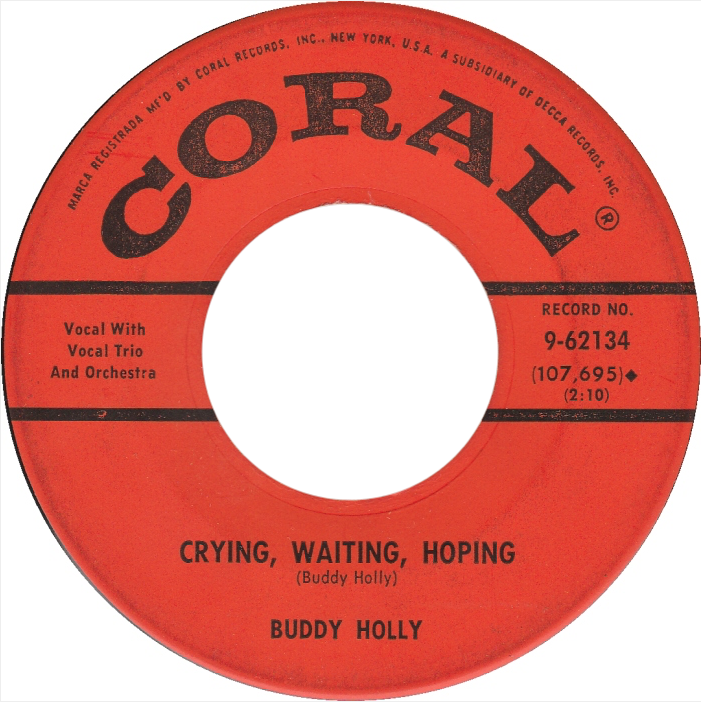
Recorded 14 December 1958 Holly’s final studio sessions may have been heavily orchestrated pop, but he had no plans to abandon rock’n’roll for easy listening, as the ‘Apartment Tapes’ plainly demonstrate. Crying, Waiting, Hoping was a classic Holly rocker along the lines of Maybe Baby or Rave On. Built around his archetypal themes of anxiety and optimism, Holly delivered a driving rock’n’roll-charged performance of the song, accompanied solely by his acoustic. Especially electrifying is the way he growls out his vocals on the bridge. After extensive overdubbing by Norman Petty, the song was released in July 1959 as the B-side of Peggy Sue Got Married. Of all the ‘Apartment Tapes’ songs to suffer Petty’s ‘improvements’, Crying, Waiting, Hoping is the one least diluted by tampering, but Holly’s original is by far the better version.
40 LEARNING THE GAME
Recorded 17 December 1958 Learning The Game was the final original song recorded by Holly on the ‘Apartment Tapes’. Recorded shortly before he and his wife travelled to Texas for the Christmas holidays, and just six weeks before his death, this ballad of heartbreak and resignation is a wonderful example of the 22-year-old’s growing sophistication as a songwriter, and a bittersweet reminder of the wonderful songs he would have surely written and recorded if history had taken a different course. The heavily overdubbed version of Learning The Game made its first appearance on the 1960 LP, The Buddy Holly Story, Volume II. The original, undubbed version – which, for many, is one of the brightest gems recorded during the home demo sessions – remained hidden away until its release on the 1979 UK boxset The Complete Buddy Holly.
For more on Buddy Holly visit The Buddy Holly Educational Foundation here
Read More: The Day The Music Died