What’s this? A rock’n’roll song written by the singer’s mum? That may have been the case, but there’s nothing safe about Freddy Cannon’s Tallahassee Lassie …
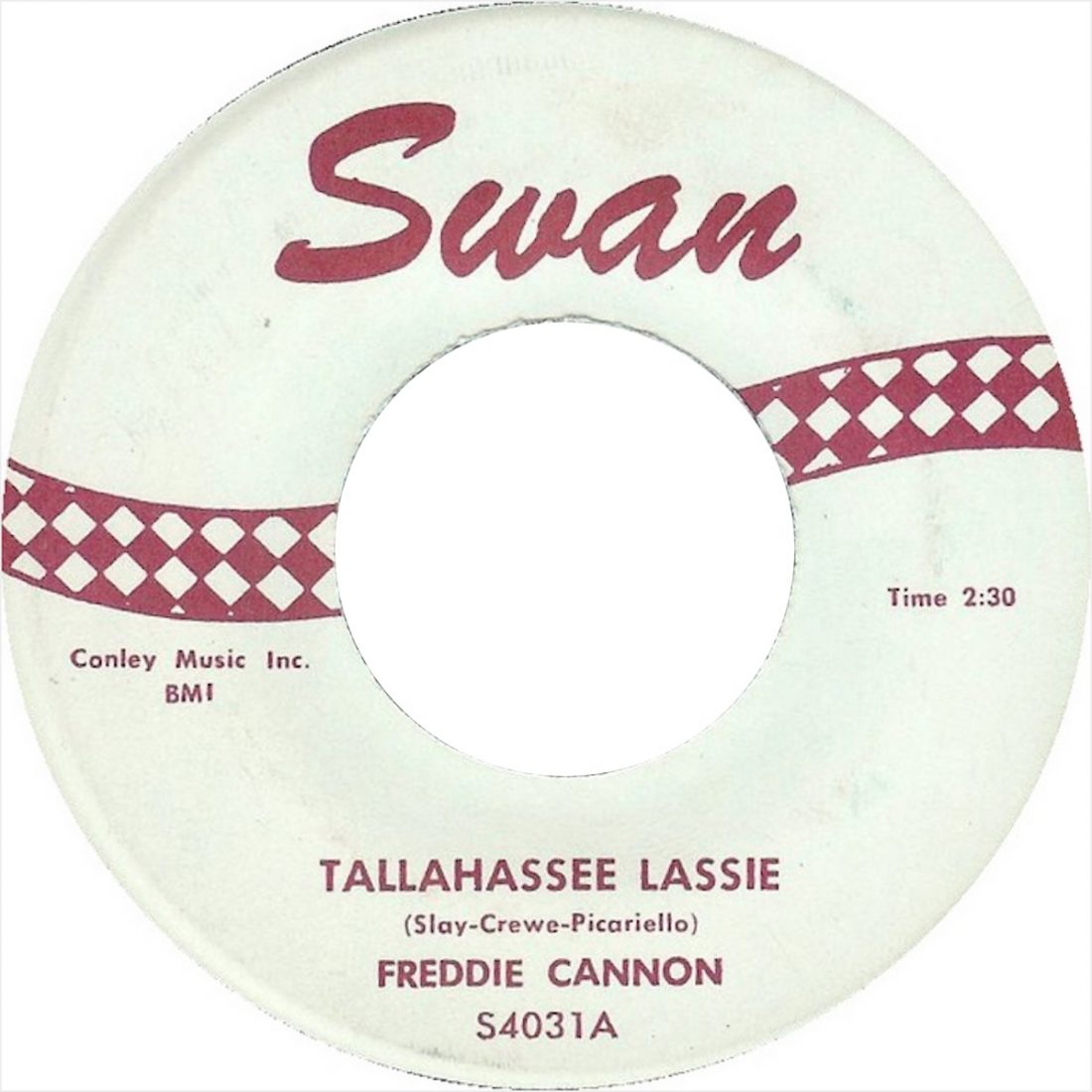
There aren’t many rock’n’roll evergreens where the songwriting credit goes to the singer’s mother, but so it is with Freddy Cannon’s 1959 banger Tallahassee Lassie. Those lyrics – “Well, she dances to the bop/ She dances to the stroll/ She dances to the walk/ She can rock and roll” – were originally penned by one Mimi Picariello, mother to Frederick Picariello (who, by the late 1950s, was performing under the name of Freddy Cannon) as part of a poem titled Rock And Roll Baby.
Tallahassee Lassie was the debut single released by Freddy Cannon and would become the Massachusetts-born rocker’s signature number. It was also the first demo he’d ever cut. After gigging around Boston and becoming a well-known name in the area, he signed up to a management contract with local disc jockey Jack McDermott in 1958. Presenting McDermott with a scrappy version of the song, then titled Rock And Roll Baby, the DJ took it to the writing and production team of Bob Crewe and Frank Slay who saw promise in the track.
Rebel Rhythm
After some rearranging and additional lyric writing, they offered to produce a recording in return for two-thirds of the composing credits. Now titled Tallahassee Lassie, it was initially rejected by the record labels it was offered to, until it found its way to Dick Clark, then one of the most influential figures in American music, as the host of the popular music television show American Bandstand. Clark liked the song but suggested a few tweaks (it was his idea to repeat the vocal bridge, that begins with the bass drum as he sings, “She dances to the bop”), and so Picariello went back into the studio to run through it one more time. The disc was then released on Swan Records, a label that Clark part owned.
The song was a smash, session musician Kenny Paulson’s driving guitar solo as much a star as Cannon’s rich, throaty vocal. Then there are the ‘woo!’s added to the re-record, an audience-pleasing gimmick that would become one of Cannon’s trademarks.
Were it not for Swan’s company president, Bernie Binnick, the single of Tallahassee Lassie would have had Frederick Picariello’s name on it. It was Binnick who suggested the stage name Freddy Cannon. With a new rock’n’roll-friendly moniker and Swan’s marketing might behind it, Tallahassee Lassie began to secure national airplay. It went on to sell over one million copies and was awarded a gold disc by the Recording Industry Association of America.
Tallahassee Lassie was ranked No.40 on Billboard magazine’s Year-End Hot 100 singles of 1959 and would prove enormously influential. As recently as 2011, The Rolling Stones released their own cover version of the song, for the 2011 deluxe edition of their 1978 long-player Some Girls.
Boom Boom’s Banger
“The original version we did at the time of Some Girls sounds like it was recorded in a wind tunnel,” Mick Jagger told Mojo. “It now sounds like we’re coming towards the end of the tunnel. Quite funky. I left it alone. Didn’t do anything new, except add some handclaps – which is very close to the feel of the original.”
It’s a fine version from the Stones, but – in truth – it pales in comparison to the original for sheer fire. As do the various other versions, by – among others – The Flamin’ Groovies, Shakin’ Stevens And The Sunsets, Los Straitjackets, Mud, and The Record Company. Even artists as stellar as Tommy Steele, Fleetwood Mac and The Beach Boys, it seems, couldn’t better the version by Frederick Picariello.
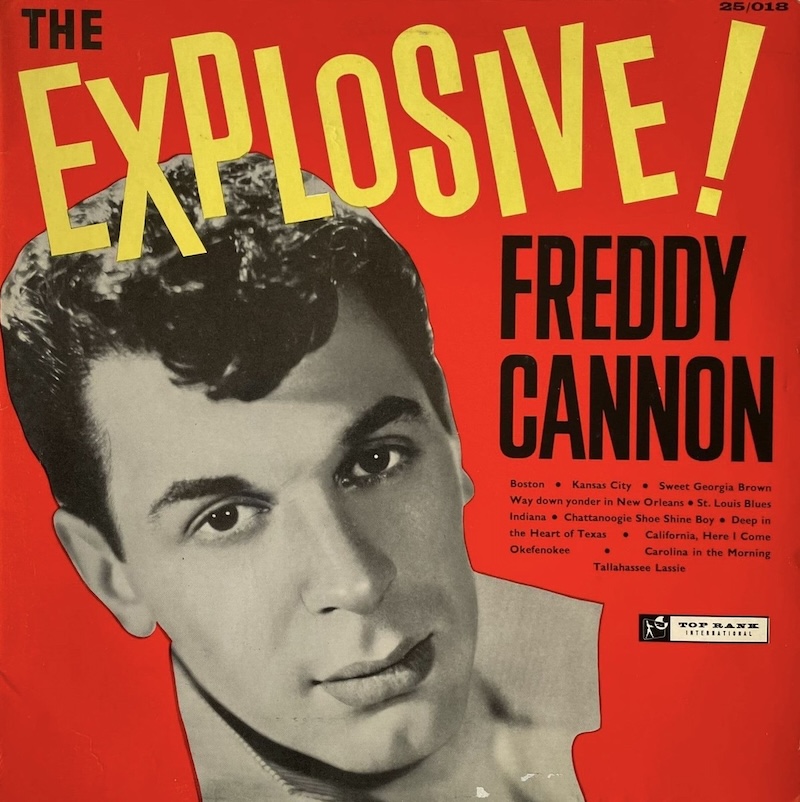
In the years that followed the success of Tallahassee Lassie, Cannon (who soon acquired the nickname ‘Boom Boom’ due to his boisterous singing style) found himself a regular performer on Dick Clark’s TV show, which no doubt aided the success of many of his subsequent 45s, including Way Down Yonder In New Orleans, Palisades Park and Abigail Beecher.
You Know
Cannon’s star would fade in the late 1960s and his final entry on the Billboard chart was 1966’s No.41 entry The Dedication Song. Bob Crewe, meanwhile, found even greater success as a songwriter, co-penning such jukebox classics as The Sun Ain’t Gonna Shine (Anymore) – originally for Frankie Valli, later a UK No.1 smash for The Walker Brothers – and Silhouettes (for The Rays), as well as a host of hits for The Four Seasons, including Big Girls Don’t Cry, Silence Is Golden, Walk Like A Man and Rag Doll.
His co-writer on Tallahassee Lassie, Frank Slay, also did well in the following years, producing the Billboard No.1-charting Incense And Peppermints for psychedelic rockers The Strawberry Alarm Clock as well as co-writing Silhouettes with Crewe. Both feature as characters in the stage play (and feature film) Jersey Boys, which tells the story of The Four Seasons.
Tallahassee Lassie, backed with You Know, reached No.6 on the US pop chart, No.13 on the US R&B chart, and No.17 on UK Singles Chart in 1959. While Tommy Steele also released a version of the song which reached No.16 on the UK chart in 1959.
The pair, however, have passed away in the last decade, while Freddy Cannon, is still very much with us. “All of the lyrics in the middle are my mom’s,” the singer told NJ.com in 2012 about his most famous song. “All of the music is mine. Between the two of us, we got lucky. I know she’s up in heaven right now looking down, really happy about it.”
Stream Tallahassee Lassie and more here
Subscribe to Vintage Rock here